 EN
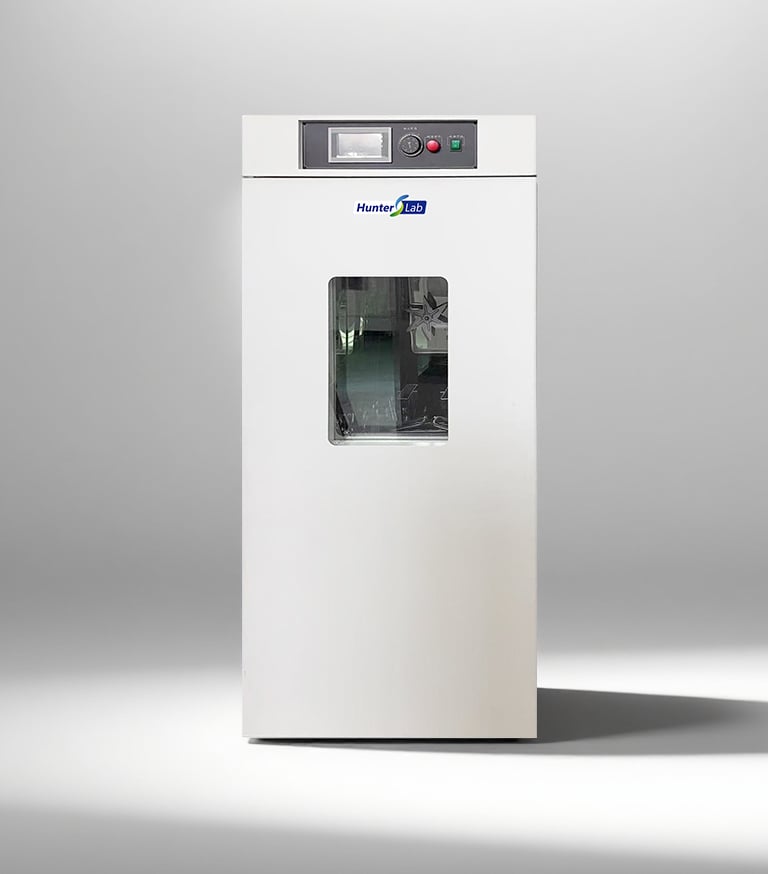
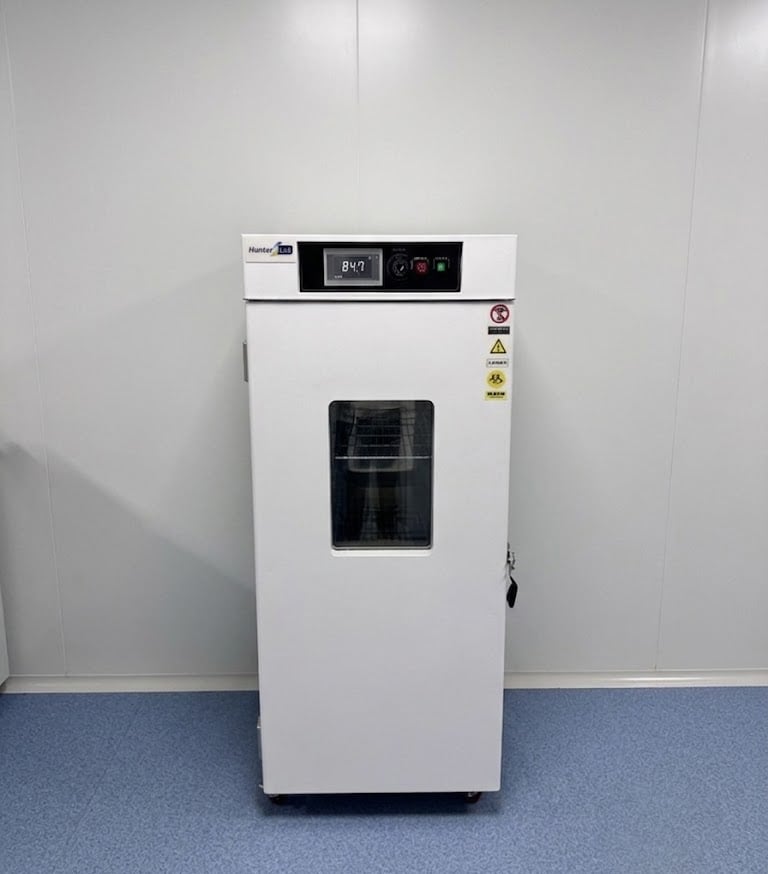
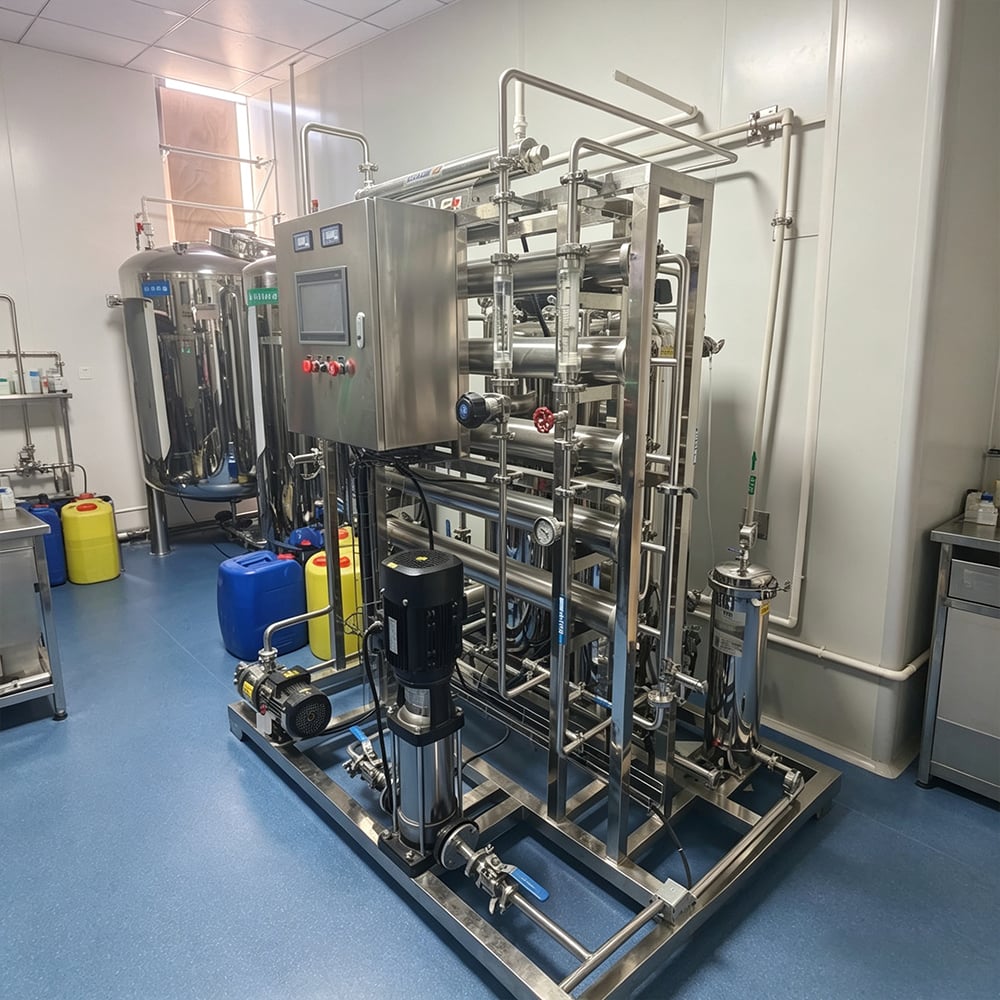
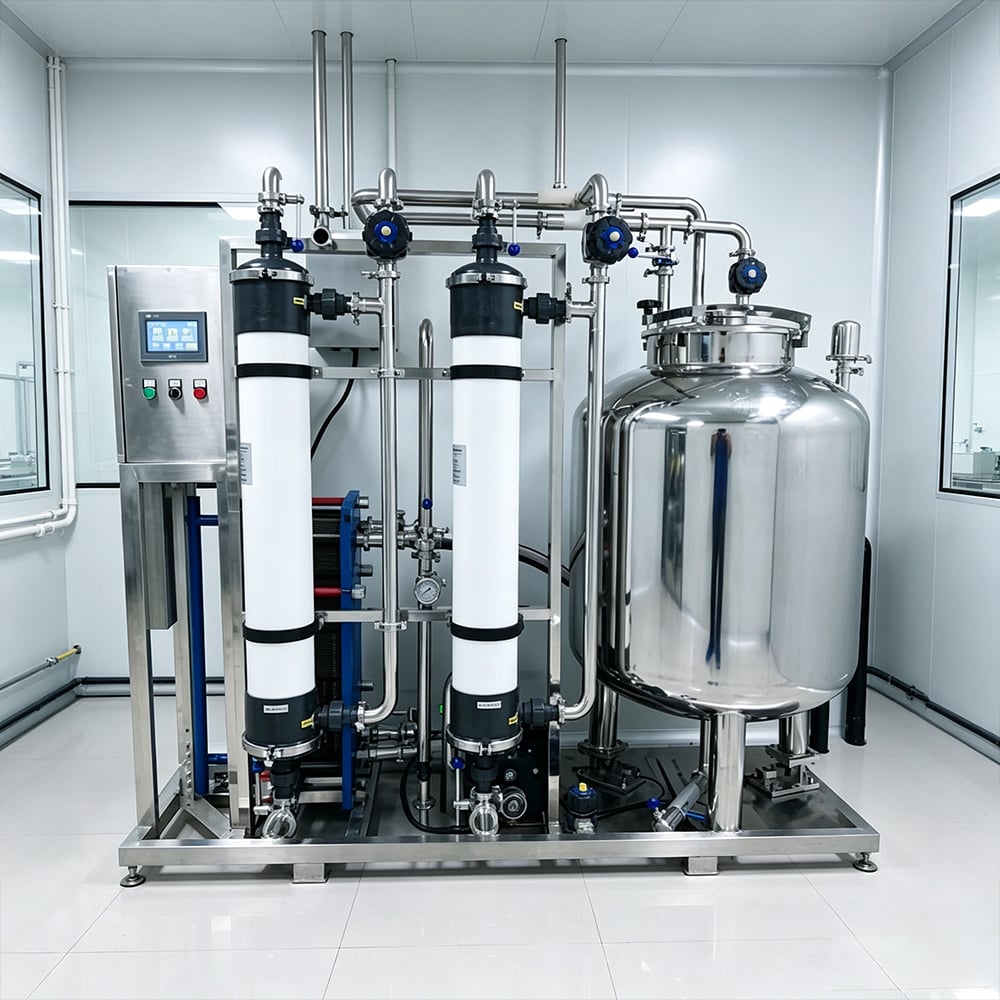
Laboratory Layout & Design
Seamlessly integrating water circulation and temperature control systems to deliver scientific, compliant, and high-efficiency customized space designs.

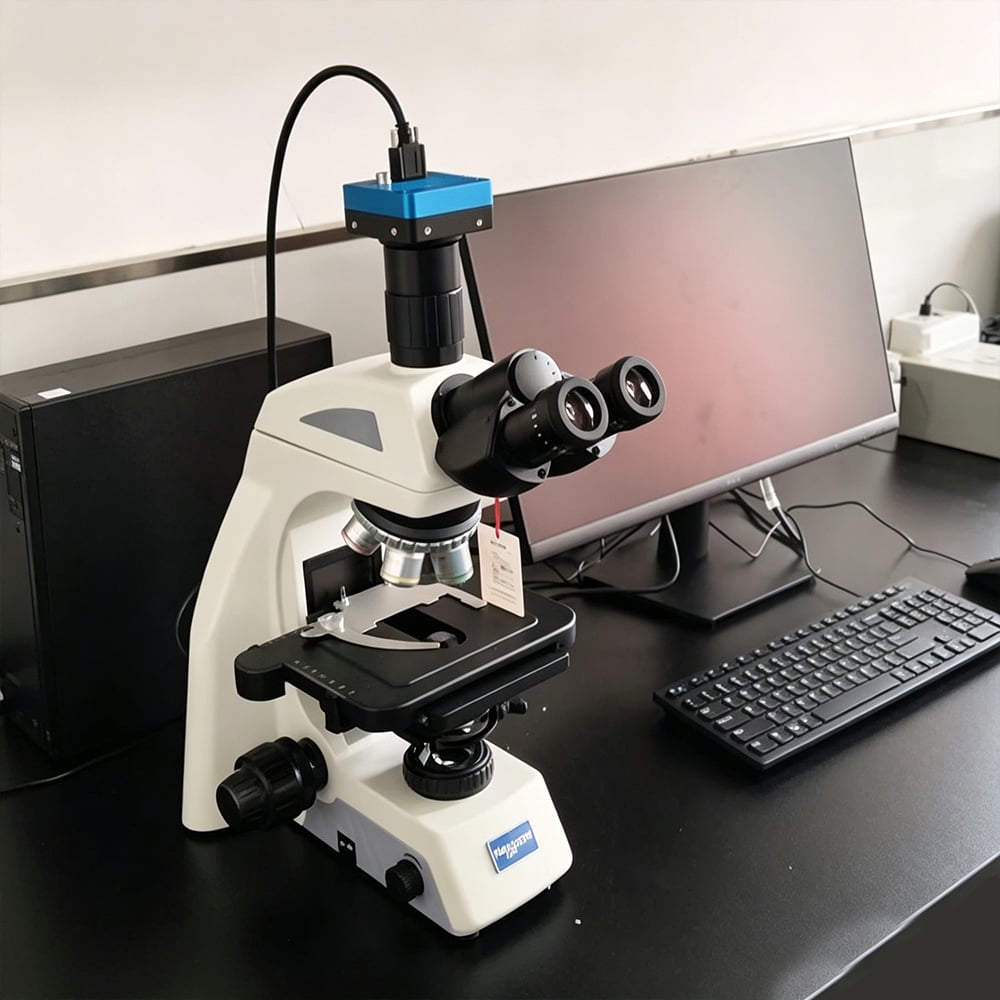
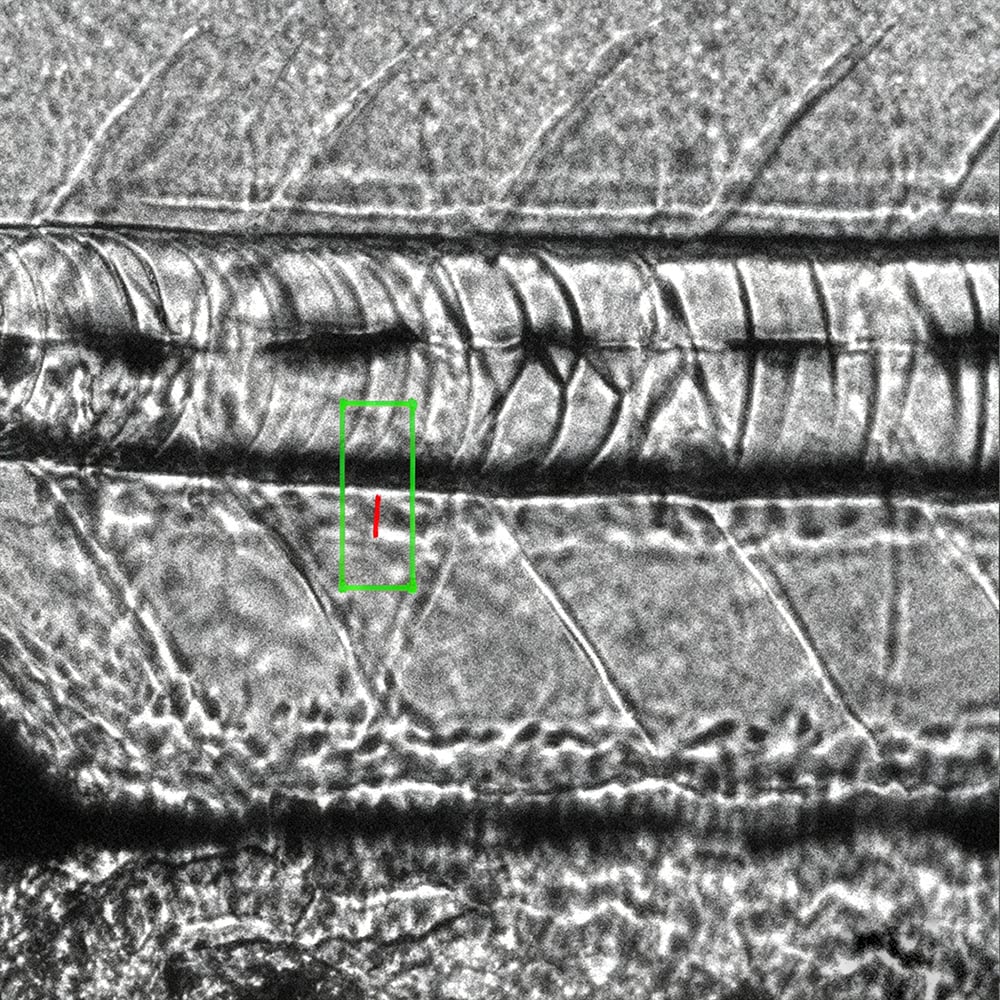
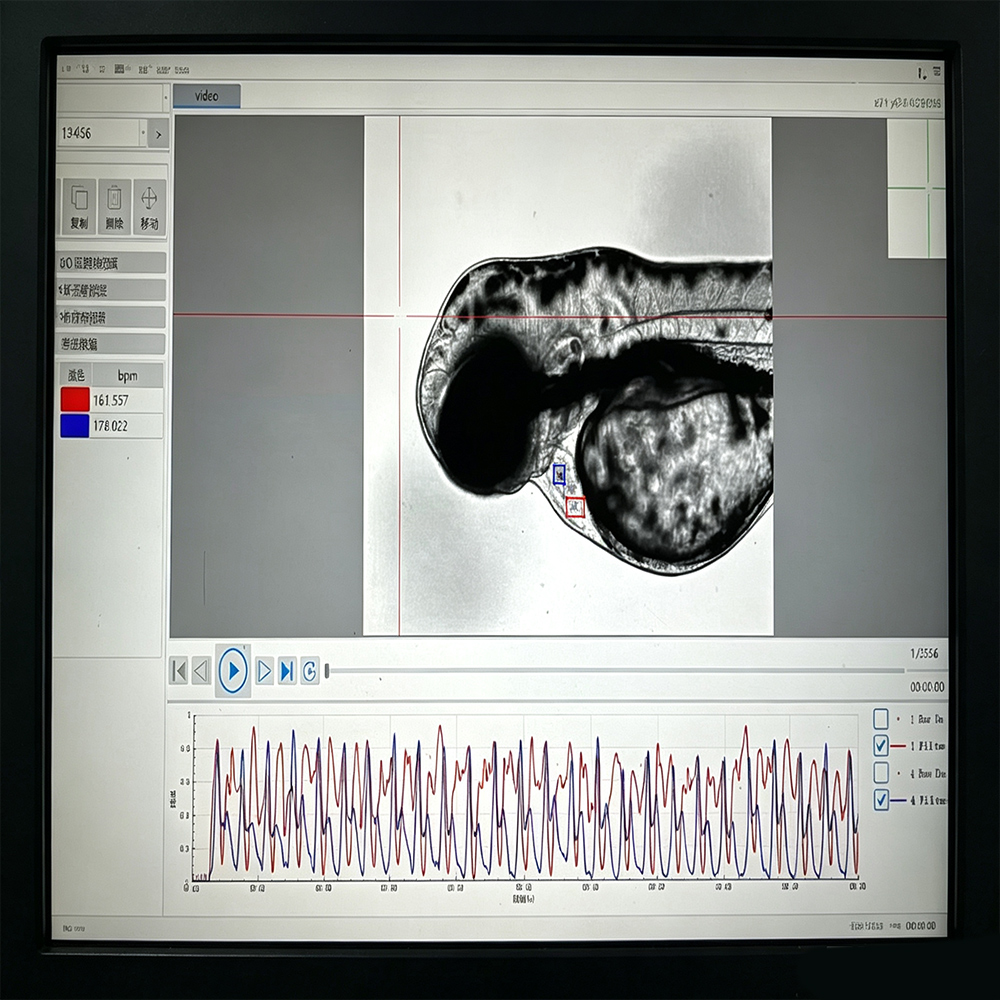
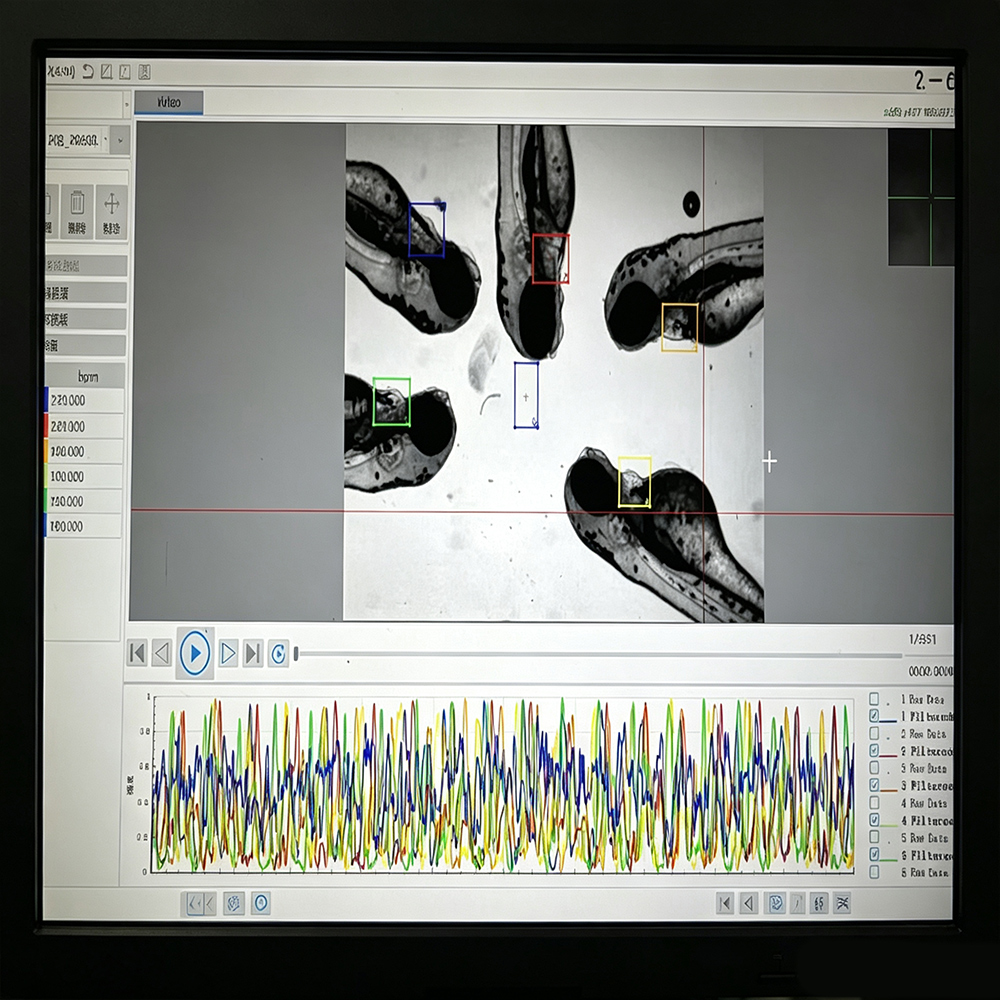
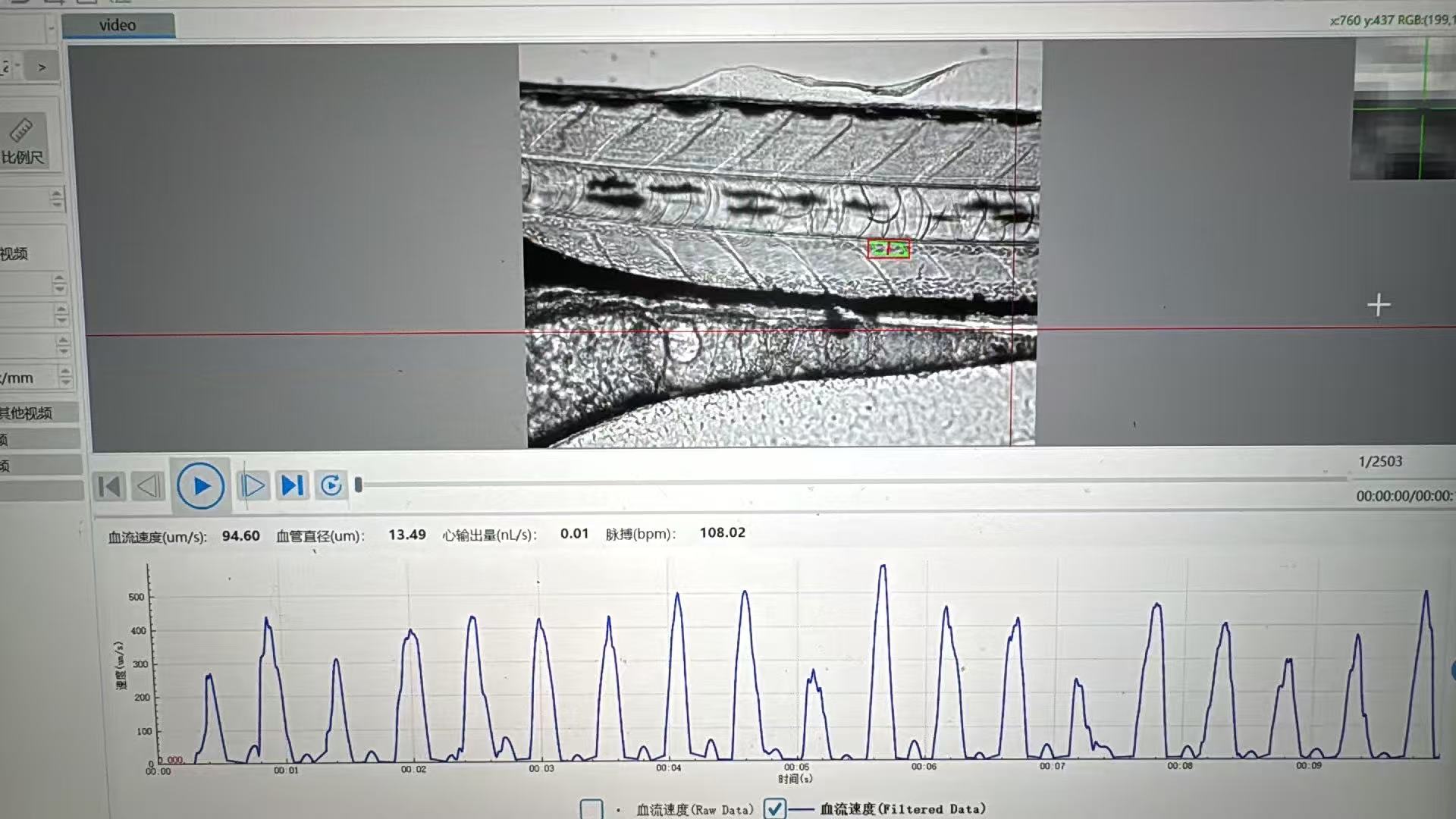
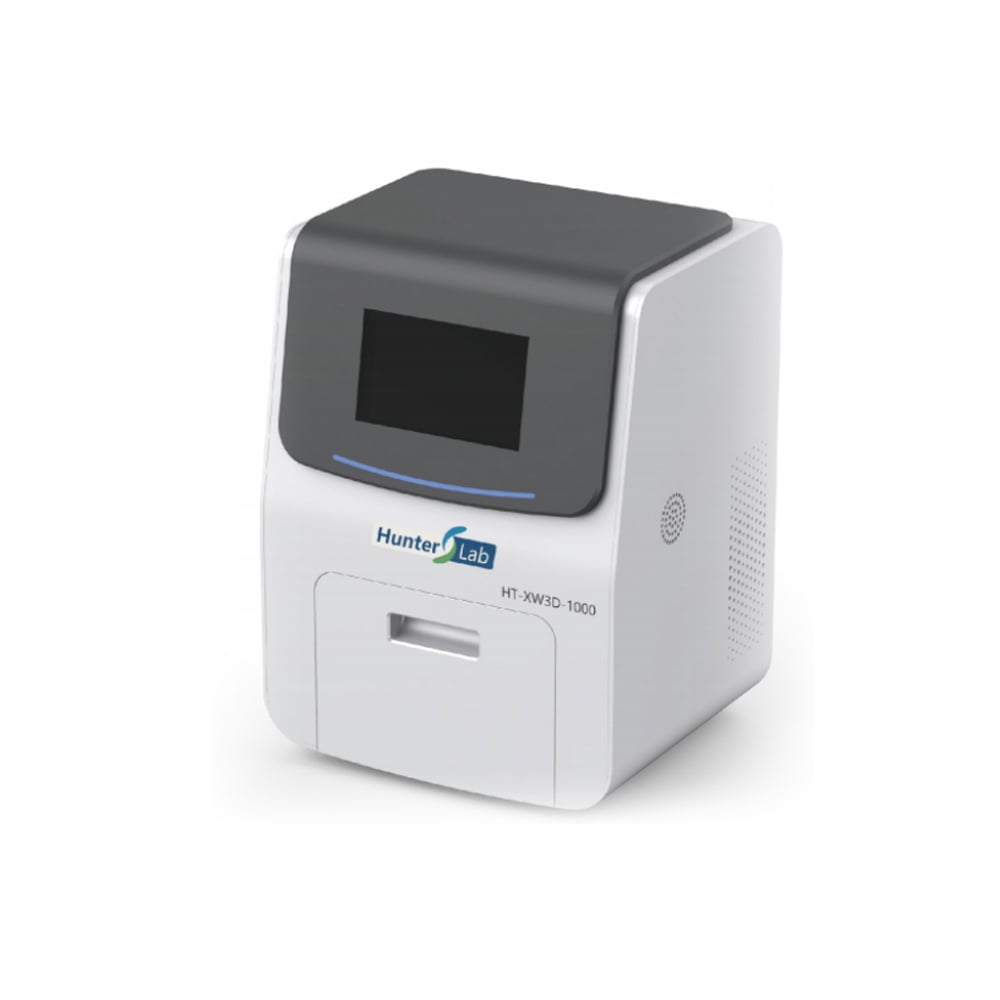
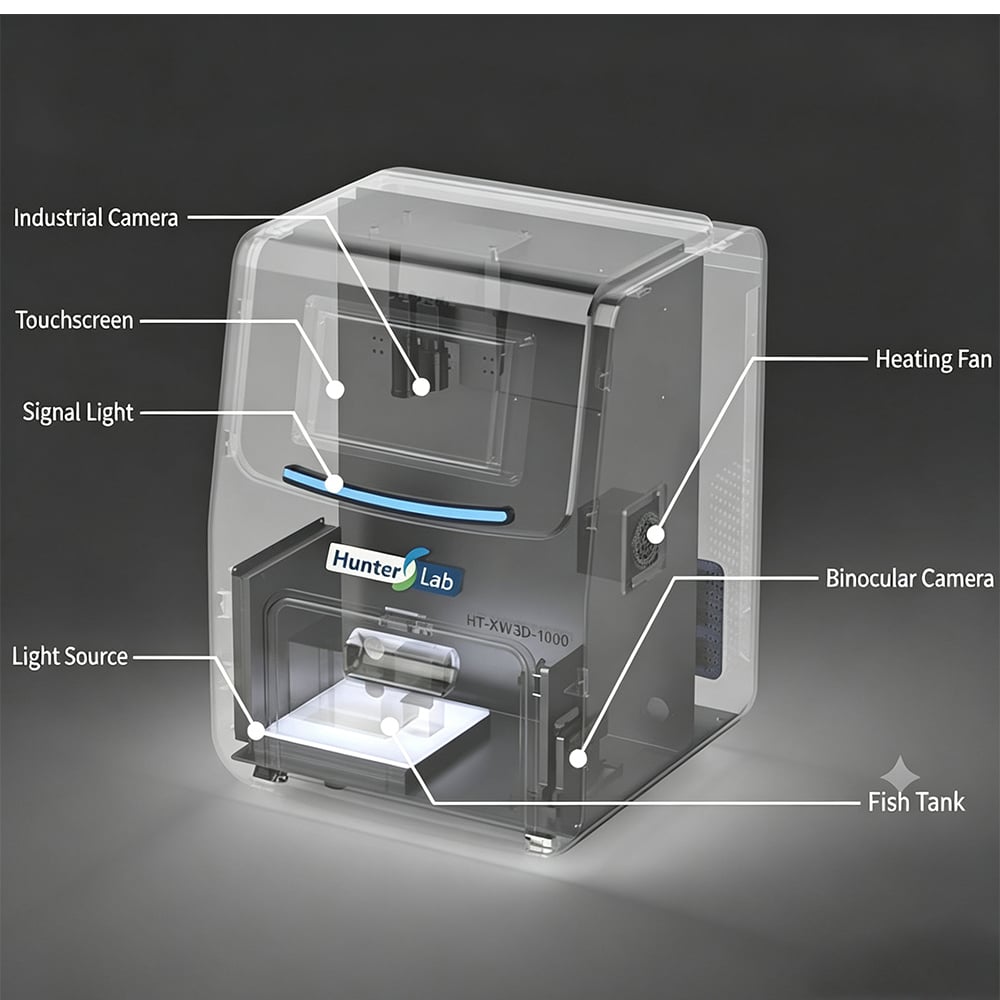
The Zebrafish Heart Rate & Blood Flow Analysis System is a microscopy-based research platform for label-free cardiovascular observation in live zebrafish larvae. Combining high-speed brightfield imaging with advanced software, it measures heart rate, blood-flow velocity, cardiac output, and vessel diameter using inter-frame correlation and multi-target tracking. Featuring flexible ROI selection and batch data processing, the platform streamlines phenotypic screening, developmental studies, and preclinical drug evaluation, exporting structured results directly to Excel for academic and pharmaceutical laboratories.
Product Brief
The Zebrafish Heart Rate & Blood Flow Analysis System is a microscopy-based research platform for quantitative cardiovascular observation in live zebrafish larvae. It combines high-speed video capture, brightfield microscopy, image processing, and analysis software in one workflow. Researchers can use the system to review cardiac pulsation, blood-cell motion, vessel diameter, blood-flow velocity, cardiac output, and heart rate from recorded video. Designed for laboratories working with zebrafish cardiovascular models, the platform helps turn visual observations into organized datasets for comparison, review, and reporting. It is intended for research use in areas such as developmental physiology, phenotype characterization, cardiovascular model studies, and preclinical screening workflows.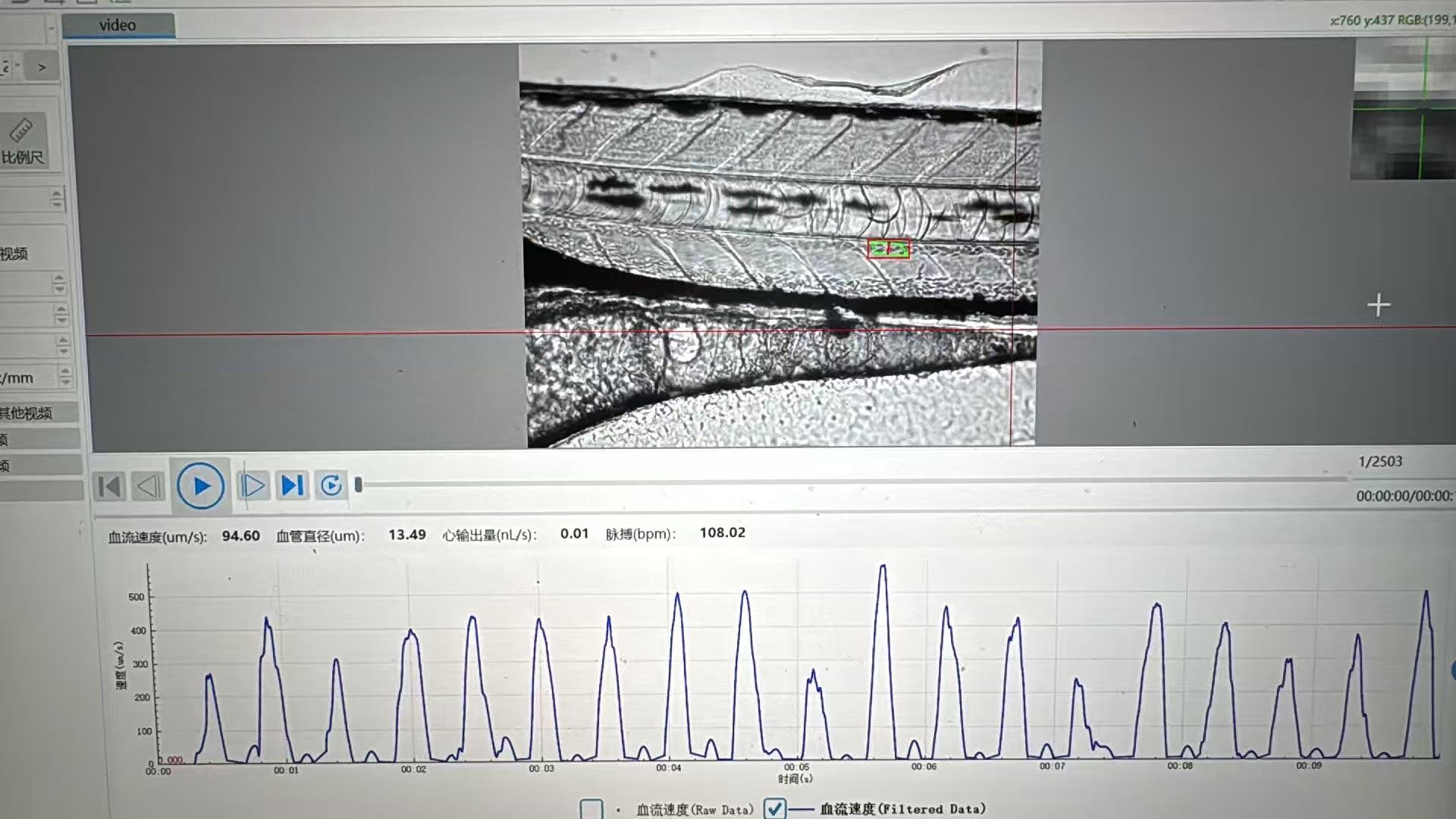
Zebrafish cardiovascular analysis often involves many short videos, changing regions of interest, and repeated measurements across samples. This zebrafish heart rate analysis system brings video acquisition and quantitative review into a more consistent process. A high-frame-rate imaging setup captures subtle cardiac movement and blood-cell motion, while software tools guide the user through region selection, calibration, data calculation, visualization, and export. The result is a practical zebrafish blood flow analysis workflow that supports repeatable documentation without relying on fluorescent dyes or transgenic markers for routine brightfield observations.
Instead of serving only as a visual reference, the system links selected structures with numerical output from recorded image sequences. This is useful when studies need visual context and time-series data.
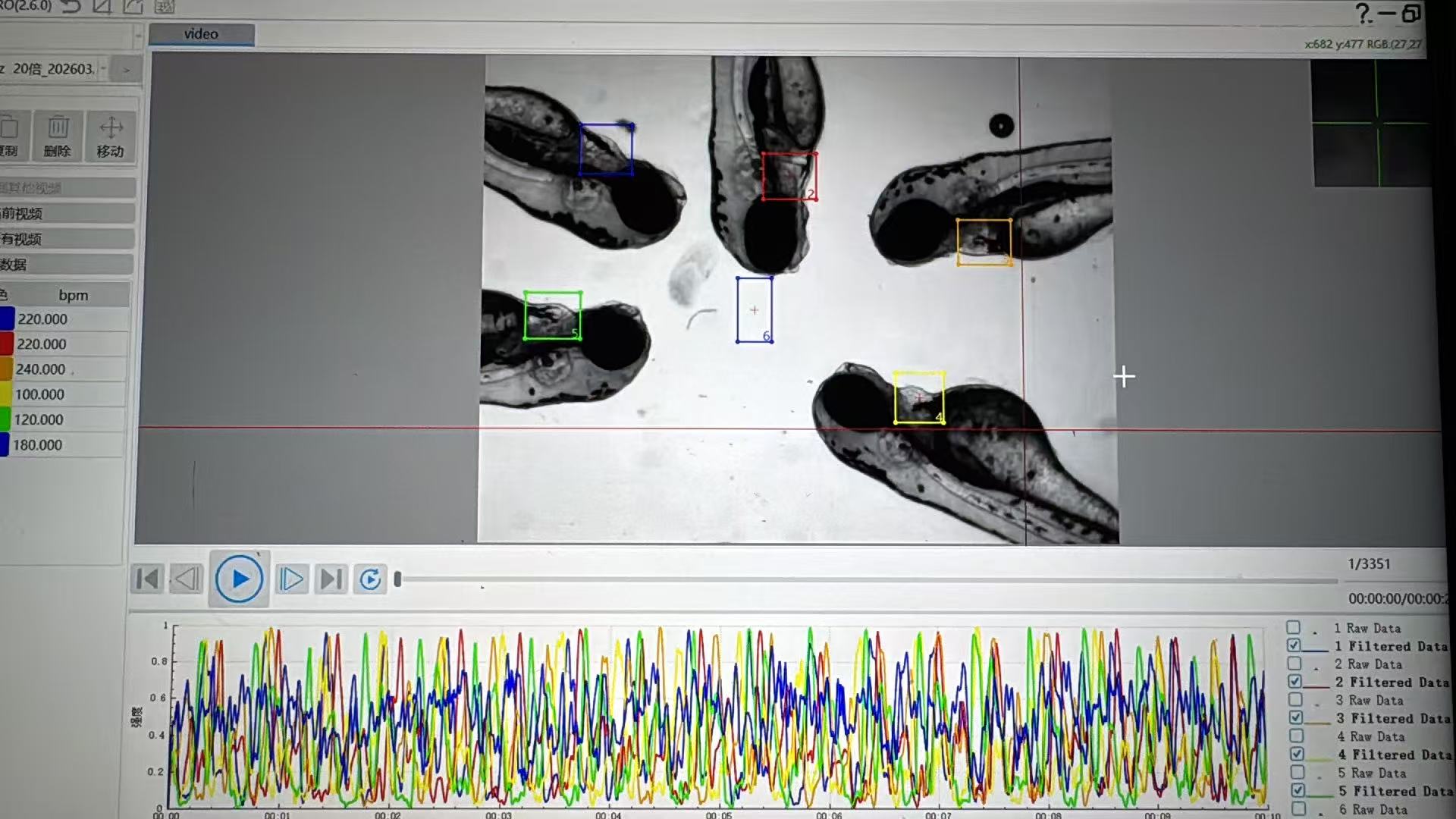
The analytical value of this zebrafish imaging system comes from the link between image data and quantitative output. High-speed video capture is used to observe fast blood movement and fine cardiac oscillation, while image processing and cross-correlation methods support velocity-related calculations across frames. Multi-target tracking provides another view of cellular motion inside a chosen vessel region. Together, these functions give researchers several ways to examine zebrafish hemodynamics from the same study material.
Scale calibration is an important part of defensible image-based measurement. The software supports calibration based on hardware parameters such as pixel size, interface magnification, and objective magnification. It also supports a known physical distance from a reference video or direct manual entry. Researchers can therefore align the calibration method with the imaging configuration used in a particular experiment. Live video can be displayed alongside signal curves for cardiac oscillation, blood-flow velocity, and vessel-diameter change, helping users review data in context before exporting results.
| Item | Available Information |
|---|---|
| Research subject | Live zebrafish larvae |
| Imaging approach | High-frame-rate brightfield microscopic imaging |
| Core analysis methods | Inter-frame correlation and multi-target particle tracking |
| Primary outputs | Heart rate, blood-flow velocity, cardiac output, and vessel diameter |
| ROI options | Custom single or multiple regions, including cardiac and vascular areas |
| Data display | Video view with time-series curves |
| Data export | Excel result files with experimental metadata, statistical metrics, and time-series curves |
| Minimum order quantity | 1 system |
Specific camera, microscope, objective, computer, electrical, and dimensional specifications are available on request so the configuration can be reviewed against the laboratory’s existing imaging workflow.
This zebrafish heart rate analysis platform can be used in cardiovascular disease-model research, where investigators compare changes in rhythm, flow behavior, or vessel dimensions across experimental groups. In genetic model phenotyping, it supports structured comparison of cardiovascular traits in knockout, gene-edited, or mutant zebrafish. For developmental studies, zebrafish hemodynamics can be observed across embryonic and larval stages to build a time-resolved view of cardiovascular development.
The system also fits preclinical drug-screening and safety-assessment workflows that require early cardiovascular observation of candidate compounds. By organizing heart-rate, blood-flow, cardiac-output, and vessel-diameter information from recorded zebrafish video, teams can establish a consistent data record for internal evaluation. The platform is a research instrument and does not make clinical diagnostic or medical-use claims.
For research groups, core facilities, and contract research teams, the system connects zebrafish imaging with a documented analysis routine. Multiple parameters from one field of view can reduce separate observation steps. Batch import and parallel processing help manage repeated video-based studies while preserving source footage, selected regions, calibration approach, and exported results in the project record.
The software’s Excel export supports common downstream tasks such as statistical review, figure preparation, and report assembly. Because the zebrafish cardiovascular analysis workflow is based on recorded images and defined regions of interest, teams can revisit a dataset when methods evolve or a result needs further inspection. This traceability is useful for collaborations where scientists, imaging specialists, and data analysts contribute to the same study.
The system supports zebrafish heart rate analysis and zebrafish blood flow analysis, including heart rate, blood-flow velocity, cardiac output, and vessel diameter from suitable video recordings.
No fluorescent dyes or markers are required for the described brightfield imaging workflow. Researchers should still select imaging conditions appropriate for their own protocol.
Yes. The software supports custom ROI drawing and multi-region selection for areas such as the atrium, ventricle, dorsal aorta, cardinal vein, and intersegmental vessels.
The software exports Excel result files that can include experimental metadata, statistical metrics, and time-series curves.
Yes. Contact us to discuss the zebrafish imaging system configuration and compatibility requirements for your laboratory workflow.
The Zebrafish Heart Rate & Blood Flow Analysis System is a microscopy-based research platform for label-free cardiovascular observation in live zebrafish larvae. Combining high-speed brightfield imaging with advanced software, it measures heart rate, blood-flow velocity, cardiac output, and vessel diameter using inter-frame correlation and multi-target tracking. Featuring flexible ROI selection and batch data processing, the platform streamlines phenotypic screening, developmental studies, and preclinical drug evaluation, exporting structured results directly to Excel for academic and pharmaceutical laboratories.
This is a title description that can briefly introduce the module.
We offer comprehensive, full-lifecycle services, including initial consultation, site planning, equipment selection, installation, hands-on training, application support, and long-term O&M.No matter your team's background, our standardized training and instant technical support guarantee equipment readiness and rapid onboarding. We handle the technicalities so you can focus on your core experiments.

Seamlessly integrating water circulation and temperature control systems to deliver scientific, compliant, and high-efficiency customized space designs.

Independent R&D and supply of over 10 categories of cutting-edge scientific instruments, spanning the three core pillars of zebrafish research: housing, manipulation, and analysis. Our portfolio includes digital smart housing systems, high-throughput 2D/3D behavioral analysis systems, panoramic in vivo imaging platforms, and forced swim systems. Powered by high-throughput, high-precision hardware and software, we comprehensively accelerate your scientific breakthroughs.

Our veteran engineering team handles standardized installation and hardware calibration on-site. We seamlessly connect your core digital networks—such as water recirculation, light control, and behavioral analysis—ensuring all experimental systems operate at peak performance from day one.

We provide a professional training system that encompasses standardized operations for smart scientific instruments and data analysis software, alongside scientific husbandry techniques for the entire zebrafish lifecycle, water quality environmental control, and daily maintenance protocols. This comprehensive curriculum empowers research teams to rapidly and independently conduct their experiments.
Dive into real-world laboratory use cases to explore how our zebrafish experimental equipment empowers life science research and industrial innovation, accelerating the translation and real-world impact of your scientific breakthroughs.

Empowering universities and research institutes to optimize biomedical research workflows. We provide high-precision, high-efficiency experimental hardware and digital workflow support for deep explorations in developmental biology, genetics, and disease modeling.

Leveraging high-throughput behavioral analysis and imaging systems, we provide pharmaceutical companies and research institutions with efficient, early-stage drug efficacy and safety assessments, significantly shortening R&D cycles and reducing drug discovery costs.

Widely applied in modern water quality monitoring, environmental toxicology assessments, as well as the safety and efficacy evaluation of food, cosmetics, and nutraceuticals, delivering smart digital testing solutions that comply with standardized protocols.
