
 EN
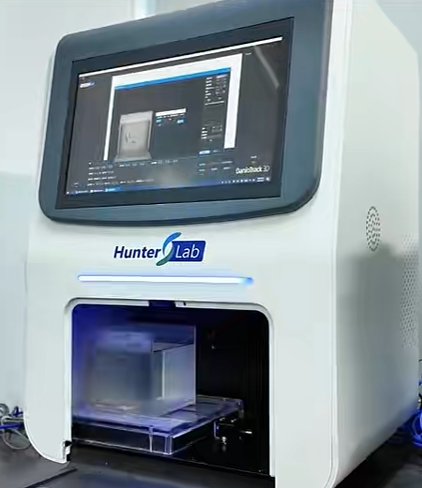
A zebrafish heart rate monitor that writes a tidy CSV feels like progress until that file must merge with a plate map, an imaging timestamp, and an animal ID. That is where many zebrafish heart rate monitor integration projects stall. The instrument works. The analysis works. The handoff does not. Data integration is not a file format issue. It is a context issue. The harder question is whether the numbers arrive with enough context to be trusted downstream without manual stitching.
Three layers often get conflated during procurement.
| Layer | What moves | Typical failure | Downstream need |
|---|---|---|---|
| File handoff | CSV or PDF | Headers drift; no timezone | Stable fields, timezone tags |
| Protocol link | SiLA 2 or OPC UA LADS | Private API is a file drop | Features and error states |
| Context link | Plate ID, well, animal ID | No key to plate map | Shared identifier |
A system can look integrated at layer one and fail at layer three. File exports are useful but they are not interoperability. Treating them as equal creates hidden labor in high-content screening. Data integration must cover the handoff, not just the export.
Where Heart Rate Data Gets Stuck
In high-content screening, heart rate is one parameter among many. An imaging plate may generate beats per minute, inter-beat intervals, and morphology data tied to wells carrying compound and stage. When the zebrafish heart rate monitor sits outside the plate reader schedule, the experiment creates parallel streams that need reconciliation.
Timestamp alignment is a common friction point. A monitor recording wall-clock time and an imager logging run-relative frames create an offset that grows with every pause. The offset is manageable when documented. It becomes corrosive when invisible because downstream models treat joined rows as one reference.
Identifier drift is quieter. The same plate can carry a descriptive name in acquisition software, a shortened form in the heart rate export, and a date-prefixed variant in the LIMS. Together they force a matching step that consumes time and adds transcription risk. SiLA 2 or OPC UA LADS systems reduce this by exposing identifiers through a defined interface instead of column header strings. Data integration should treat provenance as part of the result. A heart rate value without a plate ID and timestamp is data but not evidence.
Match Integration to Screening Scale
A small academic group running a few plates per month may be fine with a documented export and a timezone field. Manual metadata attachment works at low volume, but continuity becomes a risk when that analyst leaves. A screening facility pushing dozens of plates per day cannot absorb manual reconciliation. That site benefits from a zebrafish heart rate monitor with a programmatic interface such as a REST endpoint, a SiLA 2 feature set, or a message queue with a stable identifier. A middle path is batch export plus automated ingestion that validates schema and rejects malformed records. This keeps file handoff simple while catching drift before it reaches the LIMS. It is not real-time but often fits end-of-day review. No data integration path fixes a study that never defined identifiers upfront. A zebrafish heart rate monitor cannot infer that a well maps to an embryo unless that relationship exists in a queryable system.
A Field Note from a Screening Bench
In one academic screening core, a zebrafish heart rate workflow exported per-well BPM values into dated folders. The downstream team built a pipeline around those files and it worked while one technician named folders consistently.
Trouble began when the core added a second imager with a different plate layout. The new software encoded well position as one string rather than separate row and column fields. The zebrafish heart rate monitor kept emitting a two-column format. The pipeline accepted both formats silently and produced a merged dataset with some wells misaligned. No component was broken. The monitor and imager measured accurately. The failure lived between systems where a shared identifier had never been defined.
The fix was middleware that normalized well identifiers and rejected unmappable records. A schema document both vendors could read made the next rig easier to onboard. Data integration pays off when the shared identifier is enforced.
Pre-Purchase Integration Checklist
Ask for export schema, timezone tags, source clock, and a protocol-level interface. Test identifier round-tripping with awkward plate maps. Output should be designed for systems, not for a human opening Excel.
Where Hunter Lab Fits
Hunter Lab treats the zebrafish heart rate monitor as one node in a longer data chain. Hardware and firmware use stable output contracts: consistent field naming, timezone-tagged timestamps, and formats that survive handoff into LIMS, ELN, and analysis pipelines. That focus comes from manufacturing and quality-control experience where small format drift becomes expensive at scale.
The company does not prescribe one data integration architecture. File-based review and a SiLA 2 orchestration layer have different constraints and both are valid. The contribution is making zebrafish heart rate monitor data legible, documenting interfaces honestly, and treating interoperability as a product requirement. Labs can bring their own plate map and schema to evaluate fit.








