
 EN
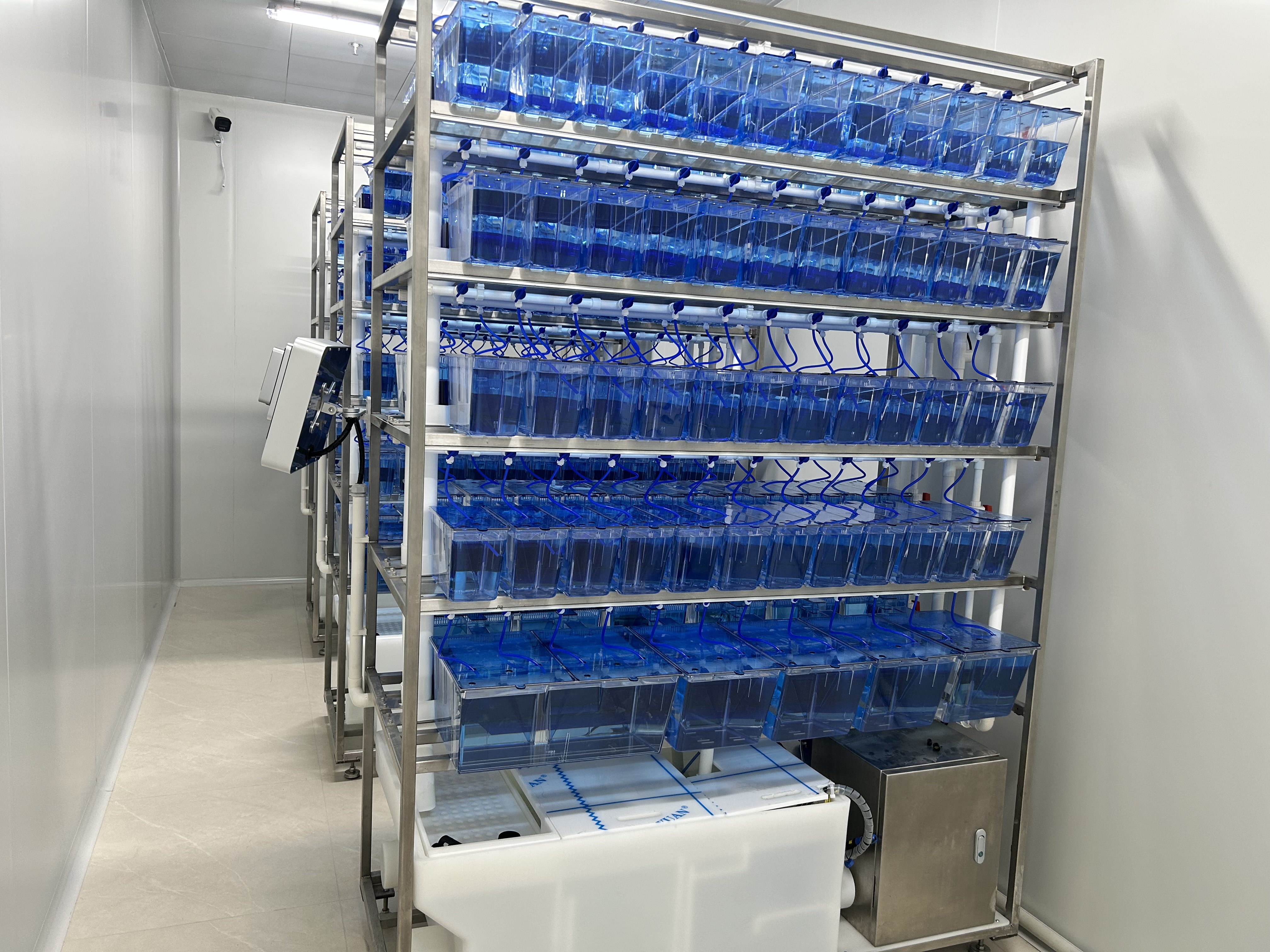
Why Should Large Zebrafish Facilities Adopt an Automated Feeding System?
At a small scale, feeding can feel like a routine husbandry task. At a large scale, it becomes a repeatability problem. When a facility supports many tanks, multiple diets, rotating staff, and time-sensitive studies, each manual feeding decision introduces variation: who fed, when they fed, how much reached the tank, and whether the exception was recorded. A Zebrafish Automated Feeding System gives a facility a more controlled way to manage that daily work without treating automation as a substitute for good husbandry.
For core facilities, academic colonies, and screening operations, the strongest case is not simply speed. It is the ability to define a feeding plan, execute it consistently, document deviations, and give trained staff more time for colony health and research support. That distinction matters because higher zebrafish density does not scale linearly: the workload and the consequences of an inconsistent routine can rise faster than the tank count.
Manual feeding becomes a systems problem in large facilities
Manual routines can work very well when teams are experienced and the colony is modest. The pressure point arrives when a facility has enough tanks that feeding requires substantial coordination every day. Shift handovers, holidays, staff absences, different diet types, and treatment-specific schedules all make it harder to deliver the same plan in the same way.
That is why labor reduction should be understood carefully. A Zebrafish Automated Feeding System does not eliminate the need for husbandry staff. Instead, it can reduce repetitive route work so staff can focus on tasks that require judgment: checking fish condition, investigating mortality, cleaning equipment, reviewing water-quality alerts, and responding to experimental exceptions. In practice, that is often a better use of skilled labor than relying on memory and manual repetition across a long tank list.
Consistency is the operational benefit that compounds over time
A feeding plan is only useful if it is delivered reliably. Published work on automated zebrafish feeding has described systems intended to distribute a standardized amount of food to each tank. That is a useful design principle, not a universal feeding prescription. Each facility still needs to validate its own ration, diet format, fish age, stocking density, water system, and observation routine.
Still, a programmable system can make consistent nutrition more achievable. It can schedule repeated events, apply a defined portioning logic, and make the intended plan visible to the team. If your facility feeds dry and liquid diets or uses different schedules for breeding, juveniles, and experimental cohorts, a Zebrafish Automated Feeding System can help turn those rules into a repeatable workflow rather than a paper instruction that varies by operator.
There is an important qualification: consistency means consistent delivery against a validated plan, not blindly identical feeding under every condition. A tank with a health issue, a newly transferred cohort, or a special study may need an exception. Good automation makes those exceptions deliberate and traceable.
Where large facilities see the clearest return
The return is usually strongest where feeding is frequent, tank counts are high, and the cost of variation is visible. Consider three common situations.
- Shared research facilities: A centrally managed schedule supports predictable service across many user groups and reduces dependence on any one operator's routine.
- Screening programs: Defined feeding events can help teams separate husbandry timing from assay scheduling, which makes daily operations easier to coordinate.
- Growing colonies: As tank numbers expand, a systemized process can prevent feeding routes from consuming an increasing share of staff time.
We often frame the choice as speed versus care. That is the wrong comparison. The more practical comparison is repetitive manual coverage versus time spent on observation, maintenance, and corrective action. For large facilities, reclaiming that attention can be as valuable as shortening the feeding route.
What to evaluate before purchasing a Zebrafish Automated Feeding System
Automation introduces its own errors, so a purchase decision should begin with workflow fit rather than a feature checklist. Ask vendors and internal stakeholders to map the actual facility process.
- Diet compatibility: Can the system handle the dry or liquid diets your colony uses without bridging, settling, clumping, or unacceptable carryover?
- Tank-level control: Can schedules and portions be adjusted by rack, tank group, life stage, or research protocol?
- Verification and records: Does the workflow provide meaningful logs, alarms, or a practical way to confirm that an intended feed occurred?
- Cleaning and maintenance: Who cleans delivery paths, how often, and what is the documented response when a line or dispenser needs attention?
- Failure handling: What happens during a power interruption, communication fault, empty feed reservoir, or blocked delivery point?
- Training: Can the daily team operate, inspect, and troubleshoot the system without turning a routine task into a specialist bottleneck?
Have you defined what “successful feeding” looks like at your facility? Before commissioning, set a baseline for time spent on feeding, missed or late events, diet use, staff observations, and any relevant colony indicators. That makes the evaluation concrete instead of relying on a general impression that the system feels more efficient.
How to implement automation without disrupting husbandry
A phased rollout is usually safer than a facility-wide switch. Start with a representative rack or a stable cohort, run the planned schedule alongside direct visual checks, and compare delivered portions with the target. Review the data with husbandry staff after the first weeks. The goal is not to prove that the machine can run; it is to prove that the combined equipment-and-team workflow maintains the colony standard you expect.
Build a simple validation routine around every deployment: confirm the diet preparation process, inspect dispensers, check a sample of feed events, document exceptions, and set clear ownership for cleaning and fault response. If a facility cannot maintain these controls, automating the route may merely move variability from the person to the device.
The practical bottom line
A Zebrafish Automated Feeding System is most compelling when it supports a mature husbandry process rather than trying to repair an undefined one. For large facilities, its value comes from repeatable scheduling, more dependable delivery against a locally validated feeding plan, clearer records, and meaningful labor reduction in repetitive work.
Hunter Lab focuses on zebrafish instruments and applications, so facilities evaluating automation can benefit from a discussion grounded in their actual colony workflow, not just a generic specification sheet. The right decision starts with tank count and labor, but it ends with whether the system can protect consistent nutrition while leaving your team more capacity to care for the colony.








