
 EN
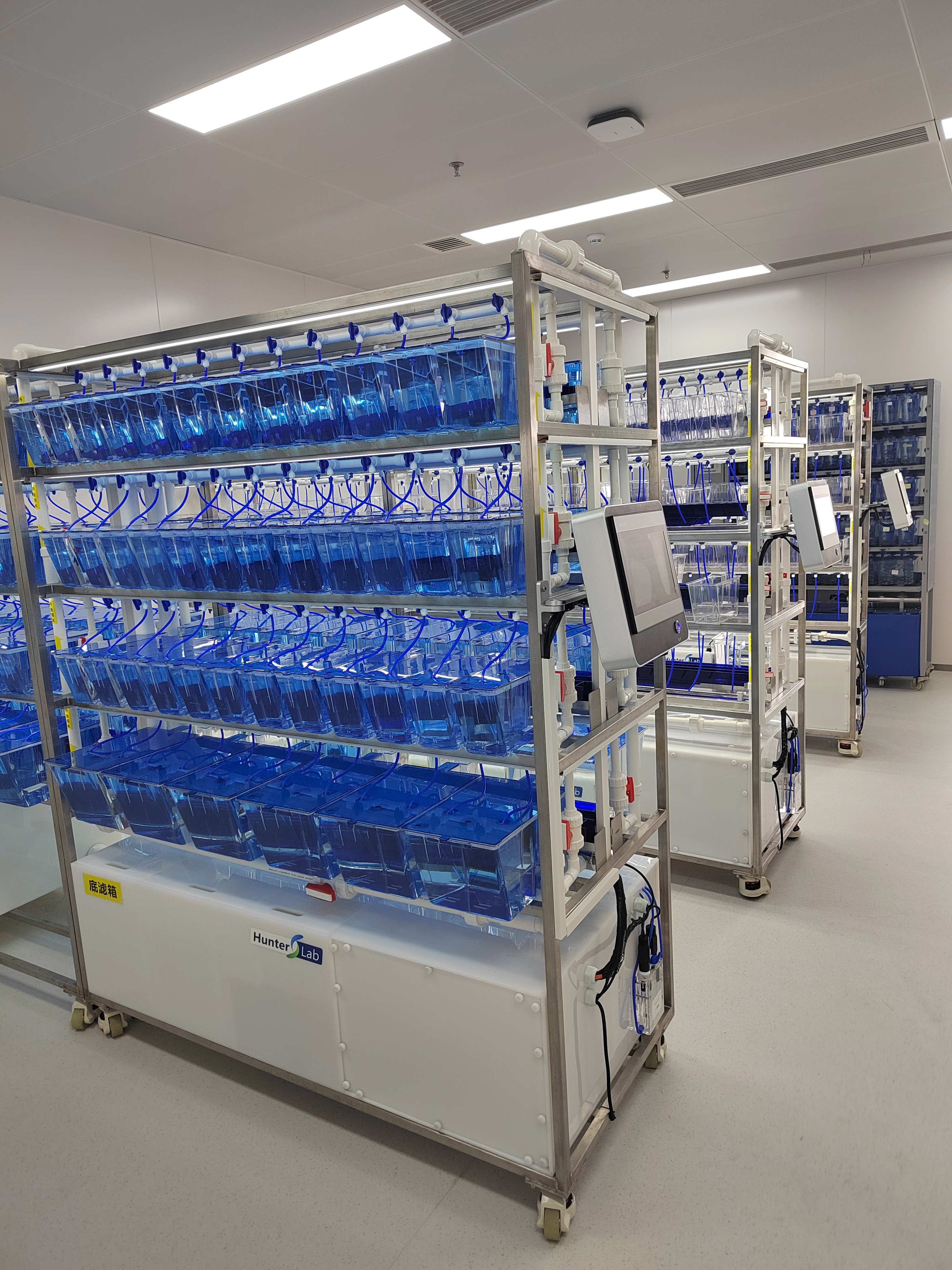
Why recirculating zebrafish breeding systems outperform static tanks for long-term research
A Zebrafish Breeding System is more than a set of tanks used to collect embryos. For a facility that maintains adult colonies through multiple projects, it is the operating environment that shapes water consistency, daily labor, traceability, and the reliability of breeding output. Static tanks remain useful for a short cross or a tightly controlled one-off setup. Over the long term, however, a well-managed Zebrafish Breeding System built around recirculating water usually gives a research team more control over the conditions surrounding every cohort.
The distinction matters because breeding is not isolated from husbandry. Adults are conditioned in one environment, moved or paired for spawning, and returned to a routine that must remain stable week after week. The question is therefore not whether static tanks can produce embryos. They can. The more useful question is whether a facility can maintain the same practical standards as colony size, experimental cadence, and staffing demands grow.
Static tanks solve a narrow problem; a Zebrafish Breeding System supports the whole colony
Static tanks are straightforward: fill a vessel with prepared water, add fish, conduct the cross, collect embryos, and replace or discard the water. That simplicity can be appropriate for small pilot colonies, quarantine-like separations, short overnight pairings, or a protocol that deliberately keeps fish off the main system. A static setup also makes it easy to isolate a single event when a team needs to observe a particular mating group.
Its limitation appears when the same approach becomes the routine. Every tank becomes a separate water-preparation, labeling, cleaning, and monitoring task. Small variations in source water, conditioning time, temperature exposure, or change-out timing can accumulate. Those differences do not automatically invalidate a study, but they create avoidable variables that are difficult to reconstruct later. A recirculating Zebrafish Breeding System moves much of that work from individual vessels to a controlled system process.
Why recirculating water improves environmental consistency
In a recirculating design, water is continuously treated and returned through a defined loop. Mechanical filtration removes suspended material, while biological filtration supports the conversion of nitrogenous waste. Facilities may also manage source-water preparation, conductivity, pH, temperature, and disinfection within that loop. The exact configuration should match institutional welfare procedures and local oversight requirements, but the principle is consistent: conditions are managed as a shared, observable process rather than recreated tank by tank.
This is especially helpful in long-term programs. Fish condition, feeding response, and reproductive performance can be influenced by their environment before a cross is scheduled. When routine housing water is more stable, a team has a clearer baseline for interpreting an unexpected spawning result. A Zebrafish Breeding System does not eliminate biological variation, yet it reduces the number of husbandry variables that have to be considered alongside it.
Temperature illustrates the point. Around 28.5°C is commonly used as a zebrafish developmental reference condition, but a breeding room does not need a single number on paper; it needs consistent control and verified records in practice. Recirculating infrastructure can centralize that monitoring. With static tanks, each container is more exposed to room-level changes and relies more heavily on the timing and consistency of manual checks.
Better monitoring turns routine care into usable research context
The strongest case for a recirculating Zebrafish Breeding System is often data visibility, not automation for its own sake. Centralized sensors, service logs, alarm responses, and water-quality checks give staff a common operating record. If a breeding rate changes across a colony, the team can review a defined system history before assuming a genetic, dietary, or protocol cause.
That record is harder to create across many static tanks. A disciplined team can certainly document each water change and each measurement. The practical issue is scale: repeated manual records become difficult to standardize when multiple people support a growing fish room. Recirculating operations can make the expected check points more repeatable, which is valuable when experiments span months or when cohorts must be compared across separate breeding windows.
Labor scales differently in a recirculating Zebrafish Breeding System
Static work concentrates labor at the tank. Someone prepares water, moves fish, cleans equipment, confirms labels, and manages disposal for every event. Those tasks are manageable for a few pairings. They become a bottleneck when a facility runs routine group crosses, maintains line inventories, or needs predictable morning collections.
Recirculation does not remove skilled husbandry. Staff still need to inspect fish, verify flow, clean tanks, test system water, and respond to alarms. The advantage is that routine water conditioning and treatment are handled at the system level. A Zebrafish Breeding System can therefore free staff to focus on welfare observations, cross design, embryo handling, and documentation rather than repeat the same preparation at every tank. For long-term operations, this shift may improve consistency even when it does not reduce every task.
Breeding quality depends on flow design, not recirculation alone
Recirculating is not a substitute for thoughtful breeding-tank design. Adults need an appropriate spawning arrangement, reliable separation from eggs where required, and conditions that allow staff to collect embryos without creating unnecessary disturbance. Flow must be suitable for the housing and breeding stage; excessive or poorly directed flow can work against the purpose of a calm, controlled cross. A well-designed Zebrafish Breeding System combines central water management with tank-level choices that fit the protocol.
Likewise, fish should not be treated as identical production units. Age, sex ratio, line history, feeding, density, and prior spawning schedule all affect outcomes. A recirculating baseline makes those biological factors easier to evaluate because the background environment is less fragmented. It does not guarantee fertility or make a weak cross successful.
When static tanks are still the right choice
There are legitimate reasons to keep static tanks in a breeding workflow. An off-system cross can be useful for a short timed pairing, an isolation need, a troubleshooting exercise, or a small project that does not justify dedicated system capacity. Static handling may also support a deliberate protocol comparison when water preparation is controlled and recorded.
The practical approach is not to frame recirculating and static methods as rivals in every situation. Use static tanks when isolation and simplicity are the primary needs. Use a recirculating Zebrafish Breeding System when the facility needs repeatable baseline conditions, scalable monitoring, and a durable operating framework for long-term research.
A decision checklist for long-term research planning
- Can the facility document water conditions consistently across all active breeding groups?
- Will colony size or cross frequency make repeated manual water preparation difficult to sustain?
- Does the protocol require off-system isolation, or would centralized monitoring add more value?
- Are breeding-tank flow, egg collection, and cleaning workflows designed for the specific study schedule?
- Can staff review system history when breeding output changes unexpectedly?
If most answers point toward shared control and repeatable documentation, recirculation is usually the stronger foundation. A well-planned Zebrafish Breeding System gives long-running studies a stable operating backdrop while preserving the option to use static tanks for the exceptions that genuinely need them.








