
 EN
Water supply is the first system that constrains everything else
In zebrafish facility construction, water supply design is not a plumbing detail that gets sorted out after the racks are chosen. It is the foundation that determines how many tanks the system can support, how stable the water chemistry will be, and how much labor the facility will need for years. A room can have excellent racks, reliable filters, and a well-trained team, but if the water supply is undersized or poorly routed, every downstream system will struggle.
The reason is simple. Zebrafish facilities are recirculating systems with continuous demand. Water is not just a medium for the fish. It is the carrier for waste, oxygen, heat, and treatment chemicals. Supply design controls how consistently that carrier reaches every tank. When supply is inconsistent, water quality becomes inconsistent, and experiments inherit that noise.
Source water quality and pretreatment decide the baseline
The starting point is the source water. Municipal supply, well water, and treated water all behave differently. Municipal water often contains chlorine or chloramine, which must be removed before it reaches the fish. Well water may carry high hardness, iron, or dissolved organics. Seasonal shifts in source water can change pH and conductivity in ways that a facility cannot control at the tap.
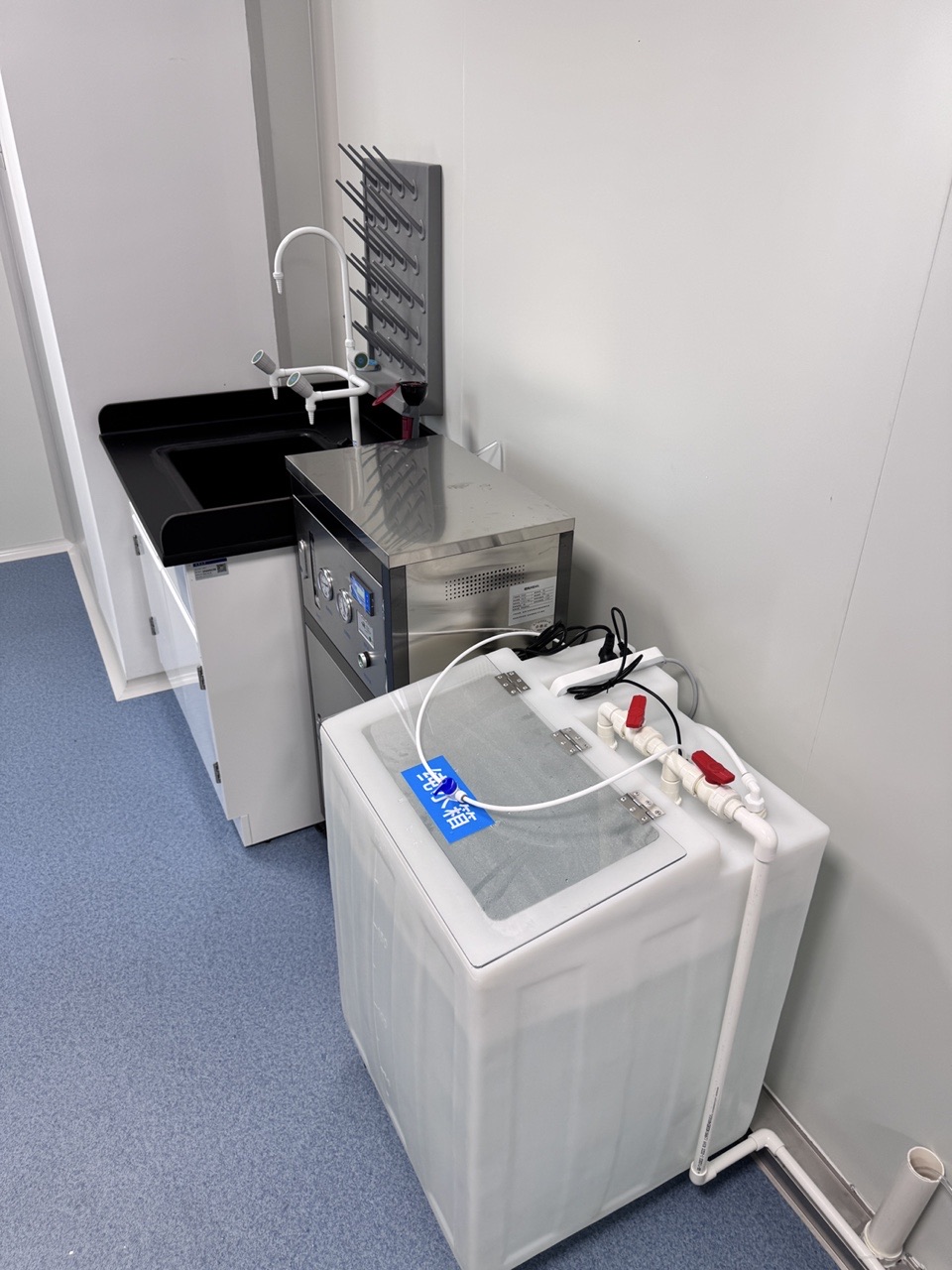
Pretreatment is where the baseline is set. Carbon filtration removes chlorine and many organics. Reverse osmosis or deionization reduces dissolved solids. UV treatment adds a microbial barrier. Storage tanks buffer demand and allow the facility to blend or adjust water before it enters the recirculating loop.
A common mistake is to size pretreatment for average demand. Zebrafish facilities have peak demand during water changes, cleaning, and system fills. If pretreatment cannot keep up, storage tanks run dry, and staff start improvising. That is when water quality problems begin.
Pressure, flow, and redundancy keep the racks alive
Pressure and flow are the two variables that determine whether a supply design works in daily operation. Pressure drives water through filters and valves. Flow determines how quickly tanks can be filled and how evenly the recirculating loop exchanges water. Both have to be designed for peak conditions, not for a quiet afternoon.
Redundancy matters just as much. A single pump or a single supply line is a single point of failure. If that line goes down, the entire facility can lose water. A well-designed system uses parallel pumps, isolation valves, and looped piping so that one failure does not stop the whole facility.
| Design factor | Weak approach | Robust approach |
|---|---|---|
| Supply line size | Sized for average flow | Sized for peak demand |
| Pump configuration | Single pump | Parallel pumps with isolation |
| Storage capacity | Minimal buffer | Buffered for peak and outage |
| Pretreatment | Sized to average use | Sized to peak use plus margin |
| Monitoring | Manual checks | Continuous pressure and flow sensors |
The table is a general guide. The actual numbers depend on facility size, tank count, and local water conditions.
Piping materials and layout shape long-term water quality
Piping is not inert. The materials in contact with water can leach compounds, support biofilm, or create dead zones where water stagnates. Materials such as PVC, CPVC, stainless steel, and certain elastomers are common in zebrafish systems. Each has tradeoffs in cost, durability, and chemical compatibility.
Layout matters as much as material. Long dead legs, low spots, and sharp bends create places where water sits and biofilm grows. A looped layout with smooth transitions and drain points keeps water moving. Isolation valves allow sections to be serviced without shutting down the whole facility. Access panels make it possible to inspect and replace piping without demolishing the room.
Drainage, return lines, and biosecurity must be designed together
Supply design cannot be separated from drainage and return lines. Water that comes in has to go out. If drainage is undersized, water changes become slow and messy. If return lines are not designed for biosecurity, a problem in one rack can spread to others.
Air gaps and backflow preventers protect the supply from contamination. Separate drainage for quarantine areas reduces cross contamination. Return lines should be accessible for cleaning and inspection. A facility that treats supply, drainage, and biosecurity as one system is more resilient than one that handles them as separate trades.
Monitoring and maintenance access turn design into practice
Even a well-designed supply system needs monitoring. Pressure gauges, flow meters, and water quality sensors turn the design into an observable system. Alarms alert staff when pressure drops or flow stops. Data logs show trends that can reveal a slow clog or a failing pump before it becomes an emergency.
Maintenance access is the final piece. Valves, filters, and pumps need to be reachable without moving racks or draining the entire system. A design that is efficient on paper but impossible to service will be neglected. Neglect is what turns a good design into a failing system.
A field example where undersized supply caused instability
A research institute in southern China built a zebrafish facility with a water supply line that looked adequate on the drawings. The system passed initial testing with a small number of racks. As the colony expanded, the facility added more tanks and more racks. During peak water changes, supply pressure dropped noticeably. Pretreatment could not keep up with demand, and the storage tank ran low.
Water quality became unstable. Conductivity drifted, pH shifted, and fish showed signs of stress. The facility initially blamed the filtration system. A review of the supply design showed that the line and pretreatment were sized for the original rack count, not the expanded facility. The fix involved adding storage capacity, upgrading the supply line, and splitting the loop into zones with independent valves. The filtration system had been fine. The supply design had not kept pace.
Where water supply design has limits
No supply design can overcome a poor water source or a building with inadequate space. A facility in a location with highly variable source water may need more pretreatment and more storage than one with a stable municipal supply. A room with no floor drains may require above-ground drainage solutions that add cost and complexity. Good design works with the building and the water source. It cannot ignore them.
Hunter Lab (Hunter) builds zebrafish laboratory equipment with attention to the system-level details that water supply design affects. The manufacturing and quality control side supports the consistency that long-term colony management requires. For facilities planning construction or expansion, that kind of build discipline is part of the foundation.








