
 EN
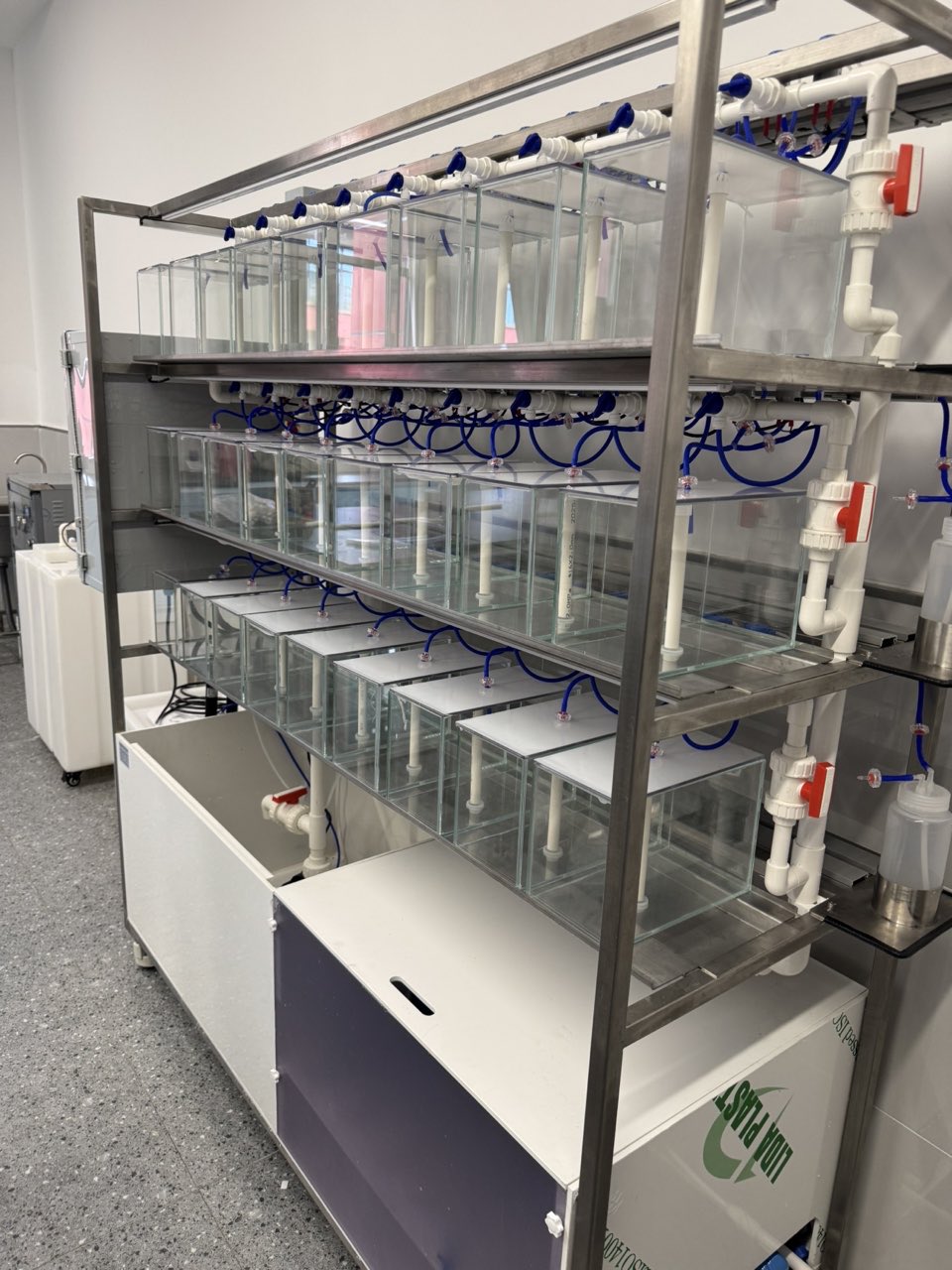
Why is high-throughput larva behavior analysis important for toxicity testing?
In toxicity testing, the most obvious outcome may not be the most useful one. A larva can be alive, look broadly normal, and still show a meaningful change in movement, response to light, or activity pattern. That is why a Zebrafish Larva Behavior Analysis System can be valuable: it gives a laboratory a repeatable way to turn those small functional changes into data that can be reviewed across many wells, doses, and compounds.
For safety teams working with chemicals, pharmaceuticals, cosmetics, or supplements, behavior is not a replacement for established toxicity endpoints. It is a complementary layer of evidence. Used with sound exposure design and appropriate controls, high-throughput behavior analysis can help a team notice signals that survival counts or a single visual observation may not reveal.
Behavior adds a functional view to toxicity testing
Traditional early screens often begin with straightforward observations: mortality, hatching, gross malformation, or developmental delay. Those endpoints matter. They answer whether an exposure produces a clearly adverse outcome. But a compound may alter neural, sensory, muscular, or energy-related function before it creates a conspicuous structural phenotype. Larval locomotor behavior offers a practical window into that functional change.
High-throughput behavioral studies with larval zebrafish commonly use locomotor activity as a response to experimental perturbations. Depending on the protocol, the readout may include distance moved, movement frequency, velocity, active time, rest time, or an activity profile during light and dark transitions. The important point is not to treat any one metric as a universal verdict. A lower distance traveled, for example, can arise from a genuine toxic effect, an altered arousal state, developmental delay, handling stress, or a poorly controlled imaging condition.
A well-designed Zebrafish Larva Behavior Analysis System helps separate those possibilities by making the observation process more consistent. Instead of relying on a person to watch a subset of larvae and make a quick judgment, the laboratory can record pre-defined conditions and compare patterns using the same acquisition and analysis workflow.
Why high-throughput changes the value of the assay
High-throughput does not simply mean running more plates. Its real benefit is the ability to compare many conditions while preserving a disciplined measurement process. Toxicity testing often needs to examine concentration series, replicate wells, vehicle controls, positive controls, and sometimes several test articles. Manual observation becomes difficult to standardize as that matrix grows.
Automation can capture behavioral data at a scale that makes dose-response patterns easier to inspect. It also creates a reviewable record: a team can revisit the video, compare a flagged well against its controls, and check whether an unexpected result reflects biology or an assay artifact. That traceability is useful when a screen informs a follow-up decision rather than serving as a one-off demonstration.
There is a trade-off, though. More wells do not automatically produce better evidence. A fast workflow with variable temperature, uneven illumination, inconsistent acclimation, or poorly timed recordings can generate a large dataset that is difficult to interpret. In practice, the question is not “How many larvae can we measure?” but “How many larvae can we measure under conditions that make comparisons credible?”
Early behavioral signals can support more focused screening
Behavior analysis is particularly useful as a prioritization tool. When multiple compounds or formulations must be assessed, a reproducible change in larval activity can identify conditions worth deeper investigation. It can help researchers decide where to add morphological review, concentration refinement, targeted mechanistic work, or a different model. It should not be presented as proof of human safety or as a stand-alone regulatory conclusion.
Published larval-zebrafish work has evaluated developmental toxicity and behavioral effects across sets of chemicals, illustrating the practical role of behavior in broader screening workflows. The lesson for laboratory planning is modest but important: a behavioral endpoint can add context to an exposure-response profile when it is interpreted alongside—not apart from—other observations.
For formal method selection, laboratories should confirm the requirements that apply to their jurisdiction, product category, and study purpose. OECD Test Guideline 236 concerns acute or lethal toxicity in embryonic fish stages. A larval behavior assay may complement such work in research and screening, but it does not automatically satisfy every test or reporting requirement.
What makes behavioral data trustworthy?
The quality of the conclusion is tied to the quality of the protocol. Before comparing compounds, define the biological stage, strain or line where relevant, plate format, exposure window, solvent limit, acclimation period, lighting program, recording duration, and analysis thresholds. These details are not administrative extras; they shape the behavior being measured.
- Use appropriate controls. Vehicle and positive controls give a reference for normal variation and expected assay responsiveness.
- Keep the environment stable. Temperature, vibration, illumination, and plate position can influence larval movement.
- Plan replicates and plate layout. Spread conditions thoughtfully so a location effect is not mistaken for a treatment effect.
- Review raw observations. Automated tracking is powerful, but a subset of recordings should be checked for tracking errors, debris, reflections, or inactive larvae.
- Interpret biological relevance, not only p-values. A statistically detectable difference deserves context: its magnitude, consistency, dose pattern, and relation to other endpoints all matter.
This is where manual and automated analysis work well as partners. Automation makes the screen scalable and consistent; informed review catches situations in which a metric no longer represents what the larva actually did.
How a Zebrafish Larva Behavior Analysis System supports safer decisions
A Zebrafish Larva Behavior Analysis System supports a structured sequence: expose larvae under defined conditions, allow a controlled acclimation period, capture behavior using a consistent stimulus program, extract pre-specified metrics, and compare those metrics with controls and complementary endpoints. The system is most useful when its output leads to a clear next step, such as repeating a borderline result, narrowing a concentration range, or moving a priority sample to confirmatory testing.
For global laboratory teams, standardizing that sequence can also make handoffs easier. A written acquisition plan, consistent naming, retained recordings, and transparent analysis settings give colleagues a way to understand how a result was obtained. That is especially helpful when safety screening involves multiple projects or sites.
A practical way to adopt high-throughput behavior analysis
- Start with a small pilot that includes stable negative and positive controls.
- Choose a limited set of behavior metrics that answer the screening question.
- Define acceptance criteria before reviewing treatment results.
- Check raw recordings and tracking performance at each run.
- Use behavior findings to prioritize follow-up, not to overstate certainty.
High-throughput larva behavior analysis matters because it adds functional sensitivity to toxicity testing while making that sensitivity usable across a realistic screening workload. When the assay is controlled, documented, and interpreted with complementary evidence, a Zebrafish Larva Behavior Analysis System can help researchers identify meaningful signals earlier and make their next safety decision with better context.








