
 EN
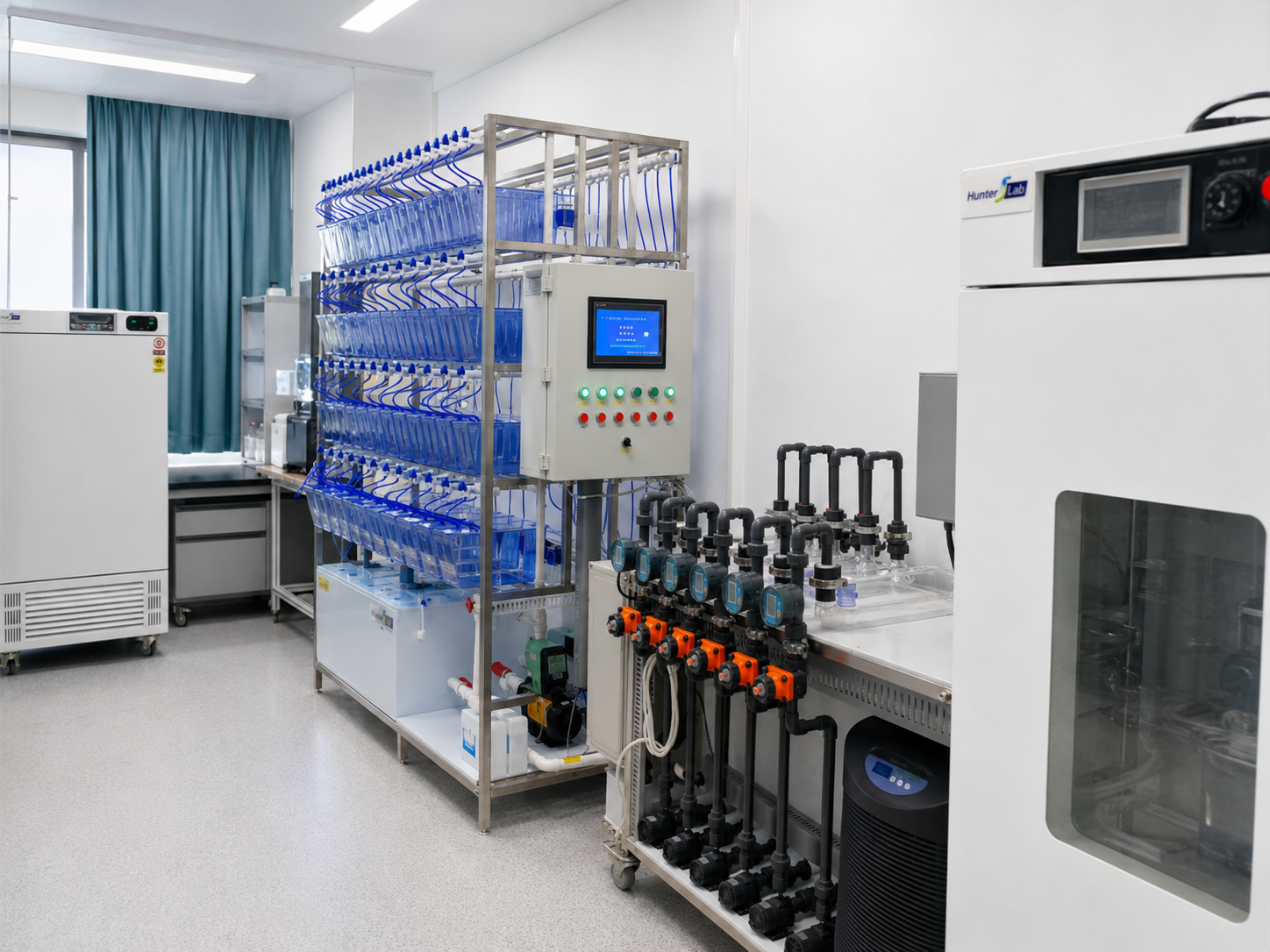
Why is a zebrafish toxicological exposure system essential for safety assessment?
A Zebrafish Toxicological Exposure System is essential because a safety decision is only as credible as the exposure conditions behind it. In early research, investigators often need to know more than whether a chemical produces an obvious effect. They need a controlled way to connect concentration, timing, developmental stage, and observable biological response. A well-designed system makes that connection visible and traceable, giving teams a stronger basis for safety assessment before they commit to more resource-intensive studies.
Zebrafish are particularly useful in toxicology because embryos and larvae support whole-organism observation while remaining compatible with organized, parallel testing. That does not make one assay a universal answer to chemical risk. It does make a reproducible exposure workflow valuable for identifying signals, comparing test articles, and deciding which findings deserve follow-up.
Exposure control turns an observation into interpretable evidence
Without a defined exposure plan, a result can be difficult to interpret. A difference between treated and control groups might reflect concentration drift, inconsistent dosing, variable water conditions, different embryo ages, or handling differences rather than the chemical itself. A Zebrafish Toxicological Exposure System brings those variables into one documented workflow: test concentration, vehicle, exposure window, vessel setup, renewal strategy, controls, and observation schedule.
That structure matters for safety assessment. It allows a team to ask a specific question: under these stated conditions, did this chemical produce a biologically meaningful response? The answer is more useful when another operator can understand what was done, review deviations, and repeat the comparison. In practice, exposure control is not a background task; it is part of the evidence chain.
For example, OECD Test Guideline 236 describes a fish embryo acute toxicity approach in which newly fertilised zebrafish eggs are exposed to a test chemical for 96 hours. The guideline also defines apical observations such as coagulation, absent somite formation, failed tail-bud detachment, and absent heartbeat. The larger lesson is not that every program must use the same design. It is that predefined timepoints and endpoints make toxicology results more comparable and easier to review.
Why whole-organism responses add value in chemical screening
Cell-based methods can answer focused mechanistic questions, but they may not show how multiple tissues and developmental processes respond together. A Zebrafish Toxicological Exposure System can help researchers observe organism-level patterns after a controlled chemical exposure. Depending on the study purpose, these may include survival, development, morphology, movement, cardiac function, or other selected endpoints.
This is especially relevant when a result is subtle. A compound may not cause immediate lethality, yet it may alter development or behavior at concentrations that warrant closer examination. The appropriate endpoint depends on the hypothesis, so a broad screen should not be mistaken for a finished risk conclusion. Still, a structured model helps teams rank findings and move from a vague concern to a focused follow-up plan.
Good toxicology uses endpoint choice as a decision, not a shopping list. A cardiac question may call for heart rate, rhythm, or contractility measures; a developmental question may call for stage-appropriate morphological observations. Choosing sensitive endpoints is useful, but choosing endpoints that can be consistently defined and reviewed is just as important.
Standardized controls protect the credibility of safety assessment
A reliable Zebrafish Toxicological Exposure System includes more than treated wells. Negative controls establish the expected baseline. Vehicle controls help identify effects attributable to a solvent or carrier. Positive controls demonstrate that the assay can detect a known response under the current conditions. Together, these controls help a lab distinguish a plausible chemical effect from a failed run.
Environmental records matter too. Temperature, dissolved oxygen, light cycle, water quality, embryo source, plate position, and handling timing can influence biological measurements. A laboratory does not need to measure every conceivable variable for every exploratory study, but it should define which variables are critical for the intended safety assessment and capture them consistently.
That discipline also helps when results need to be compared across runs. A common problem in screening is that a borderline signal looks important in one batch and disappears in the next. Before treating that as a biological contradiction, review whether the exposure system, operator workflow, or control performance changed. The risk of overinterpreting a single run is lower when the protocol preserves this audit trail.
Reproducibility supports better decisions, not just better reports
Published interlaboratory work has noted that zebrafish screening can differ in exposure scenarios, endpoints, and data analysis. That variation is precisely why a Zebrafish Toxicological Exposure System is essential. It encourages laboratories to turn tacit habits into documented choices: how embryos are randomized, when solutions are prepared, how wells are read, which exclusions are allowed, and how data are reviewed.
For a laboratory building a repeatable program, a practical workflow may include the following:
- Define the question and the relevant safety assessment endpoint before dosing.
- Set concentration spacing, vehicle limits, exposure duration, and acceptance criteria in advance.
- Use concurrent negative, vehicle, and positive controls where appropriate.
- Record exposure conditions and deviations at the time they occur.
- Review biological findings alongside control performance before assigning chemical risk priority.
This workflow does not eliminate uncertainty. It makes uncertainty easier to identify and manage. That is a meaningful improvement when an early toxicology result may influence formulation choices, candidate prioritization, or the next tier of testing.
How the system helps teams manage risk earlier
A Zebrafish Toxicological Exposure System can support earlier, more disciplined risk management in pharmaceutical, cosmetic, environmental, and chemical-development workflows. It can help teams compare compounds under matched conditions, identify dose-response patterns, and flag endpoints that merit mechanistic or confirmatory work. For busy programs, that consistency can prevent resources from being spent on weak or irreproducible signals.
It is also useful for communication. A decision maker may not need every image or raw measurement, but they need to know whether the study had controlled exposure, appropriate controls, defined observations, and transparent limitations. Those details make a safety assessment easier to defend internally and easier to hand off to another team.
For systems involving cardiovascular observation, consistent imaging and analysis can be important because small changes in timing, anesthesia, or operator scoring may affect the readout. An exposure workflow should therefore be designed with the downstream measurement in mind, rather than treating imaging as an isolated final step.
What a zebrafish system cannot establish on its own
A Zebrafish Toxicological Exposure System is a screening and evidence-generation tool, not a blanket declaration that a chemical is safe or unsafe for every use. Translation depends on the compound, exposure route, species differences, endpoint, study quality, and applicable regulatory expectations. Chronic exposure, metabolism, formulation behavior, and human relevance may require additional methods.
The strongest use of the system is therefore proportionate: use a controlled zebrafish study to produce reliable early evidence, then integrate it with chemistry, in vitro data, exposure context, and follow-up testing. When a laboratory is clear about that role, toxicology data become more actionable without being overstated.
Conclusion
The value of a Zebrafish Toxicological Exposure System lies in its ability to make chemical testing organized, observable, and repeatable. By controlling exposure, defining endpoints, verifying controls, and documenting limitations, it strengthens safety assessment and helps teams prioritize the next question with greater confidence. The goal is not to replace scientific judgment. It is to give that judgment better evidence.








