
 EN
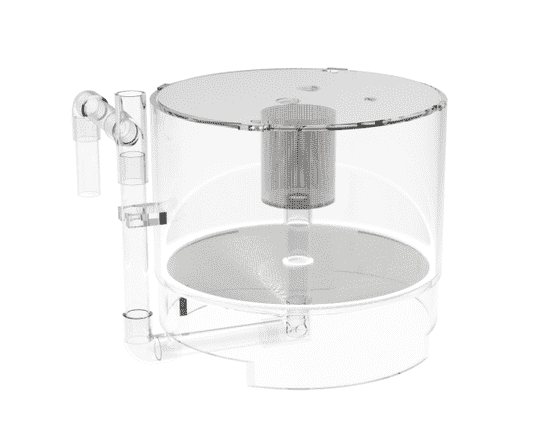
Why is a zebrafish automated feeding system critical for high-throughput screening?
In a busy aquatic facility, feeding can look like a routine husbandry task until a screen begins to drift. A Zebrafish Automated Feeding System turns that routine into a controlled experimental input: it helps teams deliver planned rations on a repeatable schedule, document what happened, and spot exceptions before they become unexplained assay variation. For high-throughput screening, that distinction matters because an animal’s nutritional history can influence baseline condition, growth, behavior, and the practical comparability of data collected across plates, days, and cohorts.
From a researcher’s perspective, the aim is not to replace judgment with hardware. It is to make feeding consistency visible and manageable. The strongest Zebrafish Automated Feeding System workflow is therefore one that supports a validated regimen, records delivery events, and gives staff a clear way to intervene when the observed outcome does not match the intended one.
Feeding variability can become assay variability
High-throughput workflows are designed to reduce variation in handling, dosing, imaging, and analysis. Feeding deserves the same attention. When one rack is fed earlier than another, when portions vary between shifts, or when a delivery problem is noticed only after a run, nutritional exposure becomes a hidden variable. A Zebrafish Automated Feeding System helps establish a more consistent timing and delivery pattern, which makes it easier to interpret changes in an endpoint as biological or compound-related rather than operational noise.
This does not mean every study needs an identical feeding protocol. Life stage, feed format, stocking density, water conditions, strain, and study objective all affect what an appropriate regimen looks like. The value of automation is that it can execute the regimen the facility has chosen with more consistency, then create a record against which that regimen can be reviewed. Published discussion of zebrafish feeding standardization similarly frames nutrition and feed management as part of improving experimental reproducibility.
Why automation supports high-throughput screening
For high-throughput screening, throughput is more than the number of wells processed in a day. It is the ability to run repeated, comparable workflows without creating new bottlenecks. A Zebrafish Automated Feeding System contributes in four connected ways.
- Schedule consistency: programmed delivery windows reduce dependence on which staff member is available at a particular time.
- Ration consistency: a validated system can help teams target the same planned delivery across comparable tanks or racks.
- Operational scalability: staff can supervise exceptions, welfare observations, and protocol review rather than repeating every feeding action manually.
- Traceability: delivery logs create useful context when a screening result or baseline needs investigation.
These benefits are especially important when screening operations expand. Manual practices that work for a small room may become difficult to audit as the number of tanks, cohorts, or study schedules grows. A Zebrafish Automated Feeding System gives facility leaders a repeatable operating layer that can scale with the research program, provided capacity, maintenance, and verification procedures scale with it too.
Consistency is useful only when it is verified
Automation should not be treated as a guarantee. Feed properties can change, outlets can clog, and actual consumption can differ from a planned dose. That is why a good Zebrafish Automated Feeding System program combines automation with observation. Staff should verify delivery, inspect equipment, review logs, and define what happens after a missed or questionable feeding event. The operational question is not simply, “Was the schedule sent?” It is, “Was the intended feeding outcome achieved and documented?”
This distinction protects both animal care and data integrity. If a deviation occurs, a record allows the team to decide whether to monitor a cohort, adjust a schedule, annotate a dataset, or postpone a comparison. Without that record, a later anomaly may be hard to diagnose. In high-throughput screening, where many samples move through a shared workflow, early visibility can prevent a localized issue from becoming a broad interpretation problem.
How feeding automation fits the screening workflow
A Zebrafish Automated Feeding System is more useful when it is designed into the facility’s broader control plan. Start by defining the biological groups that must be comparable and the feeding variables that need to be fixed or documented. Next, validate schedules and portions under real facility conditions rather than assuming a nominal setting will suit every tank. Finally, link the feeding record to the study calendar so investigators can see whether a deviation overlaps with acclimation, exposure, imaging, or behavioral testing.
- Define a stage- and study-appropriate feeding regimen.
- Test delivery with the actual feed type and the normal facility setup.
- Set acceptance checks for timing, delivery, and equipment condition.
- Document exceptions and assign responsibility for review.
- Reassess the process when expanding screening volume or changing protocols.
That workflow makes scalability more credible. Scaling is not merely adding tanks; it is preserving the controls that allow different runs to remain interpretable. A Zebrafish Automated Feeding System can remove repetitive manual steps, but it should also preserve the feedback loops that tell a team when its controls no longer match reality.
What to evaluate before adopting a system
For a research facility, the right choice depends on the animal population and the screening design. Evaluate whether the Zebrafish Automated Feeding System supports the feed types in use, appropriate scheduling granularity, practical cleaning and maintenance, delivery confirmation, and accessible logs. Also assess how staff will respond to a failure. A system with sophisticated scheduling but unclear exception handling may create false confidence rather than useful consistency.
It is equally important to plan a baseline period. Compare manual and automated operation under your own validated conditions, observe fish condition and feed response, and determine how records will enter the study documentation. This measured approach is stronger than claiming that one feeding method fits every research program.
Conclusion: treat feeding as a controlled input
A Zebrafish Automated Feeding System is critical for high-throughput screening because it can make a recurring husbandry variable more consistent, traceable, and scalable. It supports research teams by reducing avoidable differences in feeding execution while giving them the records needed to investigate deviations. When paired with validated protocols and active oversight, feeding automation helps keep the focus of a screen where it belongs: on reliable biological evidence rather than preventable operational uncertainty.








