
 EN
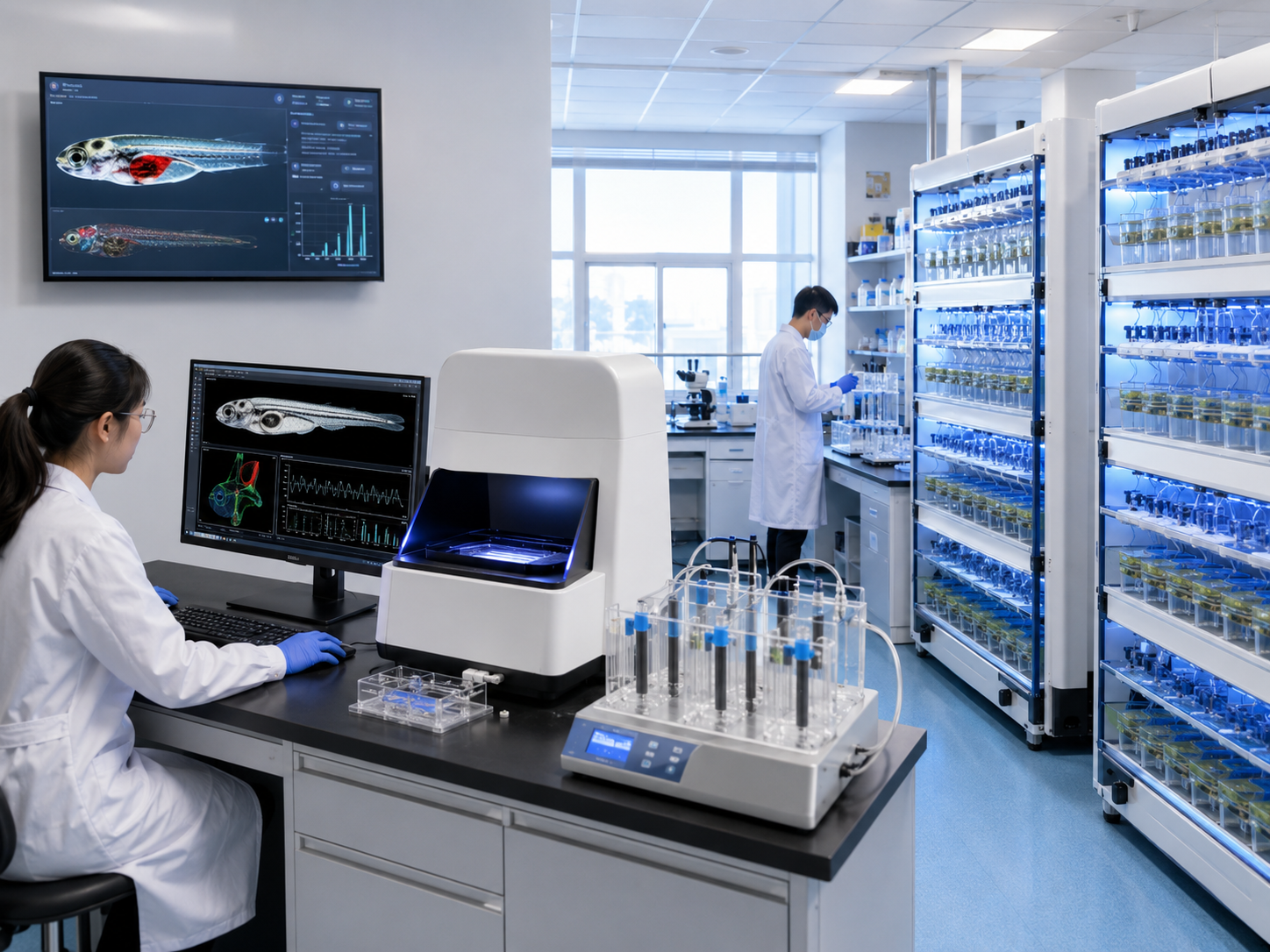
Why do researchers prefer automated zebrafish microinjection systems?
For a laboratory moving from pilot work to repeatable embryo studies, a Zebrafish Microinjection System is not simply a faster way to deliver material. It is a way to control the parts of injection work that otherwise depend heavily on hand position, timing, and operator judgment. Researchers still need to validate the protocol, inspect embryos, and interpret biology. But when a study needs many embryos treated under the same conditions, automation can make the workflow easier to standardize.
That distinction matters. Manual microinjection remains useful for early method development, unusual targets, and low-volume experiments. An automated zebrafish microinjection workflow becomes most compelling when the laboratory has a defined protocol and needs to reduce avoidable variation across a run. The appeal is practical: greater control over repeatable actions, clearer quality checks, and less reliance on one highly practiced operator.
What automation changes in an embryo injection workflow
In a manual setup, the researcher typically aligns each embryo, positions the needle, chooses the injection moment, and advances to the next specimen. Skilled operators can do this exceptionally well. The challenge is that small differences in embryo orientation, needle approach, pressure response, or pace can accumulate when many embryos are processed.
A Zebrafish Microinjection System can organize these repeatable steps around controlled positioning, image-guided targeting, programmed delivery settings, and a defined sequence. The exact configuration varies by laboratory, but the operational goal is consistent: perform the same validated action as similarly as possible from embryo to embryo while retaining records that help the team review the run.
This is especially relevant because zebrafish embryo injections are time-sensitive. A commonly cited embryo gene-function protocol notes that injections are ideally performed at the one-cell stage and uses 500 pL as a common example volume within that protocol. That is not a universal volume prescription; it illustrates why timing and delivered volume must be deliberately controlled for each assay.
Automated vs manual: the real comparison
The useful automated vs manual question is not “Which method is universally better?” It is “Which source of variation is limiting this experiment?” Manual work can be the right choice when the protocol is still changing, embryo geometry is atypical, or an experienced scientist needs immediate tactile and visual judgment. Automation is usually strongest after the team has defined acceptable embryo stage, needle preparation, target location, delivery settings, and post-injection acceptance criteria.
| Workflow need | Manual injection can fit when | Automation can fit when |
|---|---|---|
| Protocol development | The team is testing targets or adjusting a new assay. | Core parameters are established and need controlled execution. |
| Batch size | Only a small number of embryos require attention. | Many embryos need the same sequence within a limited time window. |
| Operator dependence | A trained injector is available for every run. | Multiple runs or operators need a more standardized workflow. |
| Quality review | Observations are documented consistently by the injector. | Positioning, delivery settings, and run-level checks can be defined in advance. |
Automation should not be treated as a substitute for experimental design. If embryos are at mixed stages, needles are poorly calibrated, or controls are weak, a machine will execute an inconsistent process consistently. The value of a Zebrafish Microinjection System appears when it is paired with acceptance criteria that are already meaningful for the biology.
Precision means controllable delivery, not an automatic guarantee
Precision is one of the main reasons researchers evaluate automation. In practical terms, it means the team can define and repeatedly apply positioning and delivery conditions, then check whether the outcomes meet the protocol. This is preferable to assuming that a visual or robotic system is inherently accurate in every assay.
For genetic manipulation studies, injection consistency is closely connected to reproducibility because embryos should receive comparable treatment at a comparable developmental stage. When it is properly validated, an automated workflow can make that comparison clearer by reducing variation in the mechanics of delivery. Researchers should still confirm actual performance with their own calibration samples, controls, survival observations, and downstream assay readouts.
Build a validation loop before relying on the system
- Define the embryo stage and acceptable orientation before a production run.
- Calibrate delivery settings with the material and needle type actually used in the assay.
- Set a visual acceptance rule for missed targets, leakage, or damaged embryos.
- Compare outcome distributions across runs, not just the most successful batch.
- Keep a manual fallback procedure for exceptions and method changes.
Efficiency comes from workflow stability
Efficiency is often reduced to throughput. In the laboratory, it also includes injector training, repeated runs, reconciliation of variable records, and the work of deciding whether delivery introduced an apparent biological difference. When those costs are high, a Zebrafish Microinjection System can improve efficiency by making routine steps more predictable and easier to review.
That does not mean every project needs automation. A small exploratory study may move faster with a skilled manual injector. The case for automation grows when the same protocol is repeated across compound panels, genetic constructs, or screening batches and the injection window constrains the day’s work. In that setting, reduced setup-to-setup variation can be as valuable as the number of embryos completed.
Consistency supports more interpretable experiments
Consistency often becomes most visible after the experiment has ended. If injection conditions vary substantially, the team may struggle to separate a true treatment effect from differences in delivery. Standardized sequences, logged settings, and predefined review points help make the technical part of the workflow more transparent.
Researchers should therefore evaluate an automated system as part of a complete method: embryo handling, needle preparation, delivery calibration, imaging or phenotyping, and data review. Automation can reduce inter-operator variability at the injection step, but it cannot remove biological variability or replace appropriate controls. The strongest workflows state clearly what the system controls and what the experiment still needs to measure.
When is an automated zebrafish microinjection system the right choice?
It is usually a strong option when a lab has a stable injection protocol, recurring batches, a narrow timing window, and a need to make results more comparable across operators or days. It may be less urgent when every experiment requires bespoke manipulation or when the protocol itself is still being redesigned.
Before selecting a Zebrafish Microinjection System, ask whether the team can define its target, volume range, embryo stage, rejection criteria, calibration process, and manual exception path. If those answers are clear, automation can turn a difficult hand skill into a more controlled, reviewable workflow. That is why many researchers prefer it: not because it removes expertise, but because it helps the expertise be applied more consistently.








