
 EN
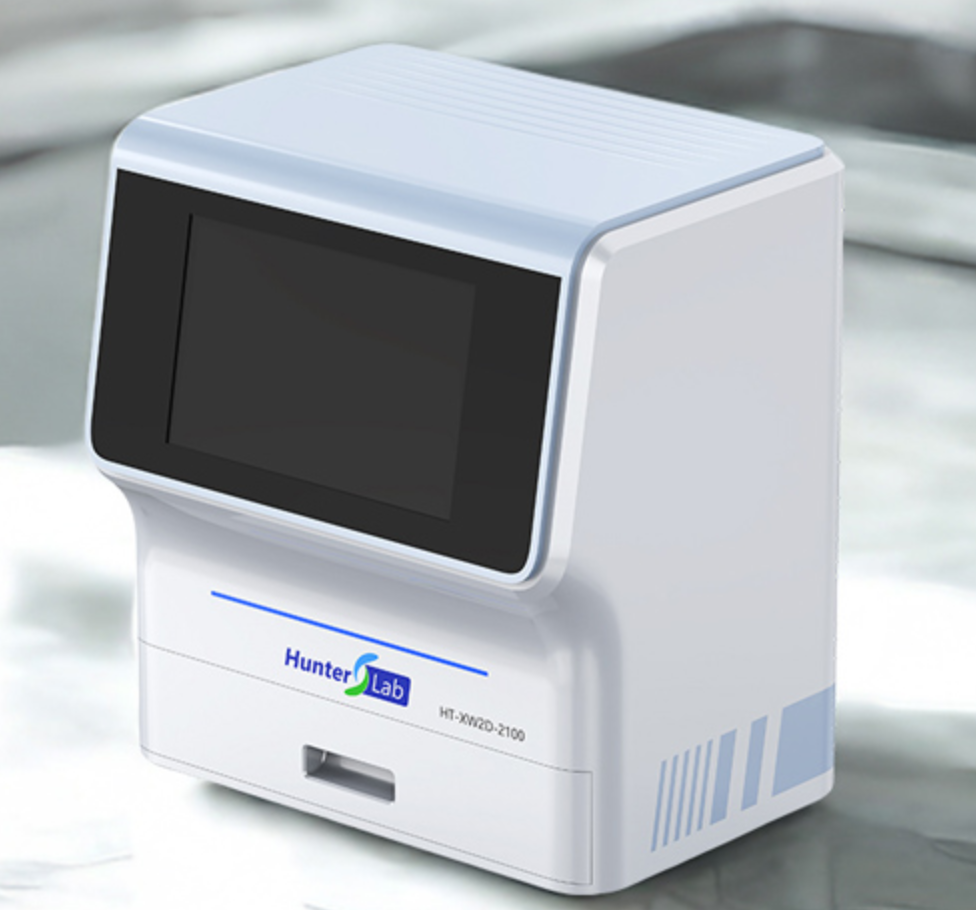
Why ammonia spike detection is essential for zebrafish facility health management
A zebrafish facility can look stable at the bench and still be moving toward a water-quality failure. A blocked flow path, a missed feed-removal task, a biofilter upset, or a change in stocking load can raise ammonia before obvious clinical signs appear. That is why a Zebrafish Water Quality Monitor should be treated as part of facility health management, not merely as a maintenance accessory.
For teams responsible for colony continuity, the critical advantage is time. Early ammonia spike detection gives staff a chance to verify the reading, protect affected systems, and investigate the cause before a water event becomes a welfare, husbandry, or study-quality problem.
Why ammonia is a facility signal, not just a chemistry value
Ammonia enters recirculating systems through normal fish metabolism and decomposing organic material. Biological filtration ordinarily converts it through the nitrogen cycle, but that balance can be disrupted by changes in feeding, biomass, flow, oxygen availability, cleaning routines, or biofilter performance. A single measurement does not explain every event; a trend paired with operational context often does.
What starts as a question about whether one tank has an elevated reading can become a more useful investigation: which shared water loop, process change, or filtration condition is driving the pattern? That reframing matters in a facility because the same underlying cause may affect multiple racks or cohorts.
For practical health management, monitor ammonia alongside temperature, pH, dissolved oxygen where applicable, nitrite, nitrate, and flow-related observations. These values interact. A total-ammonia result is not a complete toxicity assessment on its own because the proportion present as unionized ammonia (NH3) changes with pH and temperature.
Why fast detection changes the response window
When an ammonia alert is identified early, staff can follow a calm, documented response rather than react after fish behavior, mortality, or experimental variation forces attention. A reliable Zebrafish Water Quality Monitor supports that sequence by making readings visible and comparable over time.
- Verify the signal: repeat the measurement using the facility’s approved method and check the sample point, calibration status, and recent readings.
- Assess scope: compare tanks, racks, or loops to determine whether the event is local or system-wide.
- Protect the colony: follow the facility’s written contingency procedure for water exchange, feeding adjustment, stocking review, aeration, or isolation. Actions should be taken by trained personnel and matched to local SOPs.
- Find the root cause: review feeding records, mortalities, filter maintenance, water-flow alarms, cleaning work, and recent changes in biomass or source water.
- Document recovery: keep time-stamped readings and corrective actions so the team can confirm stabilization and prevent recurrence.
This workflow is especially valuable when several people share husbandry responsibility. It turns detection into a repeatable decision process instead of leaving a concerning result to be interpreted from memory.
Interpret ammonia in the conditions that produced it
Published freshwater ammonia references illustrate why facilities should not rely on one universal number. A review summarizing ammonia chemistry notes that at pH 7.0 and 20°C, roughly 0.4% of total ammonia nitrogen is unionized NH3; at pH 8.0 and 25°C, the cited fraction rises to about 5.4%. Those values are not zebrafish-facility action limits. They show the operational principle: a result has to be interpreted with its pH and temperature context.
That is also why an effective Zebrafish Water Quality Monitor should support consistent sampling, clear timestamps, and comparison against the facility’s own validated baseline and response thresholds. Environmental water criteria may be informative, but they are not a substitute for species-, life-stage-, and system-specific SOPs.
Build an ammonia monitoring routine that staff can use
Define normal before defining an alert
Collect enough routine data to understand each system’s usual variability. Record the sampling location, date and time, water temperature, pH, total ammonia reading, and notable events such as filter service or a change in feed. If your facility experiences seasonal room-temperature changes, baseline interpretation may need adjustment rather than a one-size-fits-all comparison.
Set escalation rules around trends and context
A meaningful monitoring plan specifies who reviews readings, how often they are collected, what triggers a repeat test, and when a supervisor or veterinary resource is contacted. It should also state how to respond when a reading rises but fish appear normal. Waiting for visible signs can shrink the corrective window; at the same time, acting on an unverified instrument error can create avoidable disruption. The right approach depends on the facility’s system design and SOPs.
Use records to protect research continuity
Water quality can become an unrecognized confounder in breeding, behavioral work, toxicology, and phenotype studies. A complete monitoring record lets researchers ask whether an unusual outcome coincided with a system event. It does not prove causation, but it prevents a major husbandry variable from disappearing from the investigation.
What to look for in a Zebrafish Water Quality Monitor
Facilities differ in scale and staffing, so there is no single monitor configuration that works for every room. Evaluate the system against your actual response process:
- Can it provide reliable, repeatable ammonia measurements within the cadence your SOP requires?
- Does it retain time-stamped data that staff can review after an event?
- Can alerts be assigned to clear owners and paired with a verification step?
- Will its sampling or sensor-maintenance needs fit routine husbandry schedules?
- Can the team compare ammonia with the pH and temperature context needed for sound interpretation?
If throughput is the binding constraint, frequent automated visibility may be the priority. If reproducibility and incident review matter more, traceable records and a disciplined confirmation workflow may be the better starting point—even if they require more staff attention. The strongest arrangement is the one your facility can maintain consistently.
Make detection part of proactive health management
Ammonia monitoring is most useful when it is embedded in daily operations: stable baselines, trained responders, documented thresholds, and clear follow-up. With that foundation, an ammonia spike is no longer just a number on a test. It becomes an early warning that helps protect zebrafish welfare, preserve water-system stability, and support more defensible research conditions.
A Zebrafish Water Quality Monitor does not replace good husbandry or facility SOPs. It gives those practices a faster feedback loop—one that makes detection and health management more deliberate when timing matters.








