
 EN
Waterborne exposure remains the default route
Immersion is the most common starting point in zebrafish toxicology. A chemical is dissolved or suspended in egg water, and fish take it up across the gills and skin. The appeal is practical. A multiwell plate and a temperature-controlled incubator can carry most early screening work.
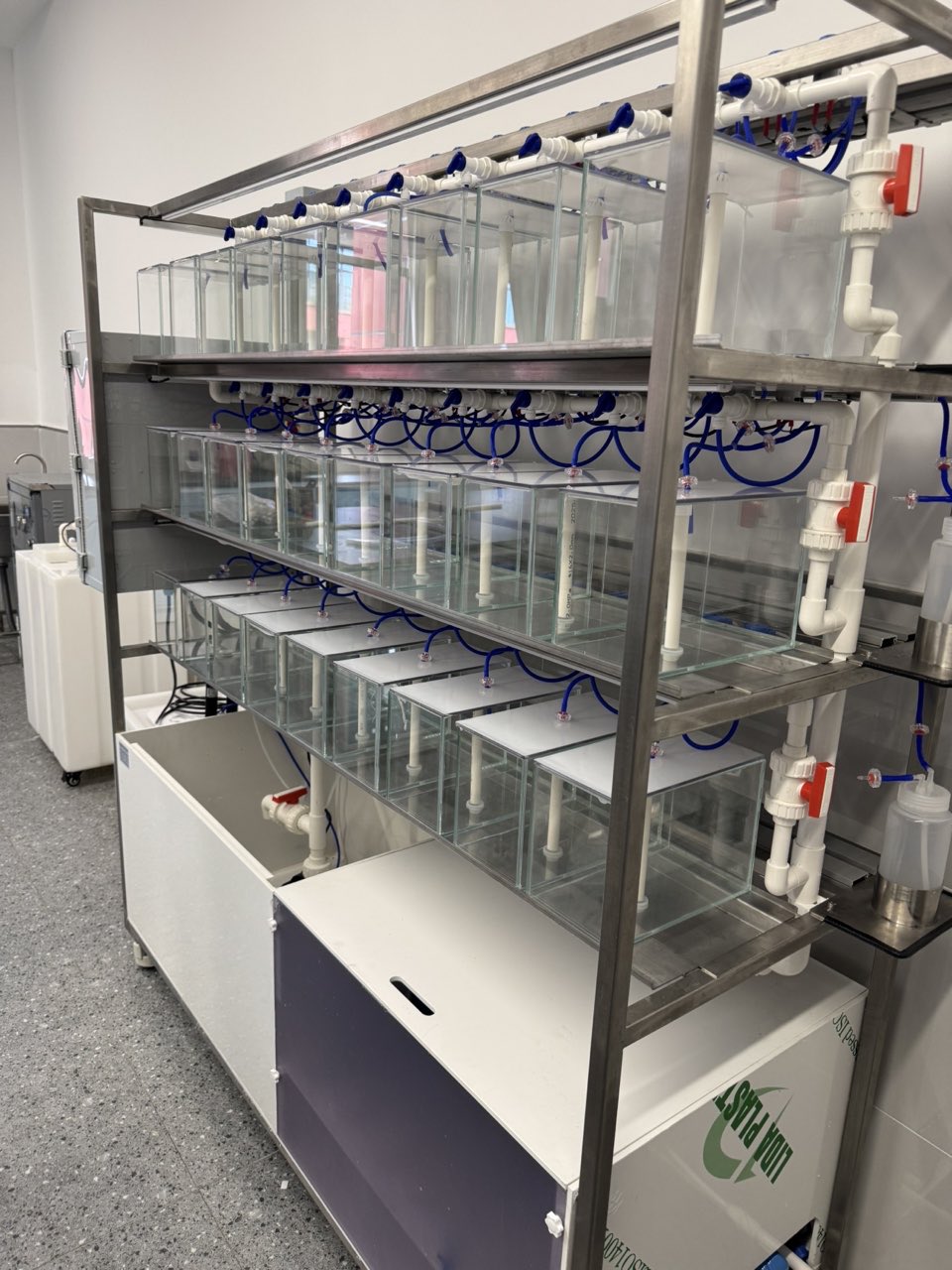
OECD Test Guideline 236, the Fish Embryo Acute Toxicity test, gave this approach a regulatory anchor in 2013. The protocol is widely used for acute aquatic toxicity screening because it is reproducible and simple to run. A zebrafish toxicological exposure system that supports waterborne work needs stable temperature, reliable aeration, and a way to track concentration drift. Volatile or light-sensitive compounds add complexity, since chamber design has to limit losses before uptake can be measured.
Immersion mixes several uptake pathways. Drinking, respiration, and dermal absorption happen at once. For screening, that is fine. For mechanistic work, it can blur the answer.
Microinjection puts the dose exactly where it is needed
Microinjection removes that ambiguity. Intravascular injection, often performed at the embryonic stage through the tail vein or the duct of Cuvier, sends the test substance directly into circulation. The route is the closest zebrafish analogue to intravenous dosing in mammals.
The hardware demands are higher. A typical rig includes a stereomicroscope, a micromanipulator, a pneumatic injector, and glass capillary needles pulled to very fine tips. Injection volumes sit in the nanoliter range. Reproducibility depends on operator skill, so training matters as much as the equipment. Intrayolk injection is often easier for new users. The yolk acts as a slow-release depot as it is consumed, which can help with compounds that clear quickly.
Throughput is the tradeoff. Microinjection cannot match immersion plates for raw sample numbers. It suits targeted questions better than broad screening.
Dietary exposure captures what oral dosing really looks like
Oral uptake deserves more attention than it usually gets. Adult zebrafish can be gavaged with a blunt needle, delivering a known dose into the gastrointestinal tract. Larvae past a certain developmental stage can also be gavaged, though the technique takes practice. For many labs, contaminated feed is the more practical option.
Dietary exposure is common in nanotoxicology and microplastics research. The question is often what happens when particles enter through the gut instead of the gill. Comparative work on polystyrene particles has shown that foodborne exposure can produce intestinal accumulation patterns that differ from waterborne exposure.
Supporting dietary routes requires extra attention to feed preparation and delivery. Automated feeders help with consistency. The harder problem is keeping exposure concentration stable. Uneaten food leaches compound into the water, which can confuse the boundary between dietary and waterborne uptake.
Static, semi-static, and flow-through designs each solve a different problem
The physical design of the exposure system matters as much as the route. Static systems are simple. Test solution goes in, fish go in, and the exposure runs to completion. Static setups are cheap and easy to replicate, but concentration can drift through uptake, volatilization, or degradation.
Semi-static systems renew the solution at set intervals, often daily. That helps maintain nominal concentrations and removes metabolic waste. The extra handling can stress embryos, and interlaboratory studies have noted that static renewal sometimes raises control mortality compared with pure static designs.
Flow-through systems offer the tightest control. They are the preferred choice for bioconcentration studies where steady-state exposure is the whole point. The cost is more plumbing, more water conditioning, and more bench space. The benefit is lower variability and better concentration stability.
| System type | Concentration stability | Setup complexity | Best suited for |
|---|---|---|---|
| Static | Low to moderate | Minimal | Short embryo screening |
| Semi-static | Moderate | Low | Multi-day larval work |
| Flow-through | High | Substantial | Bioconcentration and long studies |
| Microinjection | Dose controlled | High | Targeted delivery and mechanism |
Matching the route to the question is a first-order decision
Exposure route is not a detail added at the end of study design. It determines what the data can say. A nanoparticle delivered through water may accumulate in one tissue pattern, while the same particle injected into circulation may distribute differently.
A project in southern China offered a useful reminder. A team screening industrial effluent used a simple static immersion setup with adult zebrafish. Acute toxicity looked low, which seemed reassuring. When the same samples were tested through a dietary route using contaminated brine shrimp, hepatic stress markers appeared within a week. The waterborne arm had missed the effect because the compounds bound tightly to organic matter and were not readily available through the gills.
That kind of mismatch is not rare. Route selection shapes bioavailability, tissue dose, and the timing of the response. It belongs at the front of experimental planning.
Regulatory trends and hardware realities shape the choice
Regulatory science is moving toward methods that use fewer adult animals. The 3Rs principles, replacement, reduction, and refinement, are embedded in European chemical safety legislation. The OECD has also been developing Integrated Approaches to Testing and Assessment that combine in vitro, in silico, and non-mammalian in vivo data. Zebrafish embryos under five days post-fertilization are not classified as protected animals under most current legislation.
OECD Test Guideline 236 remains the most established regulatory application for zebrafish in ecotoxicology. New approach methodologies are expanding, and the zFET is being evaluated alongside cell assays and computational models. That trend favors exposure systems that can handle several routes without a complete rebuild for every study.
A capable system needs inert materials, cleanable surfaces, and separate handling for water, injection, and feed. Hunter Lab (Hunter) builds zebrafish laboratory equipment with that multi-route flexibility in mind. The manufacturing and quality control side supports the precision that microinjection and flow-through work demand.








