
 EN
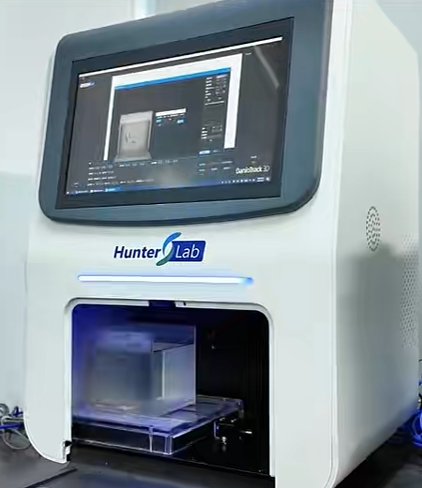
What Software Is Best for a Zebrafish Behavioral Analysis System?
There is no universally suitable software for a Zebrafish Behavioral Analysis System. The right choice is the one that can turn your assay design into traceable, reviewable data without forcing the team to rebuild its workflow after every experiment. For a core facility or a growing screening lab, that usually means evaluating three things together: the software interface, the tracking algorithms, and data export.
In procurement reviews, it is tempting to compare dashboards first. We would start somewhere less glamorous: ask whether the software can reliably identify the fish, plate wells, zones, and stimulus periods that matter in your actual videos. High-throughput larval studies often quantify locomotor activity after an experimental perturbation, but a movement total alone rarely explains whether a result is biological, environmental, or an artifact of tracking.
Start with the behavioral question, not the feature list
A useful Zebrafish Behavioral Analysis System has to match the assay before it matches a marketing checklist. A light/dark locomotor assay, social-preference experiment, startle response, and adult novel-tank assay create very different data problems. Write down the primary endpoint, the unit of analysis, the expected number of animals or wells, and the conditions that define a valid run.
- For larvae in multi-well plates: look for stable well recognition, batch processing, configurable activity thresholds, and straightforward handling of missed detections.
- For individual adult fish: prioritize arena calibration, zone definitions, body orientation when relevant, and manual review of ambiguous tracks.
- For stimulus-driven assays: confirm that the system records event timing and can align behavior with light, sound, vibration, or other programmed changes.
Software is not separate from the acquisition environment. Lighting, camera angle, background contrast, temperature, and the timing of stimulation can all shift a behavioral readout. An integrated workflow can help standardize those inputs, but it does not remove the need to document them.
How to judge tracking algorithms in practice
Tracking algorithms determine whether software converts video into meaningful trajectories. The most useful approach is not necessarily the one with the longest list of metrics. It is the one that remains credible when fish overlap, reflect light, enter a low-contrast region, or briefly stop moving.
Ask what the algorithm actually tracks
Some tools report centroid position and distance moved; others estimate heading, body points, posture, or three-dimensional trajectories. More parameters do not automatically produce better data. If your hypothesis concerns locomotor distance and burst activity, a robust two-dimensional track with visible quality flags may be more useful than a complex pose model that cannot be checked by the operator.
Automated tracking reduces scorer-to-scorer variation, but it introduces edge cases that can be invisible in summary statistics. A practical validation step is to select representative videos: low activity, high activity, glare, crossings, and borderline image quality. Compare the plotted tracks and a small manual annotation set with the exported metrics. If the disagreement changes with treatment group, the configuration is not ready for interpretation.
Require controls, exclusions, and auditability
A reliable Zebrafish Behavioral Analysis System should let the user retain calibration settings, exclusion reasons, assay templates, and processing versions. Ask whether a reviewer can open a run later and see the original video, region definitions, stimulus timeline, and algorithm settings. That audit trail is often more valuable than an additional chart type.
Data export is a buying criterion, not an afterthought
Data export determines whether the experiment can be reproduced and analyzed beyond the vendor interface. At minimum, request a sample export before purchase and inspect it with the people who will perform statistics and reporting. A good export should be readable without proprietary software and should preserve identifiers rather than flattening every run into a single summary table.
| Export item | Why it matters | What to verify |
|---|---|---|
| Per-animal or per-well results | Supports biological replicates and outlier review | Unique ID, plate/well or arena, group, and time window are retained |
| Time-resolved tracks or bins | Allows checks beyond endpoint totals | Timestamp, position or activity bin, units, and sampling interval are clear |
| Assay metadata | Connects behavior to acquisition conditions | Protocol version, camera settings, light/stimulus schedule, and calibration are available |
| Quality and exclusion fields | Makes failed tracks visible | Missing frames, tracking confidence, and exclusion reason can be exported |
CSV or spreadsheet-compatible output is helpful for routine review, but it is not the whole answer. For advanced work, ask whether raw trajectories, event markers, and metadata can be exported in a structured form that a statistics or scripting workflow can use. That matters when a finding must be re-binned, checked at a different time scale, or combined with imaging and molecular data.
Compare software with a pilot, not a brochure
The most defensible selection process is a short pilot using your own representative recordings. Run the same clips through each candidate workflow and score the results against a predefined checklist. Keep the test modest: one routine assay, one difficult video, and one stimulus-linked experiment are often enough to reveal the operational differences.
- Define the behavioral endpoints and acceptable error before viewing results.
- Calibrate each candidate with the same arena dimensions and recording conditions.
- Review track overlays, not only aggregate plots.
- Export the data and ask the downstream analyst to reconstruct a basic figure.
- Record operator time, training burden, failed-track handling, and support response.
That small exercise often exposes a common mismatch: a platform may be excellent for fast plate-level screening yet awkward for detailed adult behavior, or it may have strong tracking algorithms but limited data export. Neither is a failure if it matches the intended workflow. The mistake is buying a general-purpose package when the assay needs a specialized, validated configuration.
What suitable software usually means for different labs
For routine larval screening, a suitable option is usually the one that standardizes acquisition, processes many wells consistently, and makes exclusions visible. For exploratory neuroscience, choose software that exposes time-resolved trajectories, flexible zones, event alignment, and exports that support custom analysis. For a shared facility, training, user permissions, template control, auditability, and data export may outweigh a marginal difference in metric count.
Before signing, ask the vendor to demonstrate your assay, your camera configuration, and your expected output. Then retain the pilot files as a local validation set. A Zebrafish Behavioral Analysis System earns trust when the team can explain not only what the software calculated, but also how it calculated it and how the result can be checked later.
Final recommendation
Choose software only after confirming assay fit, transparent tracking algorithms, and usable data export. Start with the smallest workflow that answers the biological question reliably, validate it on representative video, and scale only after the exported data support the analysis your team needs. That approach protects both throughput and data quality without assuming that one package suits every zebrafish lab.








