
 EN
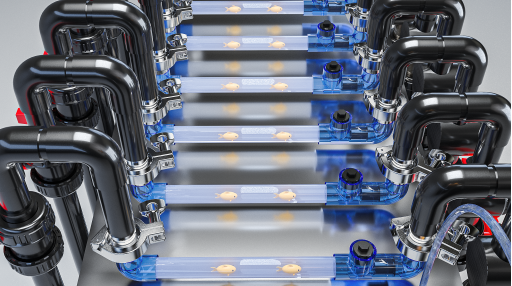
A Zebrafish Endurance Testing Device turns sustained swimming into structured experimental data. Rather than treating a fish that stops swimming as a simple pass-or-fail observation, a controlled-flow assay can record the load applied, the response over time, and a predefined fatigue endpoint. That distinction matters when a lab compares intervention groups, developmental stages, or repeated measurements. The useful question is not simply whether fish can swim. It is which physiological and behavioral outputs the protocol is designed to capture.
In a typical swim-tunnel setup, the Zebrafish Endurance Testing Device creates a known water-current profile while the researcher defines acclimation, speed increments, duration, sampling intervals, and the endpoint. Some outputs are directly logged by the system. Others, such as a critical-speed value or a normalized work estimate, are calculated from the test record. The result is more interpretable when those two categories stay separate.
1. Flow velocity and individual swim speed
The foundational measurement is swim speed. A Zebrafish Endurance Testing Device can document the commanded water velocity and, when paired with video tracking or position scoring, the fish’s ability to hold station against that flow. Depending on the protocol, speed may be reported as an absolute velocity, body lengths per second, or the current stage reached during an incremental test.
These values answer different questions. Absolute flow is important for instrument control and repeatability. Body-length-normalized speed makes it easier to compare cohorts with different sizes. Position within the chamber can reveal whether a fish is maintaining sustained swimming or repeatedly drifting toward the downstream grid. For a scientifically useful performance comparison, the laboratory should state which speed definition was used and how the flow field was verified.
A Zebrafish Endurance Testing Device does not make a speed value biologically equivalent across every experiment by itself. Water temperature, fish size, sex where relevant, strain, time of day, acclimation, and feeding history can shift the result. Published zebrafish critical-swimming protocols, for example, use controlled pre-test preparation; the exact schedule should be selected and documented for the study rather than assumed.
2. Critical swimming speed as a derived endpoint
One of the most widely useful outcomes from a Zebrafish Endurance Testing Device is critical swimming speed, often written as Ucrit. In an incremental protocol, current velocity rises in fixed steps until the fish can no longer sustain its position according to the study’s endpoint rule. Ucrit combines the last fully completed speed stage with the fraction of the final stage completed. It is therefore a derived endpoint, not simply the highest pump setting.
Ucrit can summarize performance across groups efficiently, but it should travel with the protocol details that generated it: increment size, step duration, acclimation current, test temperature, chamber dimensions, endpoint definition, and whether values were normalized by body length. When those details change, an apparent treatment effect may reflect changed assay conditions. A well-configured Zebrafish Endurance Testing Device helps preserve these settings alongside the result.
3. Exhaustion time and endurance at a fixed load
Exhaustion time is another core parameter. Here the current is held constant—often at a challenging but chosen fraction of prior capacity—and the test records how long each fish maintains the required swimming behavior. This is useful when the biological question concerns endurance under the same workload rather than the upper limit reached during a ramp.
A Zebrafish Endurance Testing Device can timestamp trial start, speed transitions, downstream contact events, recovery intervals, and the final endpoint. The wording of that endpoint is important. A laboratory might define fatigue as repeated contact with a downstream screen for a stated interval despite gentle prompting, or it may use a validated position-based rule. Without a consistent rule, differences in exhaustion time can become observer-dependent.
Fixed-speed endurance can also reveal patterns hidden by a single critical-speed number. Two groups may reach similar Ucrit values yet show different durability at a submaximal current. Reporting both outcomes can distinguish a short burst of high capacity from sustained performance, provided the same endpoint and exposure duration are applied across groups.
4. Aerobic-capacity-related measurements
A Zebrafish Endurance Testing Device can support aerobic analysis when the setup includes compatible respirometry. Dissolved-oxygen change in a calibrated measurement volume can be converted to oxygen uptake over time and related to the swim workload. In that configuration, researchers may examine resting uptake, uptake during stepped exercise, peak oxygen consumption under the selected protocol, or recovery kinetics after exercise.
These are valuable indicators of aerobic capacity, but they require careful qualification. Oxygen data depend on calibration, temperature stability, background oxygen change, chamber volume, fish biomass, mixing, and the timing of measurements. A flow-only endurance system does not automatically measure oxygen consumption. The article record should say whether oxygen is directly measured, inferred from another method, or outside the instrument configuration.
5. Fatigue behavior, position, and recovery
When video capture or observation scoring is included, a Zebrafish Endurance Testing Device can quantify behavior surrounding fatigue. Common candidates include time spent in defined chamber zones, number of downstream contacts, burst-and-glide frequency, time to resume stable swimming after a speed change, and recovery behavior after the trial. These readouts are especially helpful when a group difference in swim speed is modest but the route to fatigue differs.
Researchers should set out before the experiment whether each behavior is an exploratory observation or a primary endpoint. Automated tracking can reduce manual scoring burden, yet it still needs validation for the lighting, fish density, background, and chamber geometry in use. A Zebrafish Endurance Testing Device supplies a controlled challenge; the analysis plan defines how behavior becomes a reproducible measurement.
6. Workload and protocol-quality parameters
The device record can also quantify the conditions that make biological outputs auditable: acclimation duration, flow stages, ramp rate, test duration, water temperature, dissolved oxygen where measured, and trial exclusions. These are not secondary housekeeping notes. They establish the workload delivered to each animal and make later comparisons meaningful.
| Parameter | What it represents | Key interpretation condition |
|---|---|---|
| Swim speed | Velocity maintained against controlled flow | Report absolute and/or body-length-normalized units |
| Critical swimming speed | Incremental-test capacity endpoint | State increment size, stage duration, and endpoint rule |
| Exhaustion time | Duration sustained at a selected workload | Use an objective fatigue criterion |
| Aerobic capacity indicators | Oxygen-use response during exercise | Requires calibrated respirometry, not flow control alone |
| Recovery and behavior | Response before, during, and after fatigue | Validate tracking and scoring rules |
How to select the primary outcome
Choose the outcome that matches the hypothesis. Use a Zebrafish Endurance Testing Device for Ucrit when the question is maximum sustained swimming capacity under a defined ramp. Use exhaustion time when the question is resilience at a known workload. Add oxygen uptake when the study needs a metabolic interpretation and the system configuration supports it. Add behavior and recovery metrics when the mechanism may affect coordination, fatigue response, or post-exercise function.
For many research programs, the strongest result is a compact endpoint set rather than a long list of measurements: one primary performance endpoint, one protocol-quality record, and one supportive behavioral or metabolic measure. That approach keeps the Zebrafish Endurance Testing Device focused on data that can be interpreted, repeated, and compared within the limits of the experimental design.








