
 EN
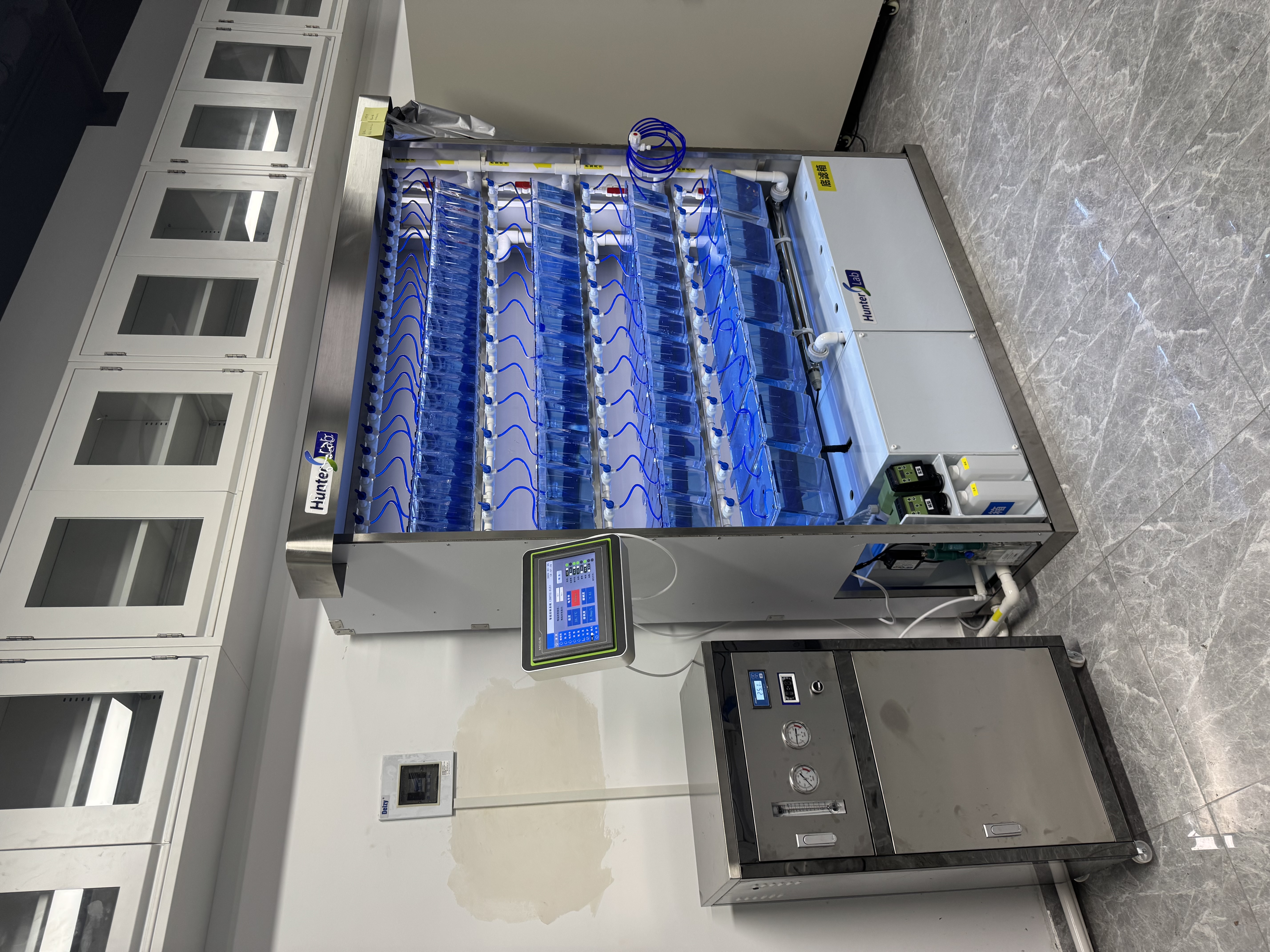
What Maintenance Tasks Are Required for a Zebrafish Breeding System?
A reliable Zebrafish Breeding System is maintained through small, repeatable checks rather than occasional major cleanups. In a research setting, the goal is not simply clear water. The goal is stable environmental conditions, clean breeding hardware, traceable records, and early recognition of changes that could affect adult condition, spawning, embryo yield, or welfare.
For a facility technician or colony manager, maintenance works most reliably as a calendar: observe the Zebrafish Breeding System every day, service the water path on a planned schedule, and investigate trends before they become a system-wide problem. Your local SOPs, veterinary program, stocking density, feed regime, and water source should determine the final limits and frequencies.
Start with a daily health and equipment round
Each day, walk the entire Zebrafish Breeding System before handling breeders. Look for unusual swimming, rapid opercular movement, surface gathering, skin changes, deaths, uneaten feed, leaking fittings, unusual pump noise, and low or uneven flow. Check that lights, heaters or chillers, alarms, water level, and make-up water are operating as expected. A short round is also a practical time to confirm that breeding tanks, inserts, dividers, and embryo-collection tools are clean and ready.
Record observations in the same log used for water tests and corrective actions. A Zebrafish Breeding System may look normal while a trend is developing, so a record of small changes is more useful than relying on memory after a poor spawn.
Verify water quality and respond to trends
Water quality is the operational core of a Zebrafish Breeding System. Monitor the parameters defined in your facility SOP, commonly including temperature, pH, conductivity, ammonia, nitrite, nitrate, and dissolved oxygen where applicable. Published zebrafish housing guidance lists broad reference values such as ammonia below 0.1 mg/L, nitrite below 0.3 mg/L, nitrate below 25 mg/L, pH 6.5–8, and conductivity from 150 to 1700 µS/cm. Those figures are reference points, not permission to ignore your validated local limits.
When a reading drifts, first verify the sample, instrument calibration, and timing. Then inspect the Zebrafish Breeding System for a blocked screen, reduced circulation, excessive organic load, failed top-up, or a change in source water. Escalate according to the facility response plan instead of making a large, undocumented correction that creates a second stressor.
Plan water exchange instead of treating it as a reset button
A scheduled water exchange removes accumulated dissolved waste and supports stable chemistry, but it must fit the design of the Zebrafish Breeding System. In a recirculating system, routine exchange may be a controlled portion of total volume; in static breeding tanks, it may be a carefully prepared replacement step. Match incoming water temperature, conductivity, pH, and treatment status as closely as your SOP requires.
Use the water-quality log to decide whether the water exchange schedule needs review. A rising nitrate trend, heavier feeding, more breeders, or a change in source-water quality can justify adjustment. Avoid solving chronic filtration problems with frequent large exchanges alone. That practice can hide the cause and destabilize the breeders you are trying to support.
Keep filtration effective without damaging biofiltration
Filtration cleaning should remove debris while protecting the biological filter that processes nitrogenous waste. Check prefilters, intake strainers, mechanical pads, settlement areas, and return lines on a schedule based on load and observed flow. Clean a clogged mechanical stage promptly because restricted flow can affect the whole Zebrafish Breeding System.
Use water from the system, rather than untreated tap water, when rinsing biological media unless your facility protocol specifies otherwise. Replace worn mechanical media, inspect pump impellers, and confirm that bypasses and valves return to their documented positions. After filtration cleaning, verify flow and repeat key water tests if the work was substantial.
Maintain breeding tanks and accessories between uses
The breeding area is where routine husbandry meets experimental quality. After each cross, remove waste, eggs that are not being retained, and remaining feed from breeding tanks. Wash and disinfect inserts, mesh, spawning trays, siphons, nets, and collection vessels according to the approved procedure, then rinse thoroughly and dry or store them to prevent cross-contamination.
Before the next setup, inspect every divider and insert for cracks, sharp edges, blocked openings, or loose parts. A well-maintained Zebrafish Breeding System also includes orderly labeling: identify parental groups, cross date, tank location, and any condition that could affect interpretation of embryo output.
Use weekly and monthly preventive tasks
Weekly maintenance for a Zebrafish Breeding System often includes deeper inspection of tanks and rack surfaces, test-meter checks, removal of mineral deposits, verification of emergency water supplies, and review of mortality and water-quality logs. Reconcile feed handling and check that waste containers, drain routes, and cleaning tools are maintained separately from clean breeding equipment.
Monthly or scheduled preventive maintenance can include pump and chiller inspection, alarm testing, replacement of consumables, calibration review, examination of tubing and seals, and a check of filtration capacity against current biomass. The exact interval should come from equipment manuals, facility validation, and observed performance—not a generic calendar alone.
Turn observations into a simple corrective workflow
When something changes in a Zebrafish Breeding System, use a consistent sequence: document the observation, confirm measurements, isolate the likely equipment or husbandry cause, correct only what the SOP permits, and check the outcome. This approach makes it easier to distinguish a one-off breeding result from a recurring infrastructure issue.
Hunter Lab supports zebrafish-focused research workflows and encourages facilities to align maintenance records, equipment checks, and staff training with their own approved husbandry procedures. For breeding programs, dependable maintenance is ultimately a form of quality control: it protects fish condition today and makes tomorrow’s breeding results easier to trust.
Maintenance checklist for each Zebrafish Breeding System
- Daily: observe fish, water level, flow, noise, leaks, alarms, feed residue, and breeding hardware.
- Routine: test and log required water parameters; investigate trends, not only out-of-range results.
- Scheduled: complete water exchange with matched, prepared water and documented volumes.
- As needed: perform filtration cleaning of mechanical stages and inspect biological media carefully.
- Between crosses: clean, disinfect, inspect, label, and store breeding accessories correctly.
- Preventive: service pumps, sensors, tubing, alarms, and consumables to the facility maintenance plan.
With this cadence, a Zebrafish Breeding System remains easier to manage, easier to troubleshoot, and better prepared for consistent breeding work.








