
 EN
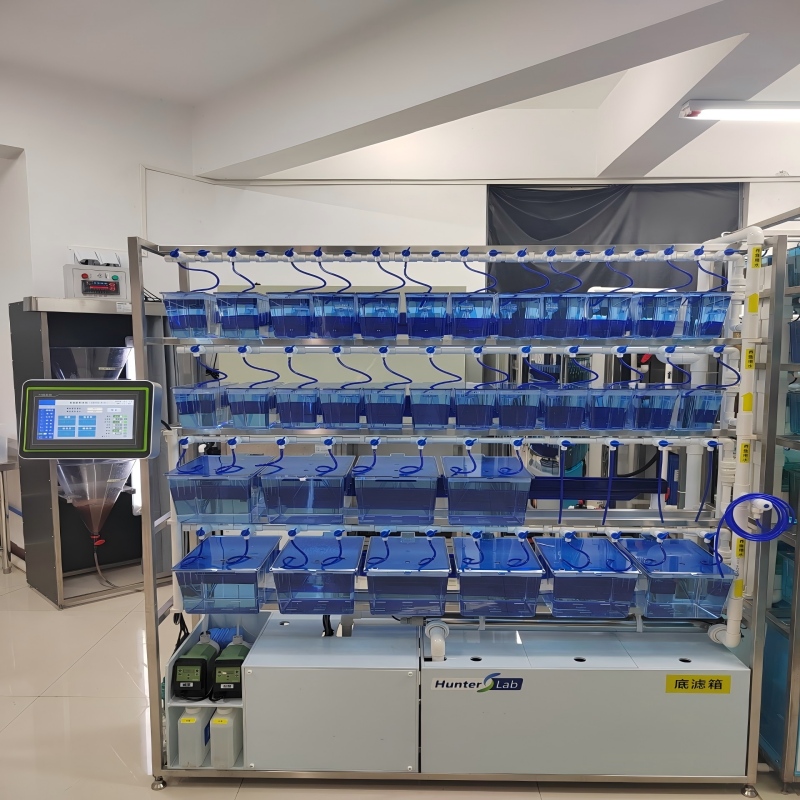
What is the role of a zebrafish larva behavior analysis system in epilepsy research?
In epilepsy research, a Zebrafish Larva Behavior Analysis System turns a larva’s movement into a repeatable experimental readout. Rather than relying only on an observer’s impression of whether a fish looks abnormal, the system records locomotion, trajectories, activity changes, and—in more advanced workflows—features of posture or movement pattern. That makes it useful for building, characterizing, and screening a zebrafish epilepsy model.
For a research team, the value is not simply “more movement data.” A well-controlled behavior workflow helps connect a seizure-provoking condition or a genetic change to measurable phenotypes, compare groups fairly, and decide which results deserve deeper follow-up. The right interpretation still depends on experimental design: behavior can indicate seizure-like activity, but it does not by itself replace electrophysiology, imaging, or molecular validation.
Why larval behavior matters in an epilepsy model
Zebrafish larvae are commonly used in both chemically induced and genetic epilepsy research. In a chemical model, pentylenetetrazol (PTZ) is frequently used to provoke seizure-like activity. Published validation work reports increased locomotor activity and seizure-like behavior after PTZ exposure. That makes a larval behavior assay a practical first layer of phenotyping: it can reveal changes in distance moved, speed, burst activity, turning, or other predefined features.
The key word is predefined. If researchers decide after seeing the data which behavior metric “counts,” the result can become hard to reproduce. A Zebrafish Larva Behavior Analysis System supports a more disciplined approach by applying the same acquisition window, tracking rules, arena definition, and analysis settings across wells and experimental days.
What the analysis system actually does
A typical workflow begins with larvae placed in a controlled arena, often a multiwell plate. The system captures video under defined lighting and temperature conditions, identifies each larva, and converts movement into time-stamped measurements. Depending on the model and software, useful outputs may include:
- total distance, velocity, and activity over a fixed recording interval;
- movement bouts, inactivity periods, and changes after a stimulus or compound addition;
- trajectory shape, turning behavior, or thigmotaxis-like spatial patterns;
- group-level distributions rather than only a single average; and
- quality-control flags for missing tracking, overlaps, or abnormal video conditions.
Those measures can make a seizure phenotype easier to compare across treatment groups. Recent research has also described automated and machine-learning-based monitoring of complex larval behaviors in an epileptic seizure context. This matters because total distance alone can miss meaningful differences in how movement is organized.
Its role across the epilepsy research workflow
1. Establishing a behavioral baseline
Before challenging larvae or evaluating a candidate compound, researchers need a baseline for the strain, age, housing conditions, and assay setup. What looks like a strong activity shift in one facility may be ordinary variability in another. Temperature, developmental stage, illumination, acclimation time, and handling all influence larval behavior. A Zebrafish Larva Behavior Analysis System helps document those conditions alongside the movement data, which is essential when data are compared across runs.
2. Characterizing seizure-like phenotypes
In a PTZ or genetic model, the system can quantify whether larvae show a reproducible behavioral change relative to matched controls. Researchers may examine the timing of activity changes, the proportion of larvae showing a predefined phenotype, and variability between wells. This is especially useful when a seizure response is partial or heterogeneous. Instead of describing a plate as generally hyperactive, the team can inspect distributions and individual trajectories.
3. Screening candidate interventions
Behavior tracking is well suited to early-stage screening because many larvae can be assessed under a consistent protocol. A published PTZ validation study describes automated locomotor tracking in 96-well format as enabling medium- to high-throughput movement quantification. That does not mean every 96-well experiment is automatically robust. Plate layout, vehicle controls, randomization, blinding where feasible, and predefined exclusion rules remain important.
When a compound reduces an abnormal activity metric, the result should be treated as a screening signal, not a standalone efficacy claim. Does it also impair normal locomotion? Does the effect reproduce at another concentration? Does an independent endpoint support the same conclusion? Asking those questions reduces the chance of confusing sedation, toxicity, or tracking artifacts with an anti-seizure effect.
4. Prioritizing deeper validation
The system can help teams decide where to invest slower, more specialized assays. A candidate that produces a consistent behavioral rescue may move forward to electrophysiological recording, calcium imaging, molecular analysis, or additional disease-relevant endpoints. Conversely, a result that appears only in one movement metric may need protocol review before it is treated as biologically meaningful. In practice, the strongest workflow is layered: automated behavior analysis for scale, followed by orthogonal methods for mechanism and confirmation.
What good data look like—and what they do not prove
It is tempting to equate more parameters with better evidence. Usually, the better question is whether each parameter answers a defined biological question. For example, a change in velocity may be useful for a rapid screen, while trajectory curvature or movement bouts may help distinguish a generalized activity change from a more specific pattern. But a Zebrafish Larva Behavior Analysis System cannot, on its own, diagnose epilepsy or prove a neural mechanism.
Researchers should therefore state conclusions with the right scope: “the intervention altered seizure-like locomotor behavior in this larval zebrafish model” is more defensible than claiming that it treated epilepsy. If recordings are noisy, first check environmental conditions, plate effects, tracking quality, and normal-movement controls. Automation can reduce manual scoring burden, but it can also introduce systematic errors if detection settings are not validated.
A practical decision framework for research teams
- Define the phenotype: Specify which behavioral features represent the relevant seizure-like response before data collection.
- Standardize the assay: Fix developmental stage, acclimation, recording duration, lighting, temperature, and plate-handling procedures.
- Use appropriate controls: Include untreated and vehicle controls, and consider a positive-control condition when scientifically appropriate.
- Check normal locomotion: Separate a selective behavioral rescue from broad motor suppression or toxicity.
- Confirm promising signals: Pair behavior results with an orthogonal endpoint before making a mechanistic or translational claim.
Conclusion
A Zebrafish Larva Behavior Analysis System provides the measurement layer that makes larval epilepsy research more comparable, scalable, and interpretable. It helps researchers quantify seizure-like behavior, screen hypotheses or candidates, and identify results that merit deeper validation. Its most useful role is not to replace expert judgment; it is to make that judgment rest on clearer, more reproducible behavioral evidence.








