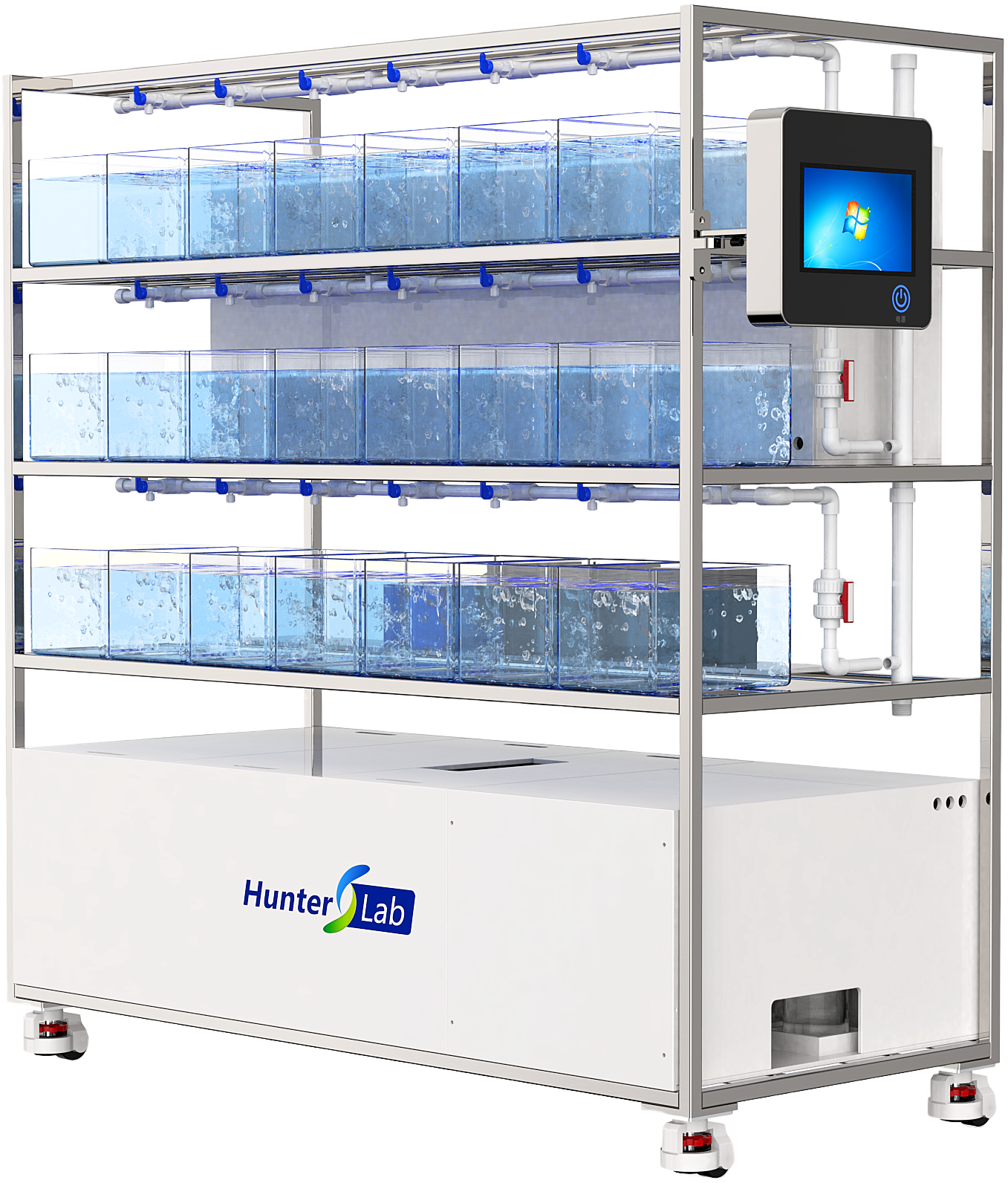
Start With Workflow Before Footprint
Installing a zebrafish phenotype analysis system is a facilities decision, not just an equipment purchase. It connects animal care, room controls, imaging workflow, data handling, and the people who run the assay. The useful question is not whether the instrument fits. It is whether the whole workflow can produce comparable data week after week.
Map the path from tank or rack to imaging, analysis, review, and storage before assigning a room. Embryos or adult fish may need transfer, acclimation, positioning, imaging, and return or disposal under approved procedures. Each handoff adds variability. Identify where plates are prepared, where handling occurs, where imaging happens, and where staff clean and reset the area. Give the station clearance for safe movement, service access, cables, and cleaning. Separate wet work from computers and optics where possible. Avoid crossing clean supplies with waste or quarantine traffic.
Environmental Stability in the Aquatic Room
Aquatic room conditions matter because phenotype readouts can be sensitive to husbandry. Published zebrafish housing guidance describes recirculating systems with filtration, water chemistry monitoring, germicidal UV irradiation, and light and temperature controls. That does not prescribe one universal build, but it gives planning a baseline: document which systems control the animal environment and who responds when they drift.
Verify room cooling, heat loads, and alarm coverage. Confirm water supply, drains, spill response, treated water access, and responsibility for water quality checks. Provide protected circuits where required, sufficient outlets, cable management, and an outage plan for racks, imaging hardware, and network storage. Control daylight and glare so the programmed photoperiod and imaging are not disturbed. A 14-hour light and 10-hour dark cycle is a common laboratory reference, but local protocols take precedence.
If the system is installed outside the main aquatic room, plan transfer conditions as carefully as imaging conditions. Temperature shifts, vibration, noise, and delays can become hidden variables. A short, repeatable transfer route with a defined staging area is often more practical than an improvised trip through busy corridors.
| Infrastructure Area |
What to Verify |
Why It Matters |
| Aquatic room climate |
HVAC load, temperature stability, alarm coverage |
Reduces phenotype drift |
| Power and network |
Protected circuits, outlets, wired connectivity, backup |
Protects imaging and data |
| Water and drainage |
Supply, drains, spill response, treated water access |
Supports husbandry and cleaning |
| Lighting |
Photoperiod control, glare, blackout options |
Protects cycle and imaging |
| Biosecurity |
Quarantine zones, carts, PPE, cleaning supplies |
Limits pathogen transfer |
| Data |
Storage, transfer speed, permissions, backup |
Keeps images traceable |
Biosecurity and Quarantine Must Shape the Layout
Installation should not compromise the health management plan. Husbandry recommendations support separate quarantine arrangements and dedicated equipment to reduce pathogen transfer into established colonies. During planning, identify which room zones, carts, tools, PPE, and cleaning supplies are reserved for quarantine and which are permitted near the zebrafish phenotype analysis system.
Ask a direct question: can an operator complete a phenotype run without moving equipment between quarantine and the main colony? If not, document decontamination, scheduling, and chain of custody steps before the system arrives. Physical separation can be modest or extensive depending on institutional rules, but the workflow must be unambiguous.
Imaging Room Controls and Data Infrastructure
A zebrafish phenotype analysis system needs more than a stable tank room. Imaging benefits from controlled ambient light, a clean surface, low vibration, manageable noise, and dependable climate control. Review door traffic, nearby centrifuges or compressors, windows, reflective surfaces, and ceiling lights. If a room doubles as a general lab, reserve protected imaging windows and define who can alter lighting or equipment configuration.
Network infrastructure is equally important. Estimate image volume, temporary local storage, transfer speed, backup, user permissions, and retention requirements before the first run. Do not assume a standard desktop share is adequate for large image sets. Coordinate with IT on wired connectivity, cybersecurity policies, account provisioning, and a recovery path if acquisition software or a workstation fails. In one shared facility, the planning team found that afternoon sunlight through a hallway window changed imaging conditions enough to affect repeated runs. Blackout shades and a revised staging schedule solved the issue without changing the instrument.
Utilities, SOPs, and Staffing for Repeatable Runs
The goal of facility planning is controlled variation, not a room that merely looks complete. Create a pre-installation acceptance checklist covering utilities, room conditions, network access, calibration space, cleaning materials, service access, and emergency contacts. Then convert it into operating ownership. Facilities owns HVAC response, animal care staff owns husbandry records, and trained users own run level documentation.
Include an installation day test that follows a realistic sample through the zebrafish phenotype analysis system. Confirm that users can log environmental conditions, locate files, perform a backup, clean the station, and escalate a fault. A checklist built after small failures is often more valuable than an ideal looking floor plan.
Questions to Resolve Before Installation
Which room will host each stage of the zebrafish phenotype workflow, and are transfers controlled? Do power, HVAC, water, drainage, lighting, and network capacity match approved installation requirements? How will the facility protect photoperiod, water quality records, and quarantine separation? Where will raw data, processed outputs, backups, and user access be managed? Who is trained to operate, clean, calibrate, troubleshoot, and call for service?
A zebrafish phenotype analysis system is more likely to support reliable work when facilities infrastructure supports the biology and the workflow together. Start with environmental stability, biosecurity, utilities, imaging room controls, and data capacity. Then test the entire path with the teams who will use it. Hunter Lab supports zebrafish laboratories with imaging and environmental control equipment designed for core facility workflows. The company's experience covers system integration, data handling, and the operational realities of maintaining zebrafish colonies. For facilities planning a phenotype analysis installation, Hunter Lab offers a partner that understands how infrastructure choices affect daily research consistency.

 EN