
 EN
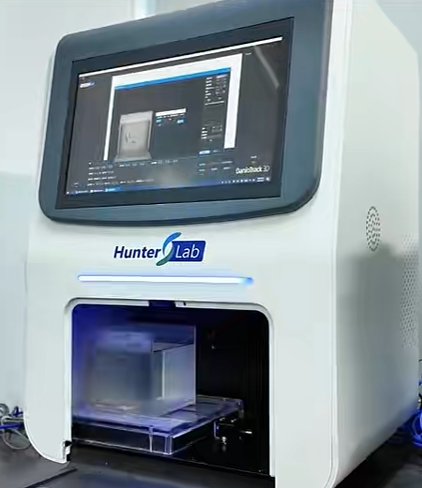
A Zebrafish Behavioral Analysis System can grow from a small exploratory assay into a shared resource or screening workflow surprisingly quickly. The question is not simply how many wells a camera can see. Sustainable scalability depends on whether animals, acquisition, analysis, storage, quality control, and people can expand together without changing what the behavioral readout means.
For a shared zebrafish facility, a sensible starting point is to define capacity as validated, reviewable datasets per week—not plates imaged or videos recorded. That distinction matters because a faster acquisition step can transfer the bottleneck to file transfer, tracking review, or biological quality control. A 2020 review of larval zebrafish assays notes that higher-throughput phenotyping of more rudimentary behaviors can be practical in a 96-well format. That is useful context, but it is not a universal target: assay complexity, larval age, arena design, lighting, and validation requirements all change the usable capacity.
Start with the decision that drives scale
Before planning expansion, document the research question and the smallest behavioral endpoint set that answers it. A locomotor screen, a light–dark response assay, and a social-behavior workflow place very different demands on a Zebrafish Behavioral Analysis System. More features or more frames do not automatically create a stronger experiment. In fact, a higher-resolution workflow may reduce practical capacity if it makes transfer, processing, or manual review disproportionately slow.
Ask four questions at the outset:
- How many larvae, plates, or arenas must be completed in a normal week?
- Which variables must remain constant for results to be comparable across days and operators?
- How much human review is acceptable per plate after automated tracking?
- Which increase is expected first: more samples, more assay types, more users, or more data detail?
The answers establish whether growth should focus on parallel acquisition, an additional instrument window, compute resources, SOPs, or data governance.
Build throughput around biological and environmental controls
Throughput is only valuable when the expanded workflow preserves the same experimental conditions. Controlled lighting, temperature, background, plate handling, acclimation time, and imaging timing should be recorded as part of every run. This is especially important when multiple users share the system or when a study extends over months. A behavioral chamber may increase capacity, but an undocumented change in illumination or water temperature can create a batch effect that no amount of later analysis can fully repair.
Use a staged validation plan. First, compare a small number of runs with the intended standard settings. Next, test the planned plate format and daily schedule. Finally, evaluate whether two trained operators obtain comparable results. If a laboratory moves from individual arenas to multi-well plates, it should confirm that density, well geometry, and observation duration do not alter the interpretation of the chosen endpoint. Long experiments in 48- and 96-well plates can introduce stress-related considerations, so plate choice belongs in assay validation rather than being treated as an administrative detail.
Plan acquisition capacity and analysis capacity as one system
Video capture is often the visible part of a Zebrafish Behavioral Analysis System, but analysis is where capacity is commonly lost. Parallel cameras, longer observation periods, or higher frame rates multiply the volume of data. One high-throughput tracking configuration reports simultaneous capture up to 180 frames per second; the exact figure is configuration-specific, yet it illustrates why acquisition specifications must be translated into storage and compute requirements before purchase or expansion.
Map the full path for one representative run: acquisition, file naming, transfer, backup, preprocessing, tracking, quality review, export, and archiving. Measure elapsed time and identify the steps requiring a person. If automated tracking flags 10% of recordings for review, that review load increases with every added plate. Capacity planning should therefore include queue time, not only instrument time.
Data architecture should scale before the first large screen
Set a file and metadata standard before data begins to accumulate. Each run should connect raw video, processed outputs, assay protocol version, plate map, fish cohort, environmental conditions, analyst, and software version. Use immutable raw-data storage where feasible, a working area for processing, and a retention policy for intermediate files. Test restore procedures as well as backups. These practices make later expansion easier because studies can be traced, reprocessed, and compared without relying on a single person’s memory.
Protect reproducibility during growth
As a Zebrafish Behavioral Analysis System serves more users, variation in mounting, acclimation, plate loading, camera alignment, and analysis settings can become more consequential than the instrument’s nominal capacity. Create a controlled configuration: versioned protocols, locked analysis templates, reference cohorts or positive controls where suitable, and a change log for software, camera, lighting, and experimental conditions.
Do not assume that automation removes judgment. Automated tracking can make routine measurements faster, but it still needs predefined acceptance criteria and periodic review of trajectories, detection failures, and exclusions. A useful rule is that any planned expansion should include a comparability test before production data are pooled with earlier datasets.
Staffing, access, and support determine usable capacity
Shared-resource growth needs training and scheduling rules. Define who may operate the system independently, how competency is documented, how bookings are prioritized, and who can approve changes to protocols or analysis settings. Cross-train more than one person for routine setup and first-line troubleshooting. Otherwise, capacity may appear adequate on paper while a single trained operator becomes the real limit.
Maintenance planning matters too. Schedule calibration checks, cleaning, camera and illumination checks, software updates, and a process for documenting downtime. When considering expansion, include service access, spare-part lead times, and the availability of application support in the total resource plan rather than treating them as afterthoughts.
Choose a phased expansion path
For many labs, the most practical approach is to expand in phases. First stabilize one assay with a known throughput and quality baseline. Then add parallel runs or a wider plate format only after analysis and data storage can absorb the increase. Add new behavioral paradigms after the original workflow remains reproducible. This phased path protects capacity from being consumed by rework.
A scalable Zebrafish Behavioral Analysis System is therefore a coordinated workflow, not a single piece of equipment. The right configuration is the one whose acquisition rate, validated biology, compute resources, data governance, staffing, and maintenance model remain aligned as demand grows. If your lab cannot explain how a new batch will be compared with last month’s batch, solve that consistency question before pursuing more expansion.








