
 EN
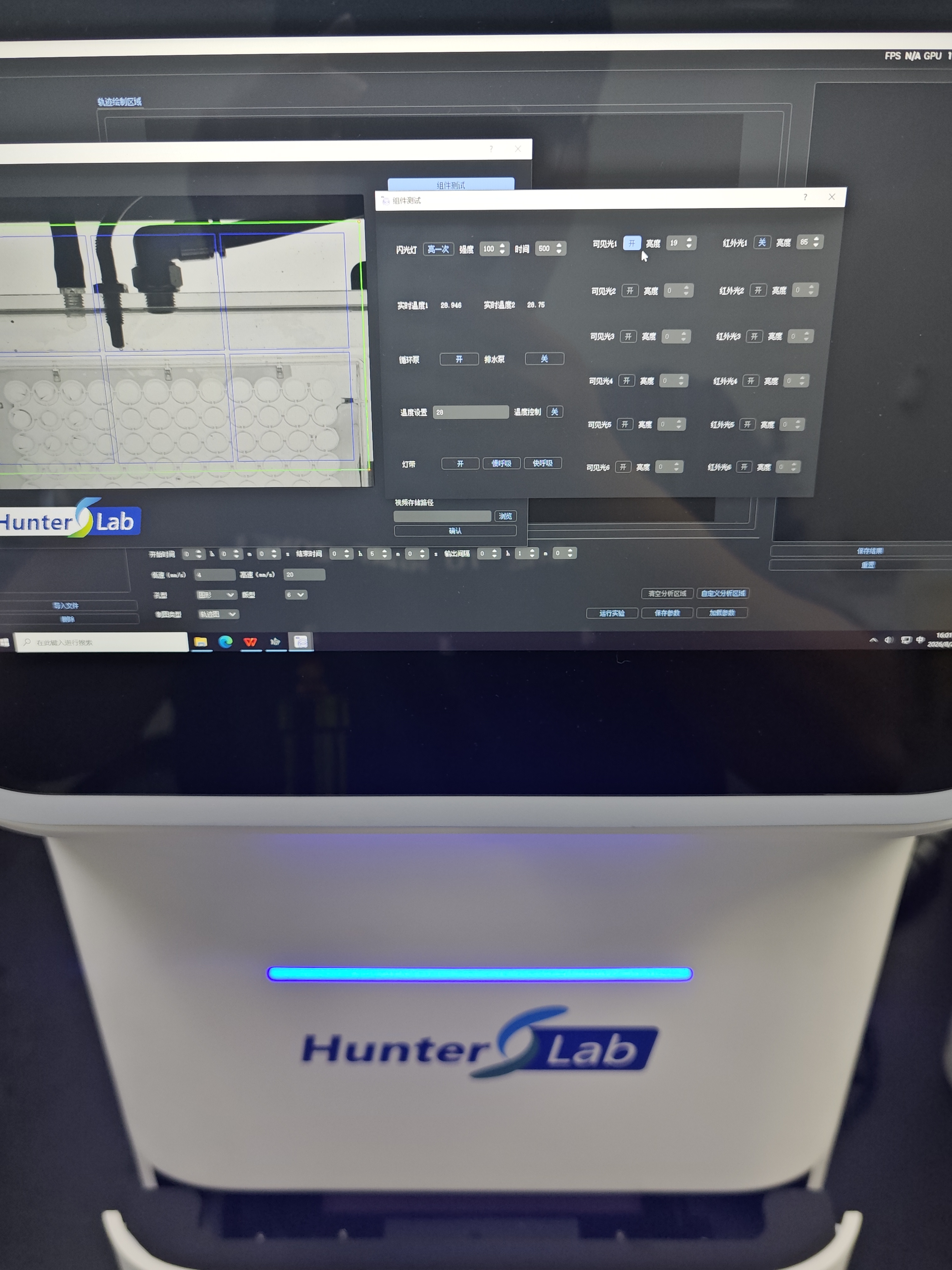
What Are the Applications of a Zebrafish Heart Rate Monitor in Drug Discovery?
A Zebrafish Heart Rate Monitor gives discovery teams a fast, repeatable way to see whether a compound changes cardiac function in a living vertebrate. In early drug discovery, that matters because an apparently promising molecule can still create a cardiovascular signal long before a program reaches costly confirmatory work. A monitor is not a stand-alone safety verdict. It is a practical phenotyping layer that helps a team decide what deserves deeper study, what needs a redesigned assay, and what may need to leave the funnel.
From a cardiovascular-analysis perspective, the useful question is not simply “did heart rate change?” It is whether the Zebrafish Heart Rate Monitor produces an interpretable pattern across dose, time, vehicle controls, developmental stage, temperature, and replicate clutches. That context turns a convenient readout into evidence a project team can act on.
Where a Zebrafish Heart Rate Monitor Fits in the Discovery Funnel
This monitoring approach is most valuable after a compound set has enough prioritization data to justify whole-organism testing, but before resources are committed to an extensive nonclinical package. In a multiwell workflow, larvae can be exposed to a concentration series and assessed for beat rate, rhythm regularity, edema, morphology, movement, and survival. The heart-rate endpoint adds a functional layer that cell-only assays cannot provide by themselves.
For teams running screening, the platform can sort compounds into practical groups: no evident cardiac phenotype under the test conditions, a reproducible rate or rhythm shift, and a broader toxicity pattern that makes the cardiac signal hard to interpret. That sorting is useful for medicinal chemistry, translational pharmacology, and portfolio review; it is not proof of clinical safety or efficacy.
1. Early Cardiac Liability Triage
The first application of a Zebrafish Heart Rate Monitor is early liability triage. Bradycardia, tachycardia, irregular rhythm, or a dose-related change that appears before overt lethality can flag compounds for follow-up. By measuring a baseline cohort before dosing and comparing each treatment with matched vehicle controls, teams can separate a possible compound effect from ordinary biological variation.
This measurement approach is particularly helpful when the desired pharmacology could overlap with cardiovascular physiology. Rather than treating every change as a failure, researchers can compare the exposure-response pattern with target engagement, general toxicity observations, and chemical analogues. The result is a more disciplined next-step decision: confirm in an orthogonal model, adjust the chemistry, or stop the series.
2. Safety Pharmacology Signal Generation
In exploratory safety pharmacology, this whole-organism readout offers an in vivo complement to other cardiac assays. Published work describes zebrafish as amenable to medium- to high-throughput whole-organism screening, which makes the model useful when a team needs comparative information across many compounds rather than a single definitive endpoint.
To make this application credible, the assay should record more than one number. A Zebrafish Heart Rate Monitor should be paired with observations of rhythm, circulation, developmental morphology, and viability. A slow rate in otherwise healthy larvae may have a different meaning from a slow rate accompanied by edema and generalized developmental delay. That distinction protects teams from overcalling a cardiac-specific effect.
3. Context for hERG-Related Risk Questions
The monitor can contribute useful context when a program is evaluating hERG-related risk. Zebrafish embryos express an orthologue of HERG, and published research has reported sensitivity to a range of QT-prolonging drugs with severe arrhythmia. This makes a rate-and-rhythm phenotype a relevant signal to investigate, especially when it is concentration dependent and reproducible.
However, a Zebrafish Heart Rate Monitor does not replace a dedicated human hERG assay, electrophysiology study, or any required regulatory package. Heart rate can change for many reasons, including anesthesia conditions, temperature drift, developmental delay, stress, and broad toxicity. The right use is prioritization: combine the zebrafish signal with ion-channel data and other human-relevant methods before drawing a mechanism or risk conclusion.
4. Compound Ranking During Drug Discovery
The platform also helps teams rank analogues when potency alone does not distinguish a series. If several compounds meet a biological activity threshold, the monitor can identify candidates that preserve a stable cardiac phenotype across comparable exposure conditions. That does not make one molecule “safe”; it provides a transparent factor for selecting the next set of confirmatory experiments.
For this use, a Zebrafish Heart Rate Monitor benefits from predefined decision rules. Teams may decide in advance how they will handle a persistent rate shift, an isolated outlier, or an effect that occurs only alongside severe systemic toxicity. Predefinition makes screening results easier to review and reduces the temptation to reinterpret borderline findings after the fact.
5. Assay Development and Quality Control
The same platform is not only for test articles. It can support assay qualification by showing whether vehicle controls remain stable across plates, operators, and collection days. In practice, temperature, plate handling, imaging timing, developmental stage, and clutch-to-clutch variability can all shift a baseline. A baseline cardiac cohort with the same larvae, exposure window, and imaging settings is often more valuable than a clean-looking trace obtained under poorly controlled conditions.
When a Zebrafish Heart Rate Monitor is integrated with automated imaging and analysis, the workflow can also reveal where quality loss begins: poor focus, inconsistent orientation, motion artefacts, or an analysis threshold that misclassifies beats. Fixing those sources of variance improves the decision value of every subsequent drug discovery run.
How to Design a Decision-Ready Workflow
- Use a Zebrafish Heart Rate Monitor with matched vehicle and positive-control conditions.
- Keep developmental stage, temperature, anesthesia exposure, imaging time, and analysis settings consistent.
- Review heart rate alongside rhythm, morphology, circulation, survival, and concentration-response behavior.
- Define escalation criteria before running the screening campaign.
- Confirm meaningful findings with appropriate orthogonal assays; do not treat one zebrafish endpoint as a complete safety pharmacology conclusion.
Conclusion
A Zebrafish Heart Rate Monitor is most useful as a whole-organism decision tool. It can reveal early cardiac signals, support comparative compound ranking, provide context for hERG questions, and strengthen assay quality control. Used with controlled protocols and confirmatory follow-up, the Zebrafish Heart Rate Monitor helps teams make earlier, better-informed choices in drug discovery without overstating what a single model can prove.








