
 EN
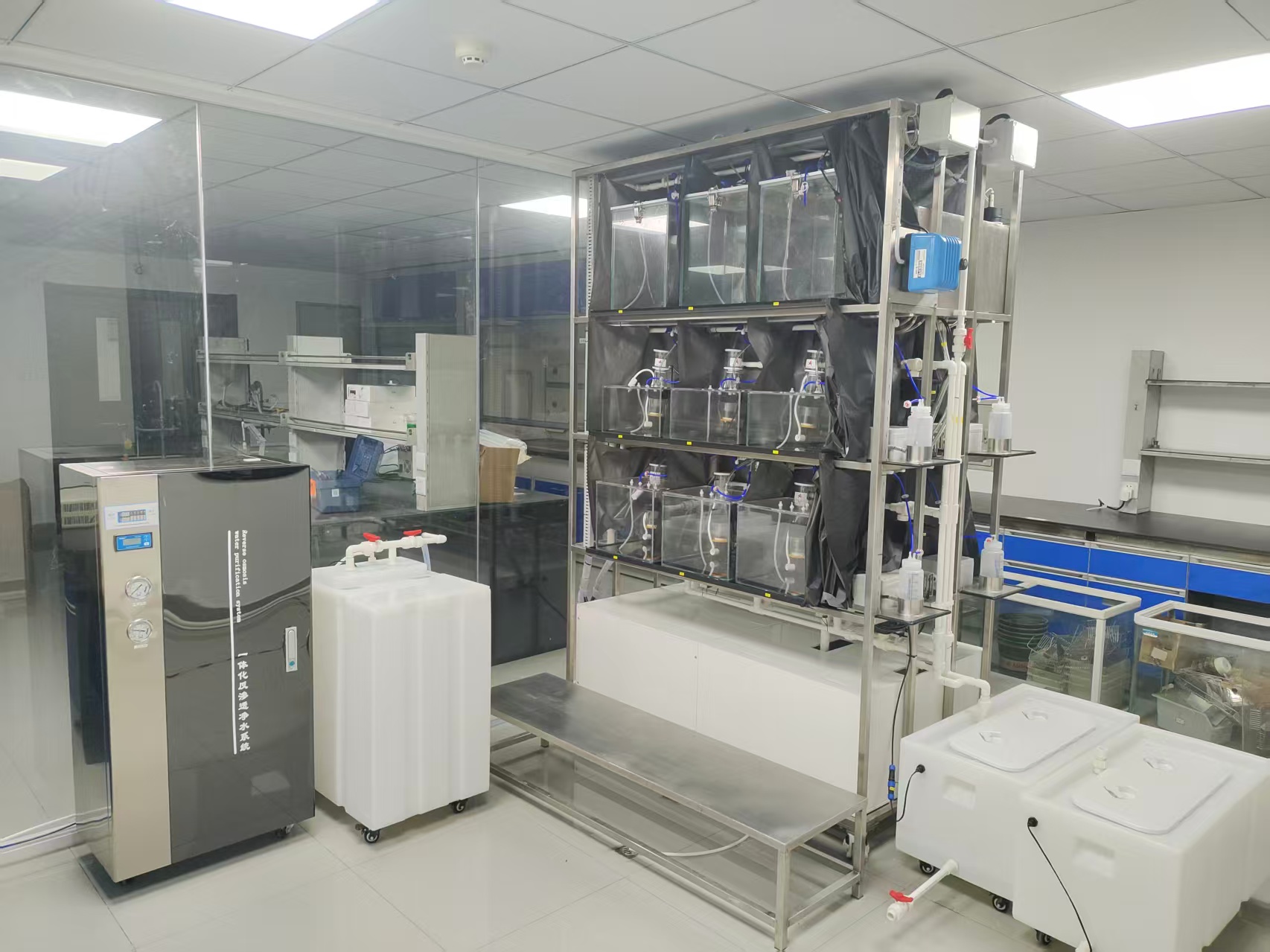
What Are the Advantages of Automated Zebrafish Toxicological Exposure Systems?
A Zebrafish Toxicological Exposure System is valuable when a laboratory needs to turn a carefully designed exposure plan into a repeatable daily workflow. In toxicology, the biological model is only one part of the result. The way embryos are assigned, dosed, refreshed, observed, and documented can shape whether a comparison is credible. Automated handling does not remove scientific judgment, but it can make the execution of that judgment more consistent.
For research groups running developmental, environmental, cosmetic, nutraceutical, or early drug-safety studies, an automated Zebrafish Toxicological Exposure System can reduce avoidable variation while making more room for protocol design and interpretation. The gains are most meaningful when the system is matched to a validated assay, defined exposure windows, and a realistic quality-control plan.
Why exposure consistency is the practical starting point
Manual exposure work can be demanding even at modest plate counts. Small differences in when a solution is prepared, how it is mixed, which wells are refreshed first, or how long embryos remain outside controlled conditions can introduce noise. A Zebrafish Toxicological Exposure System helps standardize the repetitive portions of that process: plate maps, dispensing sequences, scheduled exchanges, and recorded timestamps.
That consistency matters because toxicology endpoints are often interpreted across concentrations, replicates, and runs. In an OECD Test Guideline 236-style fish embryo acute toxicity workflow, newly fertilised eggs are exposed for 96 hours and observations are recorded at intervals. Not every zebrafish study follows that design, of course, but it illustrates why a repeatable schedule is more than a convenience. It protects the meaning of a time-dependent comparison.
With a well-configured Zebrafish Toxicological Exposure System, researchers can define an exposure sequence once and apply it consistently across plates. If room temperature, solution stability, developmental stage, or assay-specific handling differs, the protocol still needs adjustment. Automation is most useful when it makes those controlled decisions visible and repeatable rather than hiding them behind a generic program.
How automation supports more reliable workflows
1. More uniform dosing and exchange timing
An automated Zebrafish Toxicological Exposure System can carry out programmed liquid-handling steps in the same order and at the same intervals. This supports consistency between control and treatment groups, especially when a study requires multiple concentrations or repeated solution changes. It also creates a clearer record of what was intended to happen and when.
Uniformity does not guarantee that the delivered concentration is correct. Teams should still verify stock preparation, compatibility of compounds with plastics, evaporation risk, and the analytical approach needed for their chemistry. The advantage is that the handling plan becomes easier to audit and refine.
2. Less operator-to-operator variation
Different researchers can follow the same SOP and still differ in pace, pipetting rhythm, or documentation habits. A Zebrafish Toxicological Exposure System gives the lab a shared execution layer for recurring actions. That can be particularly helpful in core facilities, teaching laboratories, and multi-week screens where staff rotation is unavoidable.
Reproducibility is a known concern in zebrafish toxicity testing. A published OECD validation-study abstract reported good intra- and inter-laboratory reproducibility, with a coefficient of variation below 30% for most chemicals and laboratories tested. That finding should not be read as an automated-system performance guarantee. Instead, it reinforces the value of controlling the operational variables that laboratories can control.
3. Higher throughput without treating speed as the only goal
A Zebrafish Toxicological Exposure System can help a team process more conditions, replicates, or compounds within a defined workflow. Higher throughput is useful when it preserves plate traceability and the capacity to review outliers. It is not useful if a lab creates more plates than it can inspect, image, or analyze with appropriate controls.
A well-designed Zebrafish Toxicological Exposure System workflow connects capacity to downstream reality: incubation space, imaging availability, endpoint scoring, and data review. Automation can reduce bottlenecks in dosing, but it should be planned together with the rest of the assay pipeline.
Efficiency that improves documentation, not just labor allocation
Laboratory efficiency is often described as saving hands-on time. That is one benefit, but a stronger advantage of an automated Zebrafish Toxicological Exposure System is structured traceability. A system can associate a plate map with run settings, scheduled actions, sample identifiers, and deviations. Those records make it easier to investigate why one run differs from another.
This is especially helpful when a result is borderline. The useful question is not simply whether automation was used; it is whether the Zebrafish Toxicological Exposure System captured enough context to distinguish a biological signal from a handling issue. Teams should retain raw run logs alongside imaging and endpoint data.
Where an automated system adds the most value
- Concentration-response studies: A Zebrafish Toxicological Exposure System can apply a predefined plate map and schedule across several dose groups.
- Repeated exposure or refresh protocols: Automation supports a more consistent sequence when the assay requires regular medium replacement.
- Comparative screening: A Zebrafish Toxicological Exposure System helps preserve consistent handling when many compounds or formulations are compared.
- Multi-user laboratories: Standardized programs can support consistency across trained operators while retaining an auditable record.
- Method transfer: A documented automated workflow can make it easier to communicate the operational details a receiving lab needs to validate locally.
What automation cannot decide for you
An automated Zebrafish Toxicological Exposure System cannot select biologically appropriate endpoints, prove relevance to humans, or replace assay validation. It also cannot correct a poorly chosen developmental window or an unstable test article. Before adoption, define the species stage, exposure route, vessel format, solution-change logic, controls, acceptance criteria, and data-governance requirements.
It is tempting to assume that a more automated process is automatically better. In practice, the right Zebrafish Toxicological Exposure System depends on study volume, protocol complexity, and the lab’s ability to validate each transfer, dispense, and timing rule. Start with the sources of variation that most often compromise your current workflow, then test whether the proposed automation addresses them.
A practical evaluation checklist
- Can the Zebrafish Toxicological Exposure System execute your required plate format, volume range, and exposure schedule?
- How will the workflow document automated actions, manual interventions, and exceptions?
- What controls will verify dosing consistency and carryover risk for your specific chemistry?
- Can the throughput target be supported by incubation, imaging, scoring, and review capacity?
- What training, cleaning, maintenance, and validation records will preserve long-term consistency?
Conclusion
The central advantage of an automated Zebrafish Toxicological Exposure System is disciplined execution. By standardizing repeatable handling steps, supporting traceability, and aligning throughput with an assay’s downstream capacity, it can help a laboratory make better use of zebrafish toxicology data. The strongest results come from pairing automation with a clear protocol, relevant controls, and a willingness to review exceptions rather than assuming the workflow is infallible.








