
 EN
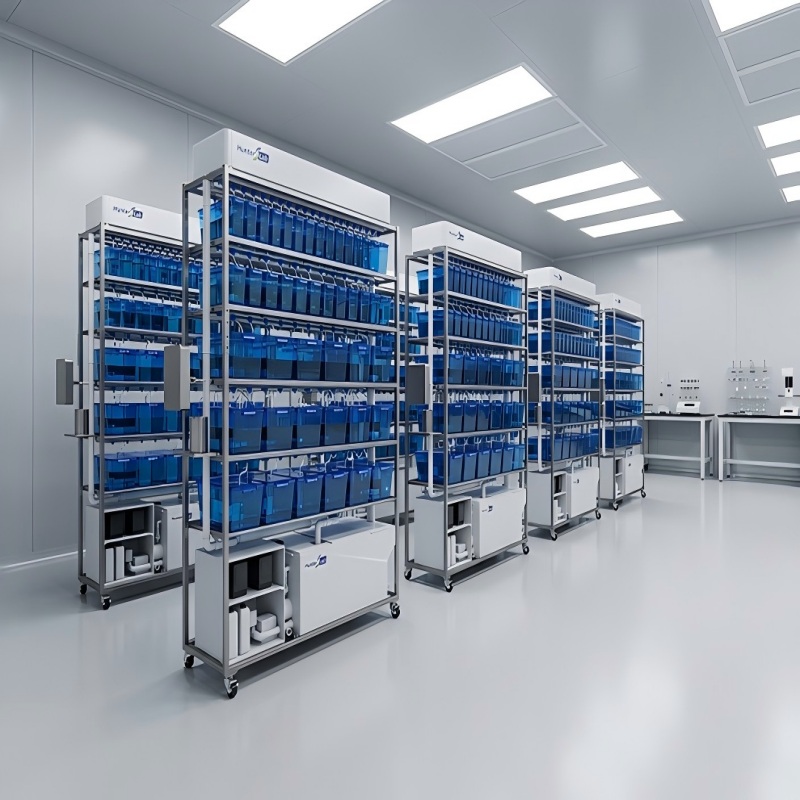
The zebrafish reproduction system offers precise control over breeding intervals for consistent results.
For a core facility, a Zebrafish Reproduction System is not simply a place where fish spawn. It is an operational framework for deciding when breeders are conditioned, when pairs or groups are set, when embryos are collected, and how every cohort is recorded. That control matters because an experiment that starts with poorly documented embryos can become difficult to compare long before imaging, dosing, or analysis begins. A well-managed system does not promise identical biology; it makes the sources of variation visible and manageable.
The practical value is cadence. By building a repeatable plan around adult condition, light-cycle timing, collection windows, and embryo staging, a facility can turn breeding from a last-minute task into a dependable upstream step. This is especially useful when several teams need embryos at defined developmental windows or when an assay must begin at the same point in each run.
Why breeding intervals matter to experimental consistency
Breeding intervals are a planning tool, not a universal fixed number. Adult age, strain, sex ratio, nutrition, housing conditions, health, and recent spawning history all influence output. A useful Zebrafish Reproduction System therefore sets an interval policy that fits the facility’s validated husbandry practice, then records exceptions rather than treating every cross as interchangeable.
The payoff is clearer scheduling. Teams can reserve breeders before an experiment, avoid unintentionally overusing a small group of adults, and estimate whether enough embryos are likely to be available for a planned plate layout. If a collection is unusually low or delayed, the record can show whether it followed an altered pairing plan, environmental disruption, or an ordinary biological fluctuation. That distinction protects the interpretation of later results.
Light timing is one example of why a controlled routine is helpful. Zebrafish spawning is commonly associated with the onset of light after a dark period. Setting breeding groups in advance and collecting within a documented window lets a lab align personnel, incubator capacity, and downstream assay preparation. It does not remove variability, but it replaces ad hoc timing with a process that can be reviewed and improved.
Build the system around controlled inputs
Precise control starts with the factors that can be deliberately defined. The goal is not to create a rigid checklist that ignores animal welfare or biology. It is to establish a small set of conditions that are consistently checked before each planned cross.
- Breeder readiness: identify approved males and females, confirm health observations, and record the planned pairing or group composition.
- Interval policy: state the intended rest period or rotation logic used by the facility. When a cross falls outside that plan, note why.
- Environmental context: document the relevant light-cycle event, water and system conditions required by the local protocol, and any maintenance event that could affect spawning behavior.
- Collection window: define when eggs are checked and when the cohort is transferred for cleaning, counting, or incubation.
- Cohort identity: assign a record that follows the embryos into the assay, including date, parent group, collection time, and developmental reference point.
This last item is easy to underestimate. Zebrafish developmental progress is often discussed in hours post-fertilization, but timing is meaningful only alongside conditions such as temperature and the staging method used. A widely used developmental reference notes that hatching can span roughly 48 to 72 hours post-fertilization and places the end of the embryonic period near 72 hpf at 28.5 °C. For a research workflow, that is a reminder to document the conditions around the clock rather than relying on a calendar label alone.
Use a repeatable breeding workflow
1. Plan backwards from the assay window
Start with the endpoint that matters: the dose start, observation window, imaging session, or harvest time. Work backwards to identify the embryo age required, the expected collection interval, and the personnel needed to check the cross. A Zebrafish Reproduction System makes these dependencies visible before the evening setup, when changes are still possible.
2. Set and label breeding groups consistently
Use the facility’s approved setup method and label each group so that parent identity, setup time, and planned collection are easy to recover. Keep separate notes for intentional deviations, such as a substitute breeder or a revised collection time. This is not bureaucracy for its own sake. It is what allows a lab to distinguish a biological signal from a change in the starting cohort.
3. Collect, assess, and stage with the same decision rules
At collection, record the time and follow the same local criteria for handling and initial assessment. If the workflow includes removing unfertilized eggs or selecting embryos for a particular assay, define who makes that decision and how it is recorded. Consistency improves when different operators are applying the same rule, especially in a shared facility.
4. Link breeding records to downstream work
The breeding record should travel with the cohort. When a later dataset looks unusual, the team should be able to check the breeding interval, collection timing, and developmental stage without reconstructing events from memory. This link is valuable for repeated screens, pilot studies, and training new staff because it creates a feedback loop between husbandry and data quality.
Where a system adds practical control
In real laboratories, the limiting factor is often coordination rather than a single technical setting. Multiple projects can compete for the same breeders, embryos may be required at overlapping stages, and a change in a light cycle or routine maintenance can shift the day’s plan. A disciplined Zebrafish Reproduction System gives the team one place to coordinate planned crosses, breeding intervals, and cohort handoffs.
That structure is particularly helpful when reproductive scheduling feeds sensitive zebrafish assays. Environmental conditions such as temperature, light/dark cycle, dissolved oxygen, and handling stress can influence zebrafish cardiovascular endpoints. Even when the article’s downstream application is not cardiovascular analysis, the broader lesson holds: the more clearly the facility records conditions at the breeding and early-development stages, the more confidently researchers can evaluate whether cohorts are comparable.
Digital protocol and experiment libraries can further support this discipline when they store approved setup parameters and complete experimental configurations for later recall. The useful feature is not automation by itself. It is the ability to recreate a successful routine, compare it with a deviation, and make a deliberate decision about the next breeding cycle.
A practical review checklist
Before calling the next planned cross “routine,” review whether the process answers these questions:
- Are the breeding intervals appropriate for the facility’s approved husbandry plan and the specific breeder group?
- Does each setup have a clear planned collection window tied to the downstream assay schedule?
- Can an operator identify the cohort’s parents, collection time, and staging reference without relying on memory?
- Are environmental or operational changes recorded when they could affect the cohort?
- When results differ, can the team compare breeding records before attributing the difference to a compound, treatment, or instrument?
If several answers are no, start small. Standardize one recurring assay, create a consistent breeding and collection record, and review it after several cycles. The aim is not to eliminate normal biological variation. It is to control the routine steps well enough that unexpected variation can be investigated rather than guessed at.
Conclusion: control the process, then interpret the results
A thoughtful Zebrafish Reproduction System provides precise control over the repeatable parts of breeding: planned intervals, setup timing, collection windows, cohort labels, and handoff records. Those controls help laboratories supply embryos more predictably and make downstream comparisons more defensible. For academic groups, core facilities, pharmaceutical teams, and safety-testing programs, the result is a breeding workflow that supports consistency without overstating what biology can guarantee.
Hunter Lab focuses on zebrafish instruments and applications. For facilities refining a reproducible zebrafish workflow, an application-focused discussion can help connect breeding records, experimental design, and the requirements of the intended assay.








