
 EN
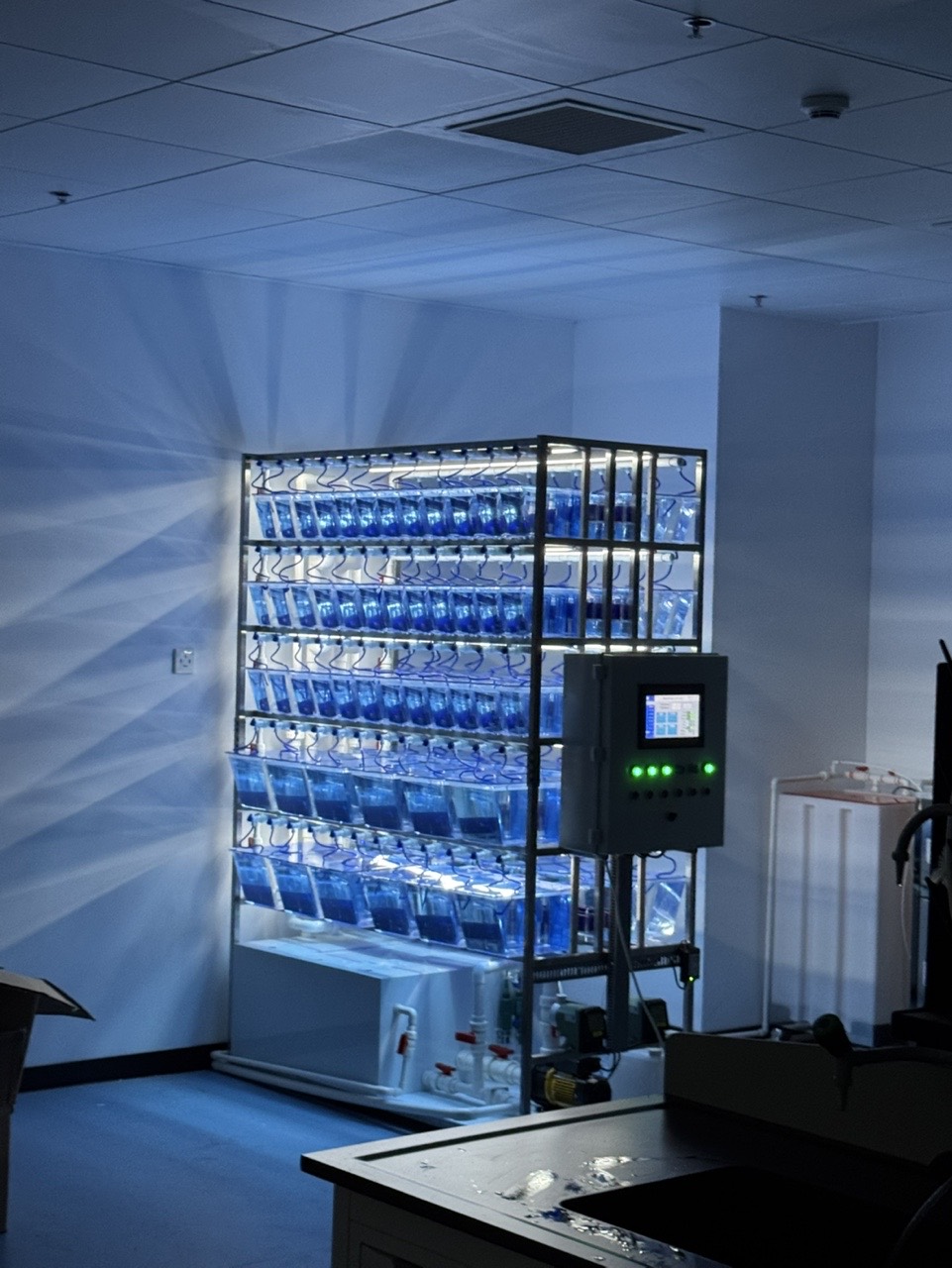
For a fish facility manager, feeding automation is useful only when it protects the daily husbandry routine rather than adding another unpredictable task. A Zebrafish Automated Feeding System that works with both dry feed and liquid feed gives a laboratory a more practical way to match delivery to colony stage, diet plan, staffing pattern, and observation schedule. The goal is not to replace animal-care judgement. It is to make each planned feed measurable, repeatable, and easy to verify.
That distinction matters in research settings. A schedule may look consistent on paper while actual delivery varies between tanks, feed formats are changed informally, or residues are not noticed until water conditions shift. A well-planned Zebrafish Automated Feeding System should make the feeding plan easier to execute and easier to review.
Why one system should accommodate two feed formats
Dry diets and liquid diets have different handling needs. Dry feed is convenient for scheduled portions and routine replenishment. Liquid feed can be useful where the facility’s approved protocol calls for a suspension or a prepared liquid ration. A versatile system does not assume that these formats behave the same way: it gives staff separate setup, cleaning, and verification steps for each route.
Published zebrafish husbandry guidance describes feeding zebrafish two to three times daily with a combination of dry and live feeds, while also noting that appropriate schedules vary with the facility and animal-welfare program. This is a helpful planning principle, not a universal recipe. The feeding schedule, diet choice, and portion size should remain under the control of the facility’s veterinary and husbandry team.
A Zebrafish Automated Feeding System supports that approach by turning a broad plan into traceable daily actions. Instead of asking whether every tank was fed, the team can ask clearer questions: What was scheduled? Which feed format was selected? Was delivery observed? Was any residue recorded? These checks matter whether the facility uses dry feed for routine maintenance, liquid feed for a defined protocol, or both across different groups.
Start with the workflow, not the dispenser
Before comparing equipment, map the current process from feed preparation to post-feed observation. Include the person who mixes or loads feed, the person who checks tanks, and the person who reviews water-quality or colony notes. This usually reveals where automation can help and where manual judgement must remain.
- Define the feeding groups: separate tanks by approved diet, life stage, study constraints, and feeding frequency.
- Write the handoff: specify who prepares dry feed, who prepares liquid feed, and who verifies that the correct line or channel is active.
- Set observation points: record tank response, visible residue, and any deviations from the expected feeding event.
- Plan sanitation: establish cleaning, flushing, tube replacement, and drying procedures appropriate to each feed path.
This workflow-first view makes the system more flexible. It also keeps a useful boundary in place: an automated delivery event is not the same as confirmation that fish received the intended ration.
How dry-feed delivery fits a laboratory routine
For dry feed, the key question is whether the facility can load a suitable diet, assign portions according to its approved plan, and check that material reaches the intended tanks. The process should include a defined refill interval and a visual check for bridging, moisture exposure, or other changes that affect flow. A Zebrafish Automated Feeding System should be assessed under the actual room conditions where it will operate, especially if humidity, rack access, or routine cleaning can affect dispensing.
Use a simple verification loop: document the selected dry feed, perform a setup check, observe a representative delivery, and compare the observed result with the planned ration. If the facility changes feed particle size or diet type, treat that as a controlled operational change rather than assuming an existing setting will remain appropriate.
How liquid-feed delivery requires a separate control plan
Liquid feed introduces preparation and hygiene considerations that do not apply in the same way to dry diets. A system that handles liquid feed needs a clear procedure for mixing, loading, timing, flushing, and cleaning. Staff should know how long a prepared liquid can remain in the feed path under the facility’s approved protocol, what signs require disposal, and how the line is checked before a new batch is used.
Rather than relying on vague claims about precision, ask practical questions during evaluation:
- Can the liquid-feed path be cleaned and inspected without disrupting the rest of the routine?
- Can staff distinguish a completed delivery from a blockage, air pocket, or setup error?
- Can the schedule and any manual intervention be recorded in a way the facility can review later?
- Does the workflow let the team separate diets or experimental groups when required?
These questions keep the focus on daily control. They also help a laboratory decide whether one integrated system is suitable or whether separate routines are more appropriate for its program.
Connect feeding checks with husbandry observation
Feeding automation should sit beside, not outside, the facility’s existing observation program. Published housing guidance lists reference water-quality ranges such as ammonia below 0.1 mg/L, nitrite below 0.3 mg/L, and nitrate below 25 mg/L; each site should follow its own approved monitoring plan and local requirements. The operational lesson is simple: if the team sees unexpected residue or changed feeding behavior, it should be able to connect that observation to the recorded delivery event and investigate promptly.
Make the post-feed check proportionate to the colony and protocol. A representative-tank observation may be adequate for a stable routine, while a new diet, new feed line, or study-sensitive group may need closer review. The record should describe what staff saw, not imply a result that has not been verified.
A practical evaluation checklist
| Evaluation area | What to confirm | Why it matters |
|---|---|---|
| Dry-feed workflow | Loading, portion setup, refill checks, and moisture management are documented. | Dry feed must move consistently through the planned routine. |
| Liquid-feed workflow | Mixing, loading, flushing, sanitation, and discard criteria are defined. | Liquid feed needs its own hygiene and verification steps. |
| Scheduling | Events can match the facility’s approved timing and group-specific plan. | Automation should support, not dictate, husbandry decisions. |
| Verification | Staff can observe delivery and log deviations. | A recorded schedule alone does not confirm the intended ration reached the tank. |
| Maintenance | Routine cleaning and inspection are realistic for the available staff time. | Long-term usability depends on procedures the team will actually perform. |
Build flexibility into the operating procedure
The value of a Zebrafish Automated Feeding System is not that it imposes a single feeding style. Its value is that it helps the facility run an approved plan with fewer avoidable variations. Start with a pilot group, define the dry-feed and liquid-feed procedures separately, train staff on exception handling, and review observations before expanding use.
Hunter Lab focuses on zebrafish instruments and applications, which makes a discussion with a zebrafish-focused supplier useful when a facility needs to align equipment evaluation with its actual husbandry workflow. Ask for a demonstration based on your own feed formats, tank groups, and sanitation steps. A thoughtful evaluation will clarify whether the proposed system fits the routine, what operating procedures are needed, and which decisions should remain with trained staff.
When dry feed and liquid feed are both part of the plan, the right automation is a system that makes those choices visible and manageable. With separate feed-path procedures, scheduled verification, and clear records, the facility can use automation as a dependable part of its zebrafish care process.








