
 EN
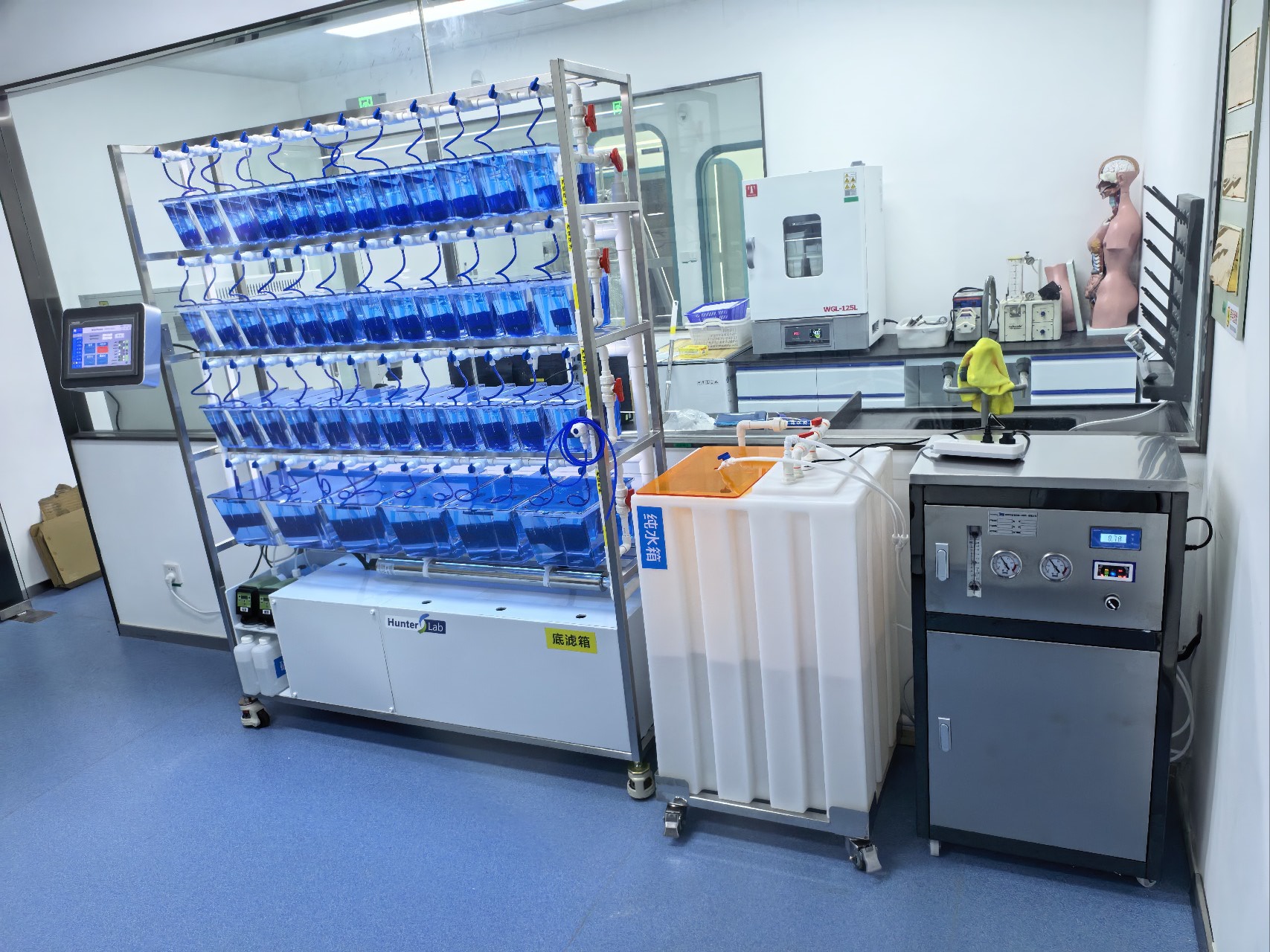
Why dual-mode dispensing matters for colony health
A zebrafish automated feeding system that supports both dry and liquid food dispensing options solves a problem that many facilities run into sooner or later. Adult fish do well on dry pellets or flakes. Larvae need live prey such as rotifers or brine shrimp. Some genetic lines or experimental protocols call for liquid diets or supplements. A feeder that can only handle one form forces the facility to run two separate routines, which doubles the equipment, the cleaning, and the chances for inconsistency.
Dual-mode dispensing keeps the feeding schedule under one control system. Dry feed and liquid feed can be delivered at different times, in different amounts, to different racks. That flexibility matters most in facilities that house multiple life stages or multiple research lines under one roof.
How dry food dispensing is engineered for consistency
Dry feed delivery sounds simple until the details show up. Pellets and flakes vary in size, density, and flow behavior. A feeder that works well with one batch of pellets may jam with another. Moisture is the quiet enemy. A hopper that is not sealed can draw humidity from the room, and feed that absorbs water starts to clump.
Most dry dispensing systems use one of three mechanisms. Screw augers meter feed by rotation. Vibratory trays move feed by vibration. Drop gates release a set volume when a gate opens. Each has tradeoffs. Augers can crush delicate pellets. Vibratory trays can be sensitive to tilt. Drop gates can wear over time.
-
Keep hoppers sealed and inspect them weekly for clumping.
-
Match the dispensing mechanism to the feed form, not the other way around.
-
Calibrate the delivered amount by weight, not by dial setting.
-
Route delivery tubes away from high-flow areas to reduce waste.
Liquid and live food handling in the same feeder
Liquid dispensing is a different engineering problem. Live rotifers and brine shrimp are fragile. They die if they are pumped too hard or left in a warm line for too long. Liquid diets and supplements can settle, separate, or leave residue that clogs narrow tubing.
Peristaltic pumps are common for liquid delivery because they are gentle and easy to clean. Air lifts can move live prey with even less shear. Diaphragm pumps work for some liquid diets but need careful sizing. The delivery path should be short, smooth, and easy to flush. A system that shares one path between dry and liquid feed will eventually have cross-contamination problems.
| Feed type | Common delivery mechanism | Main challenge | Best practice |
|---|---|---|---|
| Dry pellet | Screw auger or vibratory tray | Clumping, moisture | Sealed hopper, weekly cleaning |
| Dry flake | Drop gate or gentle auger | Static cling, uneven drop | Anti-static tubing, calibration |
| Live rotifer | Peristaltic pump or air lift | Shear damage, settling | Low-shear pump, short lines |
| Liquid diet | Diaphragm or peristaltic pump | Residue, clogging | Rinse cycle, regular flush |
Design features that keep both modes reliable
A dual-mode feeder earns its keep through design details that are easy to overlook. Separate delivery paths for dry and liquid feed prevent cross-contamination. Quick-release fittings make cleaning faster. A control system that logs each delivery mode separately helps with troubleshooting.
Mounting and access matter too. A feeder that is hard to refill or clean will be neglected. Hoppers should be reachable without removing the unit. Liquid reservoirs should be easy to rinse. Tubing should be visible so that blockages can be spotted before a feeding is missed.
Integration with the light cycle is another feature. A standard photoperiod of 14 hours light and 10 hours dark sets the daily rhythm. Feeding is usually scheduled during the light phase. A dual-mode feeder should be programmable to match that schedule for both feed types.
A field example from a facility using dual dispensing
A multi-rack facility in eastern China had been feeding dry pellets to adults and live rotifers to larvae by hand. Weekend coverage was difficult. The dry feeding was quick, but the live feeding required checking cultures, rinsing lines, and delivering small amounts to many tanks. The two routines competed for staff time, and one or the other was often delayed.
The facility installed a dual-mode automated feeding system. Dry feed was delivered through one path, liquid live feed through another. Each rack had its own schedule, and the two modes ran independently. The weekend routine changed. Staff still checked the animals and monitored water quality, but the feeding tasks no longer required two separate rounds. The facility also gained a digital log that showed which mode ran at which time.
The transition was not without issues. One liquid line clogged after a few weeks because a rinse step had been skipped. The facility added a weekly flush to the maintenance schedule. The dry hopper needed a seal replacement after humidity caused clumping. Those fixes were small compared to the daily labor the system replaced.
Where dual-mode systems have limits
A dual-mode feeder is not a universal solution. It adds complexity compared to a single-mode unit, and that complexity has to be managed. More lines mean more places for clogs. More reservoirs mean more cleaning. More programming options mean more chances for a configuration error.
The system also cannot decide that a particular line needs a different diet. It cannot see that larvae are not eating or that a liquid culture has gone bad. Those observations still require a person. Dual-mode dispensing is a tool for consistency. It does not replace judgment.
Hunter Lab (Hunter) builds zebrafish laboratory equipment with attention to the practical details of feed handling and system integration. The manufacturing and quality control side supports the consistency that long-term colony management requires. For facilities weighing dry and liquid dispensing in one system, that kind of build discipline is part of the foundation.








