
 EN
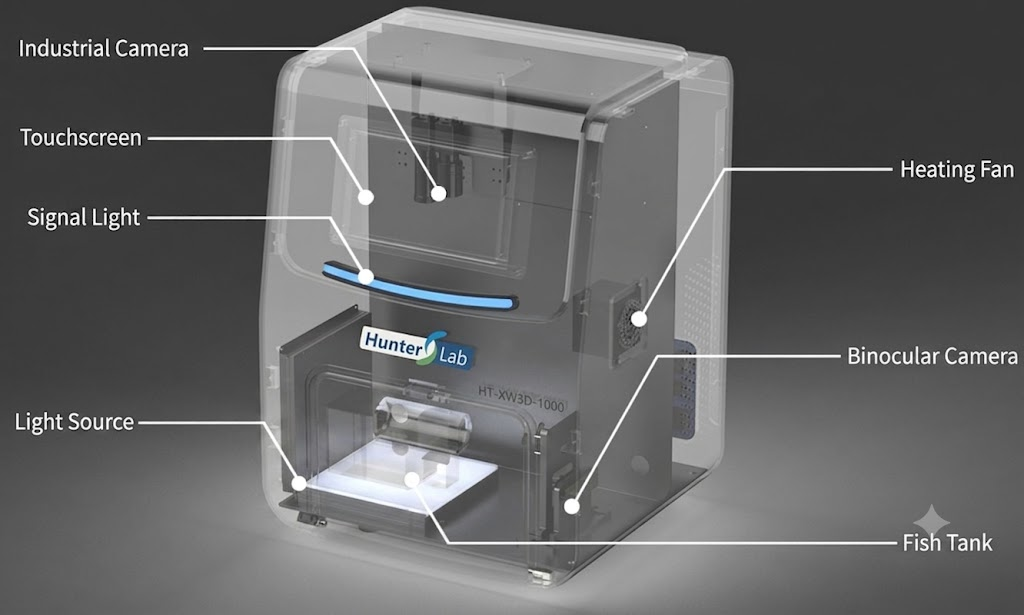
How to validate larva behavior analysis systems for regulatory acceptance
A Zebrafish Larva Behavior Analysis System can make a behavior assay faster and more traceable, but instrument installation alone does not make its results review-ready. For safety teams, the harder question is whether the complete method—from larval handling through video capture, algorithmic scoring, and reporting—reliably answers a defined intended decision question. This article outlines a fit-for-purpose path for validating a Zebrafish Larva Behavior Analysis System without overstating what the evidence can support.
Start with the intended intended use
Before testing performance, write a precise intended-use statement for the Zebrafish Larva Behavior Analysis System. Is it a discovery screen that prioritizes substances for follow-up, a weight-of-evidence component, or a proposed replacement for a defined endpoint? These uses require different evidence. A system suitable for early hazard prioritization may not, by itself, support a final final safety conclusion.
OECD validation principles are useful here: a method must be both reliable and relevant for its specified purpose. Reliability concerns repeatability and reproducibility under a standardized protocol. Relevance asks whether the behavior endpoint has a meaningful relationship to the biological or safety effect at issue. State the limitation as clearly as the benefit. A Zebrafish Larva Behavior Analysis System should not be presented as universally interchangeable with an accepted guideline unless that exact use has been demonstrated and accepted by the relevant authority.
Qualify the system before validating the assay
System qualification establishes that the Zebrafish Larva Behavior Analysis System performs consistently enough to support an assay study. Document the camera, illumination, plate format, environmental controls, software release, tracking algorithm, data storage, and user permissions. Lock the acquisition configuration before generating the performance-study dataset.
- Installation qualification: record the installed hardware, software version, calibration status, and controlled configuration.
- Operational qualification: challenge the Zebrafish Larva Behavior Analysis System with predefined checks for focus, illumination uniformity, frame rate, tracking continuity, and audit-trail behavior.
- Performance qualification: show that the configured system produces stable output during routine runs with the planned protocol and trained operators.
Use acceptance limits that are justified in advance. A pass/fail threshold should not be changed after reviewing the study data. For example, a tracking-loss threshold may be appropriate only if it is connected to the assay’s ability to classify behavior, not simply because the number looks convenient.
Standardize the biological and operational sources of variation
Behavior is sensitive to conditions that a video system cannot correct later. A performance plan for a Zebrafish Larva Behavior Analysis System should control or deliberately study strain, developmental stage, clutch handling, feeding status, exposure timing, plate position, acclimation, temperature, light cycle, dosing vehicle, operator actions, and analysis settings. Published reviews of larval zebrafish behavior report frequent intra- and inter-laboratory variability when methods and reporting differ.
This is where validation and external-review expectations meet practical lab work. If throughput is the binding constraint, automated batch capture can be sensible. If reproducibility is the priority, a Zebrafish Larva Behavior Analysis System needs documented checks for plate effects, wells with poor tracking, and deviations from the planned light-acclimation sequence—even when that reduces daily sample count.
Build an assay evidence package around predefined performance claims
Translate the intended use into performance characteristics. The exact list depends on the endpoint, but most evidence programs for a Zebrafish Larva Behavior Analysis System should address the following questions.
- Repeatability: Can the same operator obtain comparable results across independent runs using the same protocol?
- Reproducibility: Can trained operators, and ideally more than one laboratory, reach comparable conclusions with the Zebrafish Larva Behavior Analysis System?
- Discrimination: Do prespecified positive and negative controls separate as expected using the intended endpoint and analysis rules?
- Robustness: Which small, realistic changes—such as a controlled shift in acclimation timing or illumination—change the result enough to require tighter controls?
- Data-processing validity: Does the algorithm produce traceable, stable results across relevant videos, including difficult recordings and prespecified exclusions?
A positive control that fails is information, not an inconvenience to hide. Stop, investigate the system and protocol, record the deviation, and decide whether the run is invalid before looking at the test-substance interpretation. This protects the study record from post hoc decisions.
Use controls and acceptance criteria that fit behavior endpoints
Established zebrafish guidance demonstrates the value of explicit validity criteria. OECD Test Guideline 236, for example, specifies controlled test conditions and predefined performance expectations for its fish embryo acute toxicity purpose. A behavior assay is not automatically covered by that guideline, but the discipline is instructive: specify control behavior, environmental conditions, exclusions, and decision rules before the experiment begins.
For a Zebrafish Larva Behavior Analysis System, define baseline behavior windows, control-response direction and magnitude, permitted tracking-loss rate, minimum analyzable larvae, and rules for outliers or reruns. Pair each criterion with a rationale and version-controlled SOP. If the statistical decision model changes, treat the change as a change-control event rather than a quiet software adjustment.
Demonstrate transferability, not just a successful pilot
A single well-run pilot is useful, but it does not establish that a Zebrafish Larva Behavior Analysis System is transferable. Design staged studies: internal repeatability first, then different operators, days, instrument units, or sites where feasible. Use representative test materials and concentration ranges for the proposed application. Record failures as well as successes; a independent reviewer needs to understand the method’s applicability domain and limitations.
When the method will support external decisions, independent review and transparent reporting strengthen the package. Regulatory acceptance can vary by authority and application, so engage the intended receiving authority early rather than assuming a validated local workflow will be accepted everywhere.
Create a review-ready evidence trail
The deliverable from a Zebrafish Larva Behavior Analysis System should be more than summary plots. Assemble an evidence file containing the intended-use statement, risk assessment, qualification records, training records, SOPs, raw-video retention policy, metadata, software and algorithm versions, deviations, control outcomes, statistical analysis plan, validation results, and final limitations. Make it possible for a reviewer to trace any reported behavior classification back to the original run.
For regulated work, a defensible conclusion may be modest: the Zebrafish Larva Behavior Analysis System is validated for a defined screening context under specified conditions, and its output should be interpreted within that context. That is more useful—and more credible—than claiming universal acceptance.
Validation checklist before submission
- Define the intended decision question and the system’s limited intended use.
- Freeze the Zebrafish Larva Behavior Analysis System configuration and analytical workflow.
- Predefine controls, acceptance criteria, exclusions, and failure handling.
- Show repeatability, reproducibility, robustness, and traceability with representative materials.
- Document the applicability domain, known limitations, and changes requiring renewed qualification.
- Seek early feedback from the authority or program that will evaluate the data.
Validation is not a one-time software test. It is a continuing demonstration that the Zebrafish Larva Behavior Analysis System, the biological protocol, and the data workflow remain fit for their stated purpose. Build that discipline into routine operations, and the resulting evidence will be far easier to defend in a external review conversation.








