
 EN
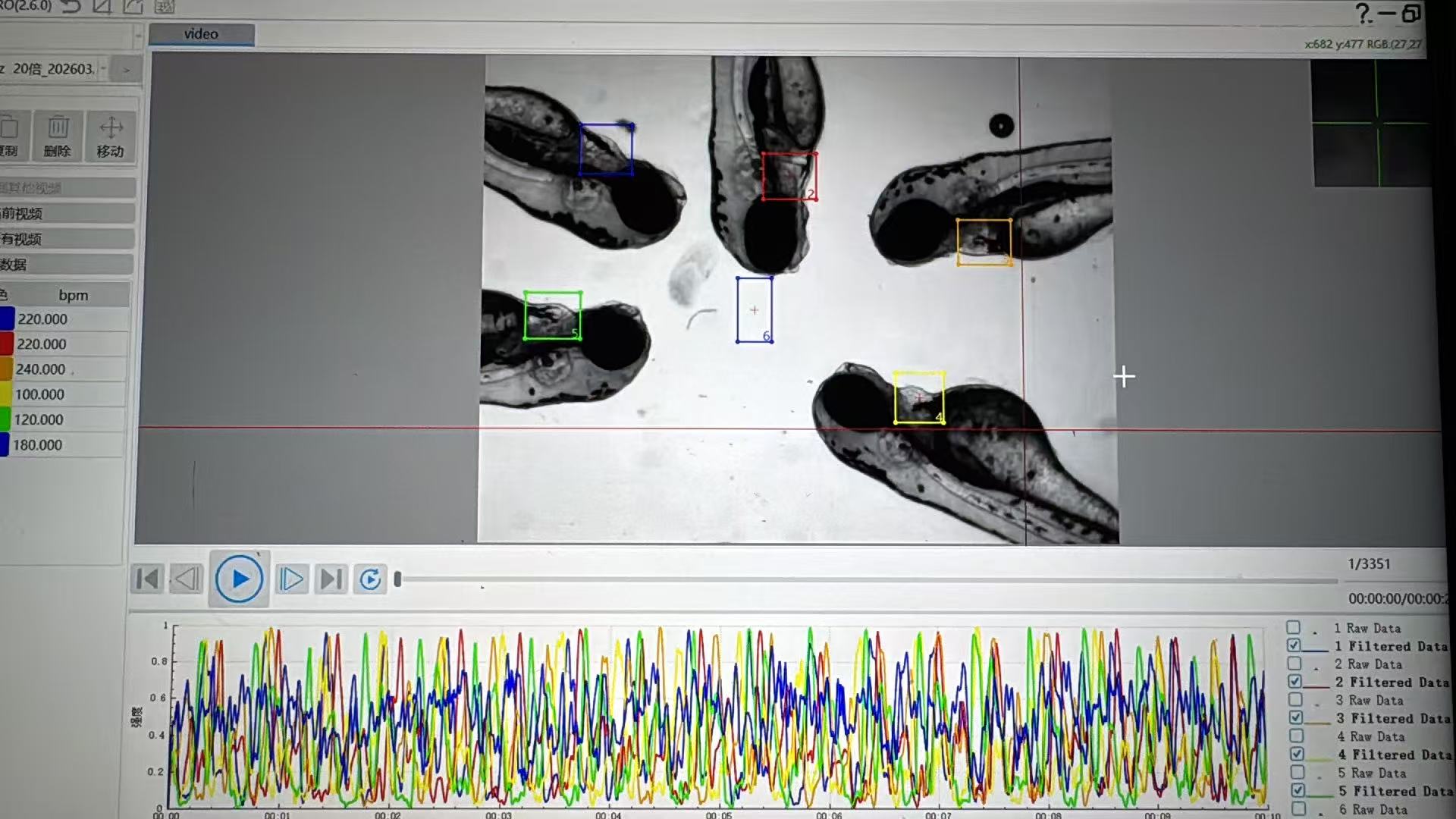
How to Validate a Zebrafish Behavioral Analysis System for Regulatory Studies
A Zebrafish Behavioral Analysis System can turn movement, startle, preference, or social-response observations into structured data. For regulatory-facing work, however, the system is not validated because a camera tracks fish or because a dashboard produces a graph. Validation is the documented demonstration that the full measurement process is fit for its defined context of use.
That distinction matters. A laboratory may have a technically capable Zebrafish Behavioral Analysis System and still lack evidence that its assay, settings, operators, and analysis rules produce repeatable and interpretable results. The most defensible plan starts by narrowing the claim: are you supporting internal screening, method development, a weight-of-evidence package, or a study intended to meet a particular authority’s expectations? Confirm the applicable requirements with the responsible quality and regulatory teams before locking the protocol.
Start with an intended-use statement
Write a one-page intended-use statement before selecting acceptance criteria. It should name the species life stage, strain or line, behavioral endpoint, exposure window, test article class, plate or arena format, recording conditions, and decision the output will inform. It should also state what the Zebrafish Behavioral Analysis System will not support. For example, a larval locomotor assay may be appropriate for detecting a reproducible shift in activity under controlled conditions; it is not automatically a standalone predictor of human clinical risk.
This statement connects validation to a measurable question. It prevents a common failure mode: optimizing tracking performance on a convenient cohort and later applying the same thresholds to another developmental stage, lighting schedule, or endpoint without evidence. A protocol that is narrowly qualified and transparently limited is more useful than one that makes a broad claim it cannot sustain.
Separate the system into validation layers
Evaluate the Zebrafish Behavioral Analysis System as a chain of linked layers, because an acceptable result at one layer does not prove the next.
- Physical acquisition. Verify camera placement, field of view, focus, frame rate, illumination, arena geometry, and time synchronization. Preserve the configuration record so a later study can show what was actually used.
- Animal and assay conditions. Define staging criteria, acclimation, density, water conditions, feeding where relevant, handling sequence, and the light/dark program. Developmental stage, temperature, noise, vibration, and plate position can all change behavior before software sees a pixel.
- Tracking and feature extraction. Test whether the software detects animals consistently, handles occlusion or reflection as specified, and flags unusable recordings. Lock the algorithm version and key thresholds.
- Study interpretation. Predefine endpoint calculations, exclusion rules, statistical treatment, and review responsibilities. A reproducible trajectory is not enough if analyst decisions are made after results are visible.
For a Zebrafish Behavioral Analysis System, this layered approach also clarifies ownership. Engineering can qualify acquisition performance, while assay scientists establish biological responsiveness and quality personnel approve the controlled records.
Build a control strategy that challenges the assay
Use controls to show that the system can distinguish a meaningful signal from routine variation. Negative or vehicle controls establish baseline behavior; a relevant positive control tests whether the assay can detect the direction and scale of change that the method is intended to recognize. Include a system-suitability decision before reviewing test-article conclusions.
Do not borrow acceptance numbers from an unrelated test just because both use zebrafish. OECD Test Guideline 236, for example, demonstrates the value of predefined validity criteria and tightly recorded environmental conditions for a fish embryo toxicity test. Its criteria are not behavioral standards. A behavioral protocol needs endpoint-specific limits justified with pilot data, biological knowledge, and the intended context of use.
Challenge runs should deliberately include realistic stressors: a modest lighting shift, a borderline focus condition, a new operator, or a representative plate-position pattern. The question is not whether every disturbance is acceptable. It is whether the Zebrafish Behavioral Analysis System detects, prevents, or records the disturbance before it is mistaken for treatment effect.
Demonstrate precision, robustness, and reproducibility
Plan validation around repeated biological experiments, not repeated measurements of the same video. Behavioral data can vary between clutches, parental pairs, days, and operators. Randomize animals into groups, balance plate positions, and preserve the allocation record. Where the protocol permits, include runs across separate days and independent cohorts so the result describes the assay rather than one favorable batch.
For each critical endpoint, define how you will assess within-run precision, between-run precision, inter-operator consistency, and robustness to controlled changes. Review both numerical agreement and biological interpretation. A statistically significant difference that reverses direction between independent cohorts is not a stable basis for a regulatory conclusion.
One useful practice is to freeze raw-video naming, metadata fields, analysis software version, and threshold settings before the formal validation set begins. Reanalyze a retained subset after a controlled handoff or software update. If results differ, document the cause and decide whether the change requires partial revalidation. Automation reduces manual scoring burden, but it also creates configuration risk.
Make the data trail reviewable
Regulatory readiness depends on traceability. For every run, retain the protocol version, sample and plate map, animal source and stage, exposure preparation record, environmental log, acquisition settings, raw files, analysis configuration, derived outputs, deviations, and reviewer decisions. Define who can alter settings and how changes are approved.
The review package should make it possible for another qualified person to answer three questions without reconstructing the study from memory: Was the run valid? Were the predefined rules followed? Does the conclusion match the controlled output? That is the practical value of validation for a Zebrafish Behavioral Analysis System.
Use an audit-ready validation checklist
- Is the intended use specific enough to set relevant acceptance criteria?
- Are animal stage, husbandry, exposure, acquisition, and analysis conditions controlled and recorded?
- Do negative, positive, and system-suitability controls have predefined outcomes?
- Have biological replicates, operators, and days been included intentionally?
- Are software versions, thresholds, exclusions, and deviations traceable?
- Does the report distinguish observed assay performance from broader claims of regulatory acceptance?
A well-qualified Zebrafish Behavioral Analysis System is built through disciplined scope, controlled execution, and transparent evidence. Treat validation as an ongoing state of control: when an endpoint, organism, camera configuration, or analysis method changes materially, assess the impact and revalidate the affected layer before relying on the new output in regulatory studies.








