
 EN
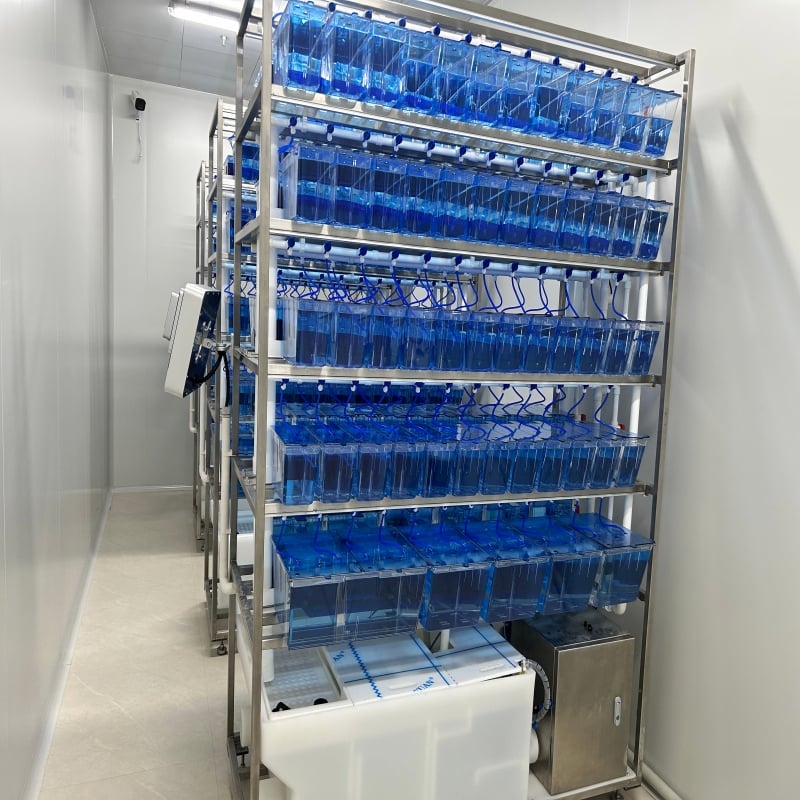
How to transition from manual to automated feeding in a zebrafish research facility
Moving a zebrafish facility from hand-fed rounds to an automated workflow is not simply an equipment change. It is a husbandry change-management project. A Zebrafish Automated Feeding System can make routine delivery more repeatable, but only if the facility defines what “repeatable” means for its own fish, feed types, tank groups, staffing pattern, and approved animal-care practices. The practical goal is not to remove observation; it is to move staff attention from repetitive dispensing toward verification, welfare checks, and exception handling.
As a shared-resource manager, I would begin with a simple principle: automate a stable process before trying to fix an unstable one. In many facilities, manual feeding happens at least twice daily, so small differences in portioning, timing, and handoff between staff can accumulate. A thoughtful Zebrafish Automated Feeding System gives a team a way to standardize a proven routine, not permission to stop looking at the fish.
1. Map the manual workflow before choosing automation
Start with two weeks of baseline observation. Record each feeding event by room, rack or tank group, life stage, diet, scheduled time, person responsible, and any exception. Include the unglamorous setup details: who prepares dry feed, how live feed is handled, where portions are staged, and how missed or delayed rounds are reported. This is the setup step nobody mentions, yet it usually reveals which part of the workflow needs help.
Separate cohorts that genuinely require different plans. Larvae, juveniles, breeding adults, experimental groups, and animals on special protocols should not be forced into one generic schedule. Published husbandry guidance commonly describes two to three daily feedings as a routine practice, while also emphasizing developmental-stage differences. For an Zebrafish Automated Feeding System, that means the first design question is not “How many tanks can it serve?” It is “Which cohorts can safely share a validated recipe?”
2. Define acceptance criteria before the pilot
Write the pilot criteria with animal-care, research, and facility staff together. A useful checklist covers delivery timing, dose consistency, missed-feed detection, cleanability, diet compatibility, alarm response, and the ability to keep a manual fallback available. Add biological observations that your program already uses, such as feeding response, uneaten-feed patterns, water-quality trends, growth review, or breeding performance. These are not promises that automation will improve every outcome; they are signals that help you see whether the transition is behaving as intended.
Assign ownership explicitly. The person who refills a hopper may not be the person who reviews logs, and neither may be the person authorized to change a schedule. A Zebrafish Automated Feeding System needs a named daily verifier, a weekly maintenance owner, and a clear escalation route for faults. If that sounds formal, it is because a silent malfunction is more dangerous than a visible manual delay.
3. Start with a limited, low-consequence pilot
Do not convert the entire facility in one weekend. Choose a small group of stable, non-critical tanks with comparable diet and schedule requirements. Keep the established manual protocol documented and ready during the pilot. For the first several weeks, compare planned delivery with actual delivery and inspect tanks after feeds. The point is to test the combined system: device, feed, schedule, cleaning routine, staff handoff, and observation.
This manual to automated phase should include a stop rule. Examples include unexplained missed deliveries, persistent residual feed, a failed log review, or any welfare concern defined by the facility. A stop rule does not mean the pilot failed; it means the team has protected its ability to diagnose the problem before expanding it. Automation introduces its own errors, so early containment is a strength, not a setback.
4. Validate feed formats and settings separately
One of the most common transition mistakes is assuming that a schedule proven for one dry feed, particle size, or dispensing path will transfer directly to another. Test each diet and delivery configuration as its own controlled change. Check for bridging, clumping, residue, moisture exposure, and uneven distribution. If the facility uses live feed, determine which steps remain manual and how those steps are recorded alongside automated events.
A Zebrafish Automated Feeding System should support your approved feeding plan rather than dictate it. Avoid setting a universal ration based on another laboratory’s practice. Use the facility’s baseline records and protocol requirements to establish a starting point, then review biological and operational observations at scheduled intervals. Conditional qualification matters here: a setting that works well for one cohort may need adjustment for another.
5. Redesign staff work instead of deleting it
The value of automation often appears when technicians have time to notice changes that a rushed feeding round can hide. Reassign saved routine time to tank inspections, mortality review, system cleaning, inventory, training, and documentation. Build a short daily dashboard or log review: Were all planned events completed? Did any alarm occur? Were there unusual leftovers? Is the next feed and backup supply ready?
This is also the moment to train beyond the original project team. Every person covering weekends or absences should know how to verify a feed, pause a program, perform the approved fallback, and document an exception. A good Zebrafish Automated Feeding System implementation is resilient to staff rotation because the procedure,not one individual’s memory,holds the operational knowledge.
6. Scale in stages and review the evidence
After the pilot meets its predefined criteria, expand one cohort type or room at a time. Keep an implementation register that records the date, settings, diet, operator training, maintenance actions, deviations, and review outcome for each expansion. This creates a practical audit trail and helps distinguish an equipment issue from a protocol issue later.
At 30, 60, and 90 days, bring facility, veterinary, and research stakeholders back to the same table. Review reliability, staff workload, fish observations, and exceptions. Ask a direct question: has the Zebrafish Automated Feeding System made the process more visible and controllable? If the answer is mixed, revise the recipe or workflow before adding capacity. The aim of the implementation is dependable husbandry, not maximum automation.
A transition checklist for facility leaders
- Document the current manual schedule, diets, roles, and exceptions.
- Group tanks by validated feeding need rather than convenience alone.
- Set biological and operational acceptance criteria before a purchase or pilot.
- Pilot the Zebrafish Automated Feeding System on a limited, stable cohort with manual fallback ready.
- Validate each feed format and schedule separately.
- Assign daily verification, maintenance, escalation, and backup responsibilities.
- Scale gradually, review deviations, and retain the evidence behind every change.
A measured transition from manual feeding is less about replacing a person at the rack and more about building a reliably observed process. When the team keeps validation, exception handling, and stage-specific husbandry at the center, a Zebrafish Automated Feeding System can become a controlled extension of the facility’s care program.








