
 EN
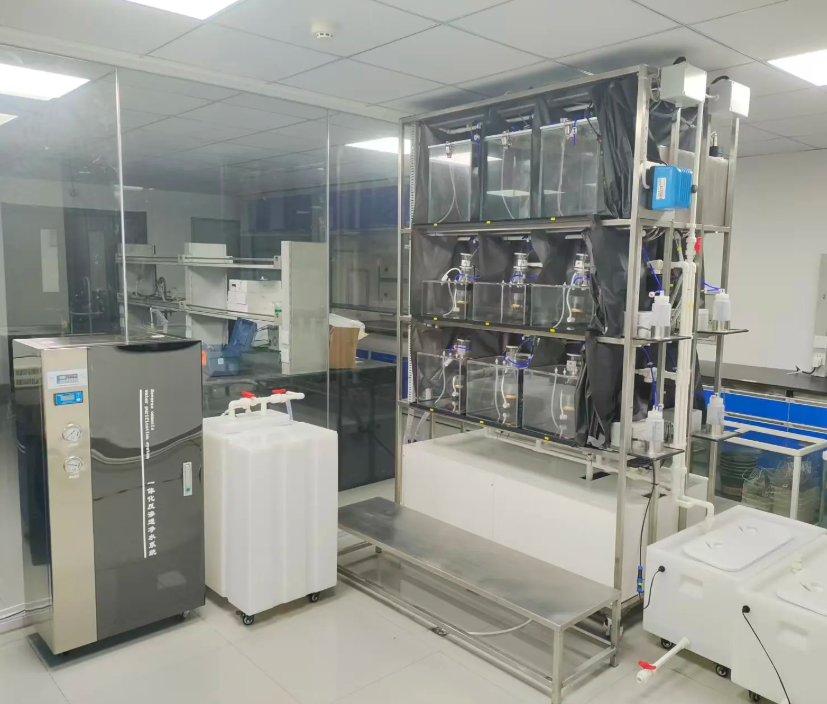
Why manual spawning checks leave gaps in the record
Zebrafish spawning is tightly tied to the light cycle. A large share of egg release happens in a fairly narrow window after the lights come on. A person walking past trays every hour may catch the general pattern, but the exact timing and the moment a clutch appears often go unrecorded. That missing timestamp matters. Spawning events are not just a count. They are a timing signal that can reveal stress, water quality shifts, or changes in diet. Manual checks also introduce observer differences. One technician may count a partial spawn as an event. Another may wait until a full clutch is visible. Over weeks, those choices turn into noisy data.
Automation does not remove the need for human judgment. It changes the role. Instead of standing over trays with a notebook, staff can review an event log and spend time on the fish that need attention.
What a spawning event looks like to a sensor
A zebrafish reproduction system can detect spawning through several physical signals. The trick is choosing a signal that changes reliably when eggs are released and does not trigger on every ripple or food particle.
-
Visual change. Cameras aimed at the tray can detect a sudden increase in small round objects. A simple background subtraction model can flag a new cluster. More advanced models can separate eggs from debris and from the fish themselves.
-
Electrical change. Water conductivity and impedance shift when eggs enter the water. The change is small, so the sensor needs a stable baseline and temperature compensation.
-
Mechanical change. A tray on a load cell or a fine mesh screen can register a small weight change or a pressure shift as eggs settle.
-
Light interruption. An infrared grid or light curtain across the tray can detect falling eggs as brief breaks in the beam.
No single signal is perfect. A camera can be fooled by reflections. An impedance sensor can drift as water chemistry changes. A load cell can pick up vibration from a nearby pump. Combining two signals usually gives a cleaner event.
| Detection method | Strength | Weakness | Best fit |
|---|---|---|---|
| Camera vision | Rich context, can count and classify | Sensitive to lighting and reflections | Tanks with stable lighting |
| Impedance or conductivity | No optics, works in dark | Needs temperature and baseline correction | Recirculating systems |
| Load cell or weight | Direct physical change | Vibration and drift issues | Small static trays |
| Infrared grid | Fast response, simple logic | Requires clear line of sight | Shallow spawning trays |
Building an event log that does not cry wolf
False positives are the fastest way to lose trust in an automated system. A log full of alerts that turn out to be bubbles or a fish bumping the tray will be ignored within a week. The design goal is not maximum sensitivity. It is a useful signal-to-noise ratio.
A few practical rules help.
-
Require two independent signals before logging an event.
-
Set a minimum threshold that ignores single eggs or debris.
-
Add a short confirmation window. If the signal does not persist for a few seconds, discard it.
-
Timestamp every event with the light cycle phase, not just clock time.
-
Keep raw sensor traces for a rolling period so false positives can be reviewed later.
The last point is often skipped. Raw data is valuable when a strange pattern appears. It allows a review of whether the system missed a real spawn or logged a false one.
A facility case where timing changed the interpretation
A research group was studying the effect of a new feed on reproductive output. The automated spawning tracker had been running for several weeks. The egg counts looked similar between control and treatment groups. The team almost concluded there was no effect.
Then the event log was reviewed by time of day. The control group spawned in a tight window after lights on. The treatment group spawned later and over a longer period. The total count was similar, but the timing was different. That pattern pointed to a subtle shift in spawning behavior that a simple daily count would have missed.
The system did not prove a mechanism. It raised a question that led to a follow-up study. That is often the most valuable output of automated tracking. It shows where to look next.
Keeping the system maintainable over months
An automated tracker is only useful if it keeps running. Maintenance needs are modest but real.
-
Clean camera lenses and infrared windows on a set schedule. A thin biofilm can blur an image or weaken a beam.
-
Recalibrate load cells and impedance sensors after major water changes or system moves.
-
Check cable connections and strain relief. Vibration and moisture are hard on connectors.
-
Review the event log weekly, not just when something looks wrong.
-
Keep a manual backup routine for the rare case when the system is offline.
Limitations should be stated plainly. Automated tracking works best for species and strains with predictable spawning behavior. It cannot replace a health check. It does not decide whether a clutch is viable. It records that an event happened, when it happened, and roughly how large it was. Those are the inputs for better decisions, not the decisions themselves.
Hunter Lab works on the manufacturing side of this equipment ecosystem. The company focuses on consistent fabrication, material selection, and supply chain reliability for lab-scale aquatic systems. For teams building a zebrafish reproduction system, that production discipline often determines whether the event log stays useful after the first month.








