
 EN
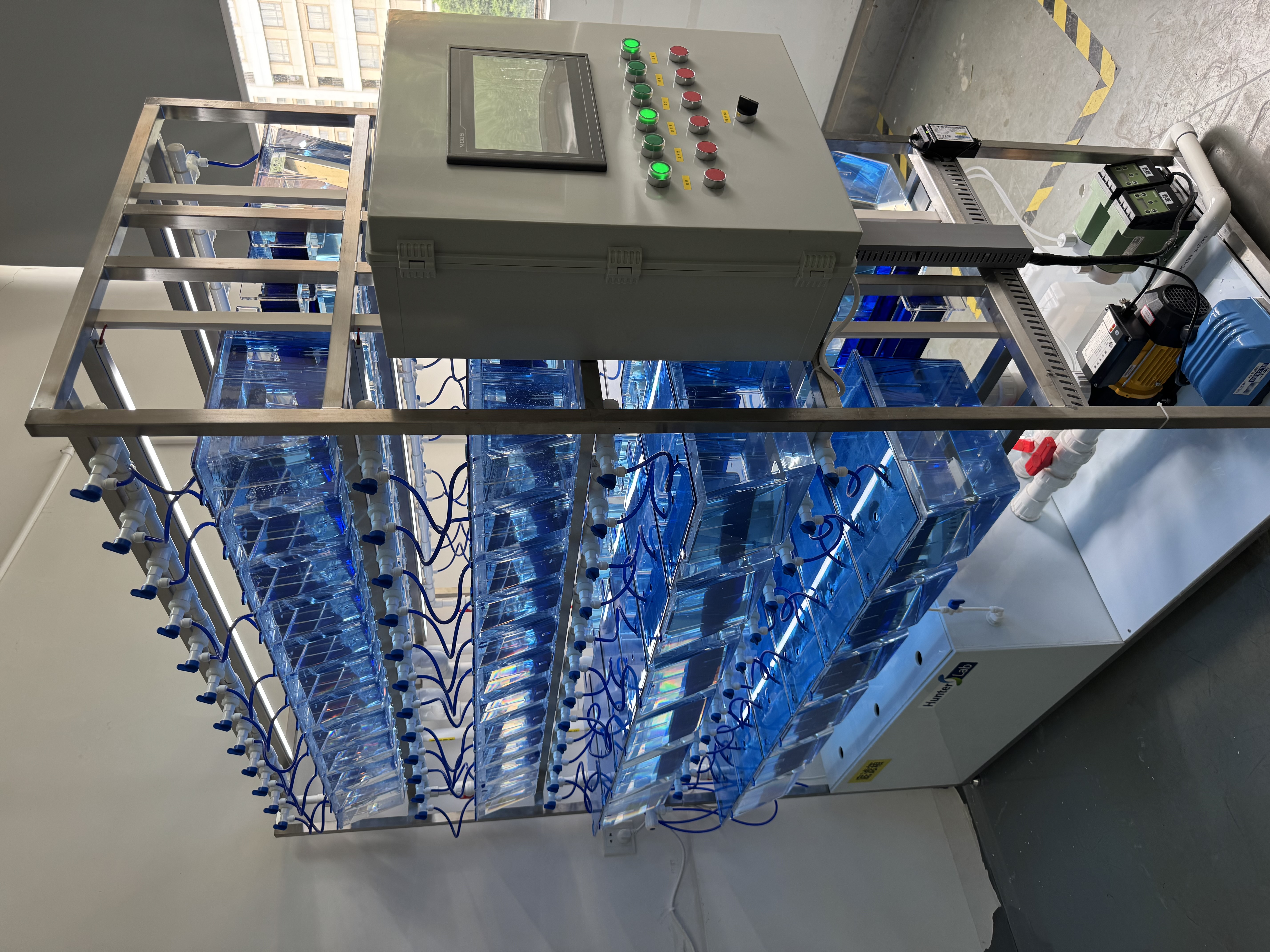
How to scale a zebrafish breeding system from 200 to 2000 tanks without downtime
Expanding a Zebrafish Breeding System is not simply a matter of adding racks. At 200 tanks, an experienced team can often solve small disruptions with manual work. At 2,000 tanks, a short interruption to water treatment, breeding schedules, records, or quarantine can ripple into missed embryo collections and avoidable welfare risk. The practical goal is to make each new block behave like a tested extension of the existing Zebrafish Breeding System, not like a second facility bolted on at speed.
For facility managers, the useful question is not “How many tanks can we install?” It is “Which constraints will limit reliable output first?” A scalable Zebrafish Breeding System needs capacity in water, backup power, staff time, biosecurity, and data handling. Tank count is only one part of the answer.
Start with a capacity model, not a rack order
Before approving an expansion, map the present Zebrafish Breeding System as a set of operating limits. List adult housing, nursery space, quarantine positions, breeding positions, reserve tanks, filtration loops, make-up water, floor drainage, electrical load, and the people who check them. Then calculate the usable rather than nominal tank capacity. A facility that appears full at 200 tanks may already be using most of its daily labor and water-quality margin.
Build the model around production waves. Ask how many pairings, group crosses, embryo collections, transfers, and tank changes occur on the busiest day rather than on an average day. Protect spare positions for isolation, unexpected cohorts, and maintenance. This is where scalability becomes operational: a new rack should add managed capacity and contingency, not merely more fish positions.
- Define an occupancy target below physical maximum for each life stage.
- Reserve quarantine and hospital capacity before assigning production tanks.
- Record peak water, drain, and power demand by loop and room.
- Set a staff-time limit for daily husbandry, breeding, and exception handling.
Choose modular expansion boundaries
A large Zebrafish Breeding System is easier to commission when it is divided into repeatable modules. A module can be a rack group, a room zone, or a filtration loop, but it should have clear isolation points, monitoring, and a defined emergency response. The benefit of modularity is not marketing language. It is the ability to validate one section, learn from it, and continue routine work elsewhere.
Published descriptions of modular zebrafish facilities show that purpose-built systems can support substantial fish populations, but they do not establish a universal design value for every site. Local water quality, density rules, strain mix, and staffing determine the real result. In practice, a Zebrafish Breeding System should be expanded in units that can be observed independently for several routine cycles.
Plan the physical expansion so plumbing penetrations, electrical isolators, floor drainage, and access routes can be completed before fish are moved. If a construction task requires shutting down a shared service, schedule it before the new module is connected and keep the legacy module on its existing validated path.
Protect utilities before moving a single cohort
The most common source of downtime during Zebrafish Breeding System expansion is a shared utility that was assumed to have spare capacity. Verify treatment flow, storage, circulation, heating or cooling, emergency power, alarms, drainage, and network connectivity under a realistic combined load. Do not treat a successful dry test as proof that the system is ready for animals.
Run a staged commissioning plan. First test valves, sensors, alarms, and fail-safe positions. Next operate the new loop with conditioned water and no fish. Then use a small sentinel cohort under the same observation and recordkeeping rules as the production Zebrafish Breeding System. Only after stable routine checks should you transfer a larger cohort. This approach may feel slower at the start; it usually prevents the much larger delay caused by troubleshooting an unproven loop after a full transfer.
Use migration waves to preserve breeding output
Do not move every breeding line because the new space is available. A no-downtime Zebrafish Breeding System uses overlapping waves. Keep active breeder cohorts on the established system until the new module has passed water-quality, alarm, and husbandry checks. Move lower-risk or noncritical cohorts first, then repeat the same checklist before each subsequent wave.
- Freeze a baseline: current census, line status, mating schedule, mortality, water observations, and open maintenance issues.
- Commission one module and confirm its daily checks, alarms, and backup response.
- Transfer a limited cohort with a documented owner and observation window.
- Compare feeding response, spawning performance, losses, and water records with the baseline.
- Proceed only when the receiving module meets the pre-agreed acceptance criteria.
This is also the point to test a recovery plan. If a sensor fails or water parameters drift, can staff isolate the module without interrupting the original Zebrafish Breeding System? A workable rollback path is more valuable than an aggressive migration calendar.
Separate biosecurity, records, and workflow routes
At 2,000 tanks, tank capacity creates more movement: more nets, carts, water tests, people, and sample labels. Treat these routes as part of the Zebrafish Breeding System design. Separate quarantine activity from established colonies, define tool ownership by zone, and make handoff points visible. The system does not need to be complicated, but its rules must be easy to follow on a busy morning.
Records need the same discipline. Assign each tank, rack, loop, and alarm a stable identifier before the expansion begins. Link breeding pairs, line status, treatments, water observations, and transfers to those identifiers. When a problem occurs, the team should be able to identify the affected module quickly instead of searching through informal notes.
Staff for the new normal
Scalability fails when procedures scale faster than training. New staff should practice routine checks, breeding setup, transfer documentation, alarm escalation, and module isolation before the facility is full. Cross-train so that one absence does not create a gap in the Zebrafish Breeding System. A short tabletop exercise—who responds, what gets isolated, where the records are—often exposes weaknesses that a design drawing cannot.
Review labor after each migration wave. If teams are consistently late on checks or are resolving the same exception repeatedly, pause the next expansion wave and fix the workflow. More tanks do not automatically mean more useful capacity.
A practical go/no-go checklist
- Utilities have been load-tested with documented margins.
- Each module has isolation, alarm, and backup procedures.
- Quarantine, reserve, and emergency tank capacity remain protected.
- Breeding schedules continue on the legacy system during validation.
- Acceptance criteria are defined for water observations, animal status, records, and staff response.
- Each transfer wave has an owner, a review date, and a rollback plan.
Scale deliberately, then repeat what works
A reliable Zebrafish Breeding System at 2,000 tanks is built through controlled repetition. The strongest plan protects current breeding output, proves each module under routine conditions, and treats people and records as core infrastructure. If your priority is uninterrupted production, evaluate the next expansion wave against validated operating margins rather than the installation schedule alone.
That approach makes scalability measurable: each added module has stable utilities, clear ownership, protected tank capacity, and a tested way to fail safely. The result is a larger Zebrafish Breeding System that can keep working while it grows.








