
 EN
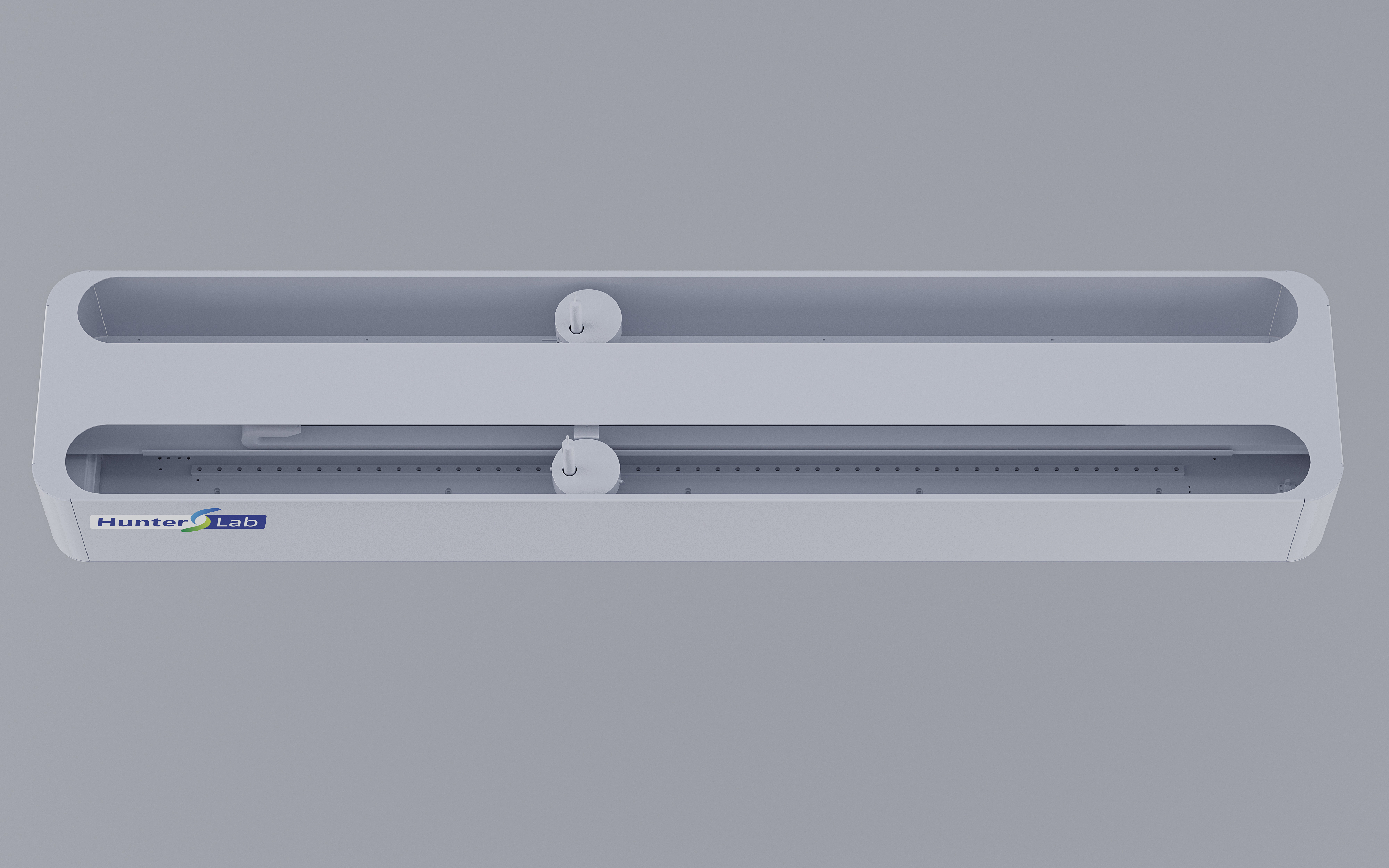
How to reduce overfeeding and waste with a precision zebrafish automated feeding system
Overfeeding rarely starts with careless husbandry. In a busy facility, it usually starts when a reasonable feed plan is repeated after the fish, tank biomass, feed format, or water conditions have changed. A Zebrafish Automated Feeding System can make delivery more repeatable, but repeatable delivery is not the same as correct feeding. The useful goal is a controlled loop: set a defensible dose, deliver it consistently, observe what the fish actually consume, and revise the schedule before leftovers become a water-quality problem.
That difference becomes obvious in shared facilities. A small excess from one tank may be easy to remove; the same excess repeated across racks becomes suspended debris, uneaten feed, higher organic load, and avoidable cleanup. Precision is therefore not merely a convenience feature. It is a way to make feeding decisions visible, testable, and easier to improve.
Why fixed portions still cause overfeeding
A Zebrafish Automated Feeding System dispenses a programmed amount, yet the amount consumed can still vary. Fish size and life stage, stocking density, health status, tank flow, pellet size, feed moisture, and the time between feedings all affect intake. Two tanks can receive the same dose while leaving very different amounts behind. That is why a schedule copied from a previous cohort should be treated as a starting hypothesis, not a permanent setting.
It is tempting to add a margin “just in case” because underfeeding feels immediately visible. The cost of that shortcut shows up later: feed that is not eaten can enter the filtration loop and add to the organic burden. In recirculating systems, staff may then spend time distinguishing a feeding issue from a filtration, density, or cleaning issue. A precision program makes the dose small enough to evaluate rather than large enough to rely on hope.
Start with a baseline that can be checked
Before programming a Zebrafish Automated Feeding System, document each feeding group rather than treating a room as one population. Record life stage, approximate fish count or biomass proxy, diet type, particle size, tank location, and the intended number of feed events. Published husbandry guidance commonly describes two to three feedings per day, but the right frequency and portion must still fit the facility’s SOP, diet, developmental stage, and welfare oversight.
Run a short baseline period with staff observation. At each event, note whether feed remains after a defined observation window, whether it settles or moves into the overflow, and whether fish show uneven access. One easily missed setup detail matters here: calibrate the dispenser using the actual feed lot and the actual tank-side conditions. A volumetric setting can drift in practical effect when particle shape, humidity, or flow characteristics change.
Use a simple dose card for every cohort
- Who: tank group, developmental stage, and the responsible reviewer.
- What: feed type, particle range, and dispenser setting.
- When: event times and minimum spacing between them.
- What to observe: visible leftovers, feeding response, and unusual distribution.
- When to adjust: a pre-agreed trigger, such as repeated leftovers or a documented change in cohort demand.
This card turns precision into an auditable practice. It also lets different technicians understand why a Zebrafish Automated Feeding System is using a particular setting instead of making undocumented, well-meant changes.
Break the daily ration into observable events
One large delivery makes it difficult to separate appetite from access. Smaller programmed events make it easier to see whether food is consumed before more arrives. The appropriate split depends on the fish and diet, so it should be validated locally. Still, dividing the daily ration creates useful decision points: if feed remains after the first event, the next event can be reviewed rather than blindly compounded.
For larvae and rapidly changing cohorts, reassess more often. For stable adult groups, a less frequent review may be sufficient, provided daily visual inspection remains part of the workflow. Automation should free staff from repetitive dispensing, not remove their ability to see a tank.
Use waste reduction as a feedback signal
Waste reduction is easier to manage when observations are translated into a consistent action. A practical three-level rule is:
- No visible leftovers: keep the setting, while continuing routine welfare and water checks.
- Occasional leftovers: review dose calibration, feed particle behavior, and whether access is uneven before changing the ration.
- Repeated leftovers or accumulation: pause automatic increases, reduce or redistribute the next dose according to the SOP, inspect the tank, and document the event.
A Zebrafish Automated Feeding System makes that rule easier to apply consistently because the original program is recorded. The team can compare what was delivered with what was observed instead of relying on memory. This also prevents a common escalation: a technician sees slow feeding in one tank, raises the setting, and unknowingly adds more food to every tank on the same program.
Connect feeding observations to water-quality review
Feed leftovers are not a substitute for water testing, and water testing is not a substitute for watching feeding behavior. Use both. Husbandry guidance for well-dimensioned recirculating systems gives examples of total ammonia below 0.1 mg/L, nitrite below 0.3 mg/L, and nitrate below 25 mg/L; your facility’s approved limits and escalation procedures take precedence. When results trend in the wrong direction, compare them with dose records, cleaning activity, density changes, and observed waste rather than assuming one cause.
At this point, overfeeding becomes a measurable operational question. Did the problem begin after a diet change? Does it occur only on one rack? Did a feed setting remain unchanged while the cohort matured? A Zebrafish Automated Feeding System cannot answer those questions alone, but accurate dispensing records make the investigation faster and more credible.
Build safeguards around the automation
Reliable automation needs human checks. Assign a daily tank observer, a weekly program reviewer, and a clear owner for feed-lot changes. Use a small test dispense after refilling or cleaning. Check that the intended feed reaches the water rather than bridging in the hopper or dispersing inconsistently. If a tank’s response changes, verify the mechanical delivery first; the equipment may be fine while the protocol no longer fits the fish.
Facilities also benefit from separating “temporary correction” from “new standard.” A one-day reduction after a documented anomaly should not quietly become the default program. Conversely, a lasting shift in demand deserves a revised dose card and a clear effective date. Those habits protect traceability while supporting waste reduction.
A practical review rhythm
| Timing | Check | Purpose |
|---|---|---|
| Each feeding day | Visual consumption, leftovers, and fish condition | Catch overfeeding before it repeats |
| After refill or diet change | Test dispense and setting verification | Confirm that the programmed dose remains meaningful |
| Weekly or per SOP | Compare water results, waste observations, and feed records | Identify trends rather than isolated events |
| At cohort transition | Recalculate the starting dose and review feed format | Keep the Zebrafish Automated Feeding System aligned with demand |
Choose precision that supports your actual workflow
When evaluating a Zebrafish Automated Feeding System, ask more than whether it can run unattended. Can staff set and document small dose changes? Can they associate programs with tank groups and feed types? Is it practical to clean, refill, and verify? Does the workflow preserve daily visual inspection? The right answer depends on the facility, but a system that makes feedback easy is more likely to reduce chronic waste than one that simply adds more scheduled delivery.
The result is not a promise that automation eliminates overfeeding. It is a disciplined method for finding it earlier. Combine calibrated dispensing, cohort-specific settings, visible consumption checks, and water-quality review, and waste reduction becomes a routine part of zebrafish husbandry rather than an emergency cleanup task.








