
 EN
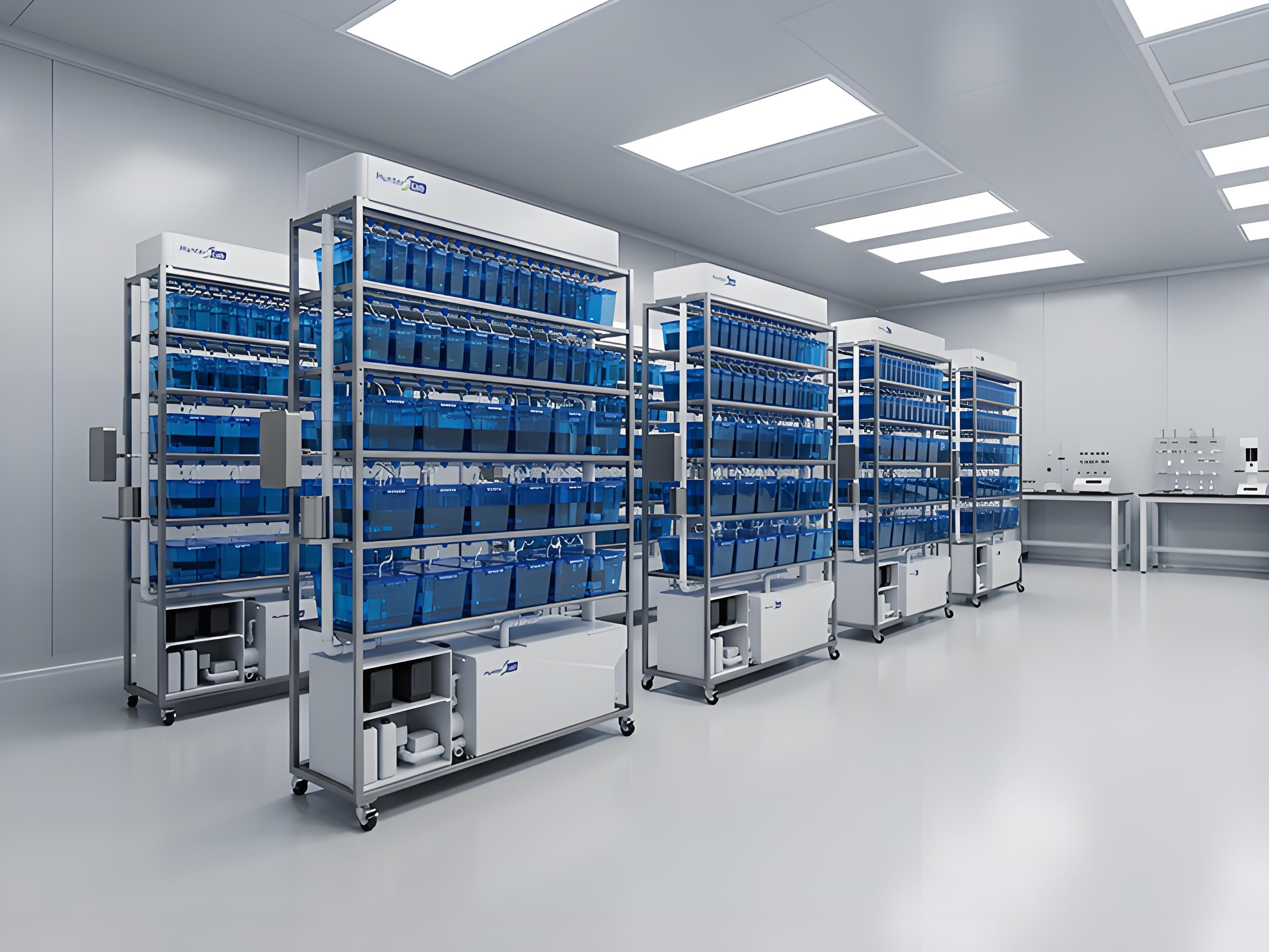
Why photoperiod consistency matters more than most labs admit
Zebrafish are light-sensitive in ways that go well beyond vision. Their circadian system uses light as the primary cue to entrain daily rhythms, and those rhythms govern spawning, feeding, growth, and even how they respond to test compounds. When multiple racks in the same facility drift out of sync, the animals are effectively living in different time zones. A rack that turns on twenty minutes earlier than its neighbor is not just slightly off. It is running a different biological schedule.
The problem is easy to underestimate because the drift is gradual. A timer that loses a minute here and there can accumulate a meaningful offset over weeks. Nobody notices until a study produces inconsistent results between racks, or until spawning rates drop on one side of the room for no obvious reason. By then, the cause is buried under a pile of other variables.
The biology behind light timing and circadian entrainment
The zebrafish circadian clock is not a single oscillator. It is a network of peripheral clocks in tissues throughout the body, all synchronized by light input from the environment. The pineal gland and the retina detect light directly, and that signal cascades into hormonal rhythms that shape behavior and physiology. Melatonin production, cortisol release, and reproductive timing all follow the light cycle.
A standard laboratory photoperiod for zebrafish is typically 14 hours of light and 10 hours of dark, though some facilities use 12/12 or 13/11 depending on the research goals. What matters less is the exact ratio and more is the consistency. A sudden shift of even an hour can suppress spawning for days. A gradual drift across racks can create a situation where data collected on Monday from rack A is not comparable to data collected on Tuesday from rack B.
Hardware choices that determine whether racks stay in sync
Not all lighting setups are created equal. The simplest approach uses individual mechanical timers plugged into each rack. These are cheap and easy to replace, but they drift independently and have no way to confirm that all racks are actually on the same schedule. A power outage resets them all to different times unless they have battery backup.
Centralized control systems address that problem by driving all racks from a single clock. The signal can be distributed through low-voltage wiring, wireless mesh, or a networked controller. The tradeoff is complexity. A central controller is a single point of failure. If it goes down, every rack goes dark at the same time.
-
Mechanical timers are inexpensive but drift and lack verification.
-
Digital timers improve accuracy but still operate independently.
-
Centralized controllers keep racks synchronized but add failure risk.
-
Networked systems allow remote monitoring and logging.
| Control method | Typical drift | Verification | Failure impact |
|---|---|---|---|
| Mechanical timer | High | None | Local only |
| Digital timer | Low | Manual check | Local only |
| Central controller | Very low | System log | Facility wide |
| Networked with backup | Very low | Remote alert | Minimal if backed up |
Timer and control strategies for multi-rack facilities
The control strategy matters as much as the hardware. A facility with a single central controller can set one schedule and trust it, but that assumes the controller is reliable and the wiring is intact. A facility with independent timers needs a routine to check them, which is easy to skip when everyone is busy.
A practical middle ground is a hybrid approach. Each rack has a local timer, but all timers receive a daily synchronization pulse from a central source. If the central source fails, the local timers keep running on their own until the issue is fixed. This avoids the single point of failure problem without accepting the drift of fully independent timers.
Another strategy is to stagger the light onset slightly across racks to reduce peak electrical load, but the stagger has to be small enough that it does not create a meaningful biological offset. A few minutes is usually fine. An hour is not.
Monitoring and verification without disrupting the colony
Verification is the step that gets skipped most often. A facility can have the best controllers in the world, but if nobody checks the actual light output, a burned-out bulb or a stuck relay can go unnoticed for days. The challenge is checking without disturbing the animals during their dark phase.
Light sensors placed inside or near each rack can log on and off times automatically. A simple photodiode connected to a data logger is enough. The data can be reviewed weekly to spot drift or failures. Some facilities use a handheld light meter for spot checks, but that requires entering the room during the light phase, which is fine as long as it does not happen during the dark period.
A monthly review of the logs can catch problems that a daily visual check would miss. For example, a timer that turns on correctly but turns off late by a few minutes every day will show a clear pattern in the log. That pattern is invisible to someone glancing at the rack.
When perfect synchronization is not realistic
Perfect synchronization is an ideal, not a guarantee. Older facilities with mixed equipment may never achieve identical timing across every rack. The practical goal is to keep the offset small enough that it does not affect the biology. A few minutes of variation is usually tolerable. An hour is not.
There are also legitimate reasons to run different photoperiods in different rooms. A quarantine room might use a different schedule to match a treatment protocol. A breeding room might use a slightly longer light period to encourage spawning. The key is to document those differences and make sure they are intentional, not the result of a drifting timer.
During a project at a multi-rack facility in eastern China, a team noticed that spawning rates were consistently lower on one side of the room. The lighting schedule looked identical on paper. A light sensor log revealed that two racks on that side were turning on about thirty minutes late because their timers had drifted over several months. The fix was simple, but finding it required data that nobody had been collecting. After synchronizing the timers and adding a monthly log review, the spawning rates evened out. The biology had been responding to a hardware problem.
Hunter Lab (Hunter) builds zebrafish laboratory equipment with attention to the environmental control details that affect colony health. The manufacturing and quality control side supports the consistency that long-term studies require. For facilities managing multiple racks, that kind of build discipline is part of keeping the animals on the same schedule.








