
 EN
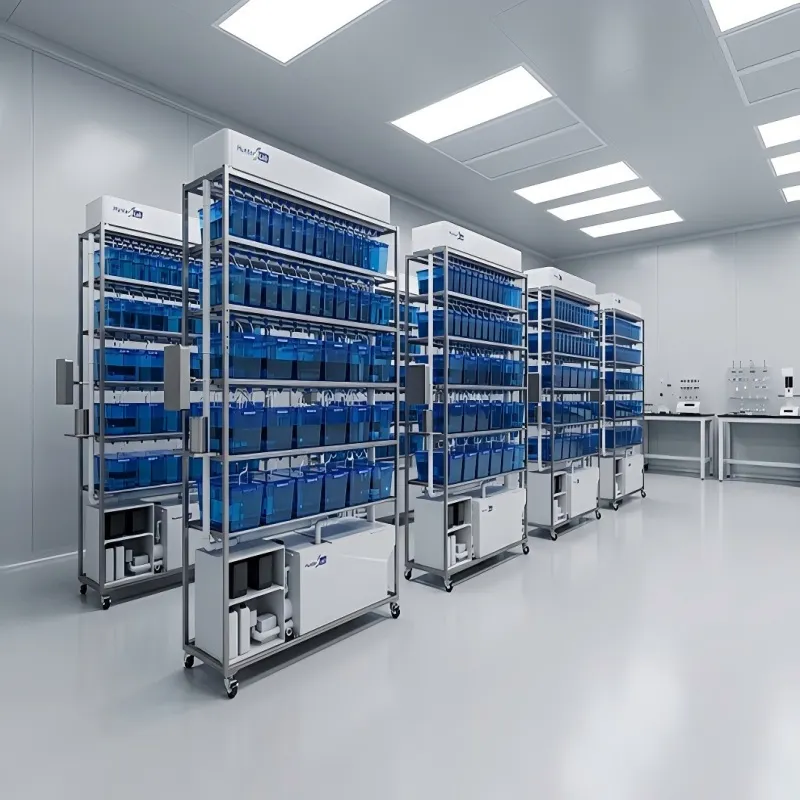
Genetic risk comes before tank count
A zebrafish breeding system for multi-strain colony management starts with a simple question: what happens if two lines mix? The answer shapes everything from room layout to the choice of recirculating aquaculture equipment. Facilities often track dozens of wild-type, transgenic, and mutant lines. Many of those lines look identical as adults. A missing tag or a shared net can erase years of selective breeding in a single afternoon. For that reason, genetic containment belongs in the same design conversation as temperature, pH, and filtration.
Multi-strain colony management is not a paperwork problem. It is an engineering problem with biological consequences. The moment a facility decides to house more than a few lines, the zebrafish breeding system must limit both waterborne and mechanical pathways for cross-contamination. That requirement drives the layout, the rack architecture, and the daily workflow.
Physical separation and labels that survive real work
A practical facility design separates lines by genetic risk tier. Irreplaceable stocks get the greatest distance from high-turnover lines. Tanks stay covered. Breeding and cleaning for adjacent lines happen at different times. These steps sound obvious, yet they are the ones most often skipped when a zebrafish breeding system is under pressure.
Tank hardware matters too. A standard breeding tank with a barrier insert lets eggs fall through while adults remain separated. In a multi-strain colony, that barrier also acts as a visual cue. Bar-coded labels generated at tank setup add a second check. Color-coded nets, lids, and feeding tools reduce the chance that a technician working quickly will move genetic material from one rack to another. Genetic containment is strongest when the correct action is also the easiest action.
Water architecture sets the biosecurity ceiling
The biggest decision in any zebrafish breeding system is whether lines share water. A shared recirculating aquaculture loop is efficient, but it creates a common exposure route for pathogens and, indirectly, for genetic material. A recirculating aquaculture approach is common, but recirculating aquaculture is not the only option. A multi-strain colony can use one of three models:
-
Shared recirculating aquaculture with UV sterilization and strict procedural separation.
-
Rack-level or zone-level isolation, where groups of tanks feed separate sumps.
-
Flow-through or standalone systems for high-value, quarantine, or irreplaceable lines.
Each model has trade-offs. Shared loops lower infrastructure cost but demand discipline. Zone isolation limits the blast radius of a failure. Standalone systems offer the strongest genetic containment but consume more water and space. For a zebrafish facility design, the right answer usually combines models rather than picking one for the whole room.
The sump is where much of the engineering lives. Mechanical filtration removes solids. Biological filtration manages ammonia and nitrite. Activated carbon handles dissolved organics. UV sterilization acts as a final barrier. In facilities where Pseudoloma neurophilia is a concern, effective UV treatment in the recirculating aquaculture loop is one of the most important preventive measures available.
Water quality targets that support diverse lines
Different genetic backgrounds can respond differently to the same water. Inbred lines often show male-biased sex ratios and lower viability than outbred stocks. A water profile that keeps one line spawning may suppress another. The table below combines published husbandry ranges with practical notes for multi-strain colony management.
| Parameter | Target range | Monitoring | Multi-strain note |
|---|---|---|---|
| Temperature | 26 to 28.5 C | Daily | Slight drift can help some lines, but inbred stocks stress easily |
| pH | 7.0 to 7.8 | Daily | Stable pH matters more than a specific setpoint |
| Conductivity | 375 to 1500 uS/cm | Daily | Some lines spawn better at lower conductivity |
| Ammonia | Below 0.5 mg/L | Weekly | Keep as close to zero as possible |
| Nitrite | Below 0.5 mg/L | Weekly | Critical during system startup |
| Nitrate | Below 50 mg/L | Weekly | Manage with water exchanges |
| Dissolved oxygen | 6 to 8 mg/L | Weekly | Low oxygen suppresses spawning |
| Alkalinity | 50 to 75 ppm | Weekly | Buffers against pH crashes |
| Hardness | 100 to 200 ppm | Weekly | Supports osmoregulation |
| Photoperiod | 14L:10D | Controlled | Consistency triggers breeding |
These numbers are not universal. OECD test guidelines, for example, use cooler temperatures for toxicology. The goal is a documented baseline, consistent monitoring, and changes only when data supports them. A zebrafish breeding system that ignores line-specific responses will eventually produce uneven reproductive performance.
Records turn a colony into a managed asset
A multi-strain colony without records is an accident waiting to happen. Line names alone do not guarantee genetic equivalence. Substrain divergence means two tanks labeled with the same stock name may carry different backgrounds. A useful record system captures the line name, source facility, breeding history, allele designations, every cross, parent IDs, collection dates, fry counts, and tank location. Suspected mixing events and corrective actions should also be logged.
Open-source tools such as VMS-Fish and FileMaker-based inventories make this easier for small facilities. The software matters less than the habit of entering data at the point of action. In a zebrafish facility design, records are not administrative overhead. They are part of genetic containment.
A retrofit lesson from a shared rack
A few years ago, a mid-sized research institution in the southeastern United States consolidated two fish rooms into one larger space. The facility design used three recirculating racks with a shared UV loop. Within six months, a low-level Pseudomonas infection appeared across all three racks. The source traced to biofilm in a shared return pipe with low flow velocity. Around the same time, a transgenic line on one rack showed unexpected pigmentation, suggesting genetic material from a wild-type stock two racks away. The exact cause was never confirmed, but the timeline matched a week when one technician netted fish from both racks during a breeding marathon.
The fix was not a full rebuild. The facility added rack-level isolation valves, a second UV unit, and a one-rack-per-day handling rule. The infection cleared. The transgenic line could not be recovered and had to be re-derived from frozen sperm. The lesson for multi-strain colony management is blunt: failures usually come from small shortcuts meeting a facility design that assumed perfect discipline.
Designing for human error and future growth
The strongest zebrafish breeding system is not the one with the most equipment. It is the one that expects human error. Three principles make the biggest difference. First, physically isolate what cannot mix. Second, make the correct action easy through color coding and clear zones. Third, add checkpoints that catch mistakes early, such as tank tag verification before every cross and weekly audits of tank-to-record alignment. A zebrafish facility design that follows these rules will support multi-strain colony management far better than one that relies on memory alone. Genetic containment is not a device. It is a daily practice supported by thoughtful facility design.
Hunter Lab builds aquatic housing systems with modular rack architecture, autoclavable tank components, and integrated filtration and UV packages. The company's manufacturing and quality control processes are structured around the demands of multi-strain colony management, from bar-coded tank tracking to rack-level water treatment. For facilities planning a new build or expansion, those capabilities are worth reviewing during the specification stage.








