
 EN
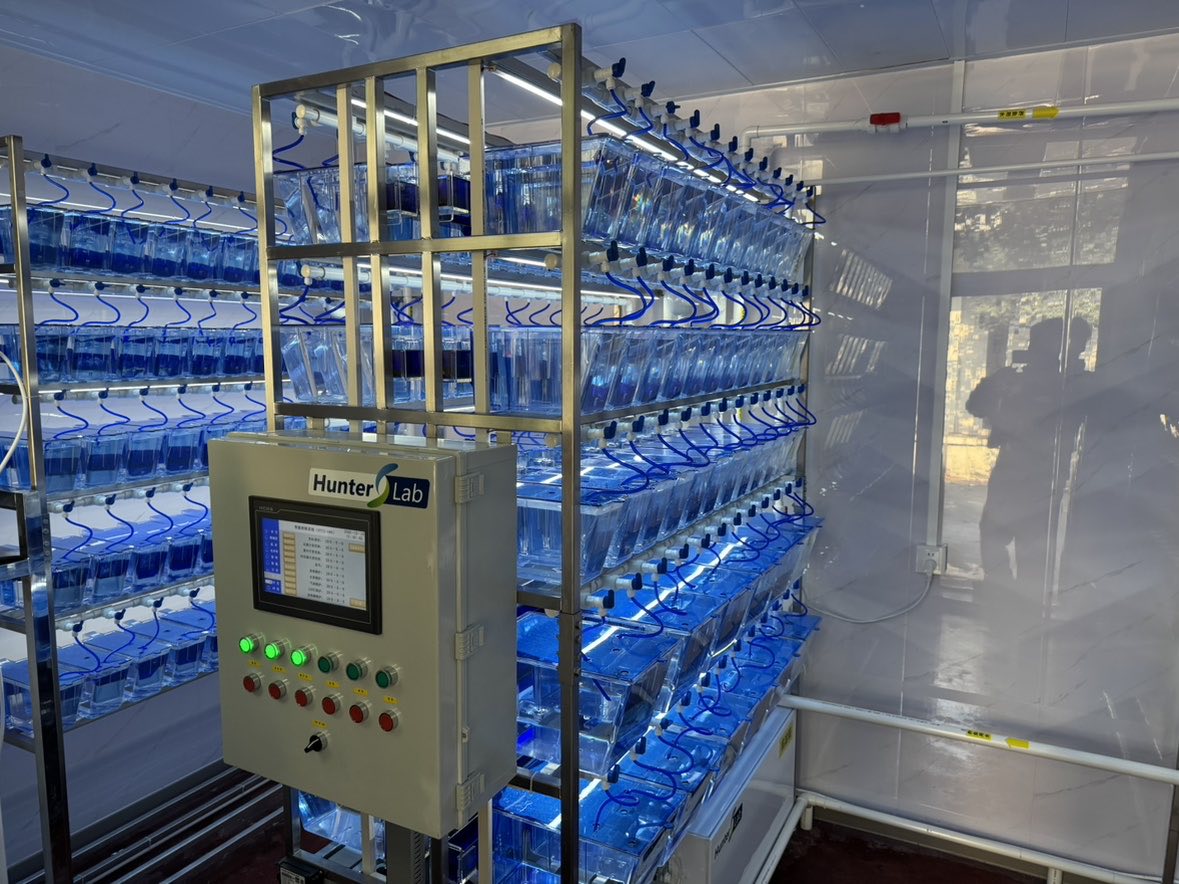
Integration starts with the breeding schedule, not the feeder
A zebrafish breeding system is built around timing. Spawning follows the light cycle. Embryo collection follows spawning. Larval feeding follows hatching. An automated feeding system that ignores this rhythm will create problems even if the hardware works perfectly. Integration means matching feed delivery to the biological clock of the colony, not just mounting a device on a rack.
The first step is to map the feeding events that matter. Broodstock conditioning, larval feeding, and juvenile grow-out all have different requirements. The automated feeder has to support those differences without forcing the facility to rebuild its schedule.
Synchronizing feed delivery with light and water flow
Light is the master cue. A 14-hour light and 10-hour dark cycle is standard, and feeding usually happens during the light phase. An automated feeder programmed to run outside that window may deliver feed when fish are inactive, which wastes food and degrades water quality.
Water flow adds another layer. In a recirculating system, feed that enters a high-flow tank can be swept into the drain before fish eat it. Integration means adjusting the feed rate, pellet size, or delivery point to match the flow. Some facilities briefly reduce flow during feeding, but that adds complexity and should be tested carefully.
-
Program feeding during the light phase.
-
Match feed delivery to the flow rate in each tank.
-
Avoid feeding right before a water change.
-
Test delivery in a single tank before rolling out across a rack.
Hardware interfaces that make or break the install
An automated feeder is not a standalone appliance. It needs power, a mounting point, and often a control signal. On a zebrafish rack, the mounting point might be a crossbar, a shelf edge, or a custom bracket. The power source should be routed away from splash zones. The control signal, if used, should integrate with the facility's existing timer or controller.
Cable management is a practical detail that separates a clean installation from a messy one. Cords that run across the front of a rack interfere with daily work. Cords that hang near water are a hazard. A few minutes spent planning the route saves hours of frustration later.
| Integration factor | Poor integration | Good integration |
|---|---|---|
| Mounting | Temporary, unstable | Secure, tool-free access |
| Power routing | Cords across walkways | Routed along frame, away from water |
| Control signal | Separate timer | Tied to central light cycle |
| Feed delivery | Fixed rate for all tanks | Adjusted per tank flow |
| Data logging | None | Feeds into breeding record |
Data logging ties feeding into the breeding record
Feeding is an experimental variable. When a batch of embryos develops differently from another batch, the feeding record can help explain why. An automated feeder that logs delivery time, amount, and any errors creates a record that can be linked to the breeding database.
This integration is often overlooked. Many facilities track feeding on paper or not at all. A digital log makes it possible to review feeding history alongside water quality, spawning dates, and larval survival. That kind of correlation is hard to do manually.
Maintenance routines that keep the system running
Automation does not eliminate maintenance. Hoppers need refilling. Delivery lines need cleaning. Sensors and timers need checking. A feeder that is hard to access for cleaning will be neglected, and a neglected feeder will eventually fail.
Integration should include a maintenance schedule. Weekly checks of delivery accuracy, monthly cleaning of lines, and periodic calibration of any sensors are basic practices. The feeder should also have a manual override or bypass so that feeding can continue if the automation fails.
A field example from a facility that integrated feeding
A multi-rack facility in eastern China had been feeding manually for years. Weekend coverage was a recurring problem. The facility installed automated feeders on the main racks, but the first attempt failed. The feeders ran on their own timers, independent of the light cycle. Feed was delivered before lights came on, and the fish ignored it. Water quality dropped as uneaten food decayed.
The team revised the integration. Feeders were tied to the central light controller. Delivery times were set to match the light phase. Flow rates were adjusted in the tanks that received feed, and a short pause was added before water changes. Feeding logs were connected to the facility's breeding database. The second attempt worked. The fish were fed on schedule, and the data showed fewer water quality swings.
What integration can and cannot do
Integration improves consistency, but it does not replace observation. A feeder cannot see a sick fish or a clogged line. It cannot decide that a particular line needs a different diet. Those decisions still require a person.
It also cannot fix a breeding system that is already unstable. If water quality is poor or disease is present, adding a feeder will not solve the problem. Integration works best when the underlying system is already in good shape.
Hunter Lab (Hunter) builds zebrafish laboratory equipment with attention to the practical details of system integration. The manufacturing and quality control side supports the consistency that long-term colony management requires. For facilities looking to add automated feeding without disrupting the breeding schedule, that kind of build discipline is part of the foundation.








