
 EN
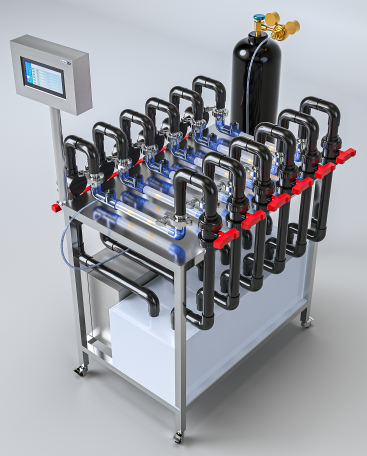
How does a zebrafish water quality monitor support automated water change systems?
A Zebrafish Water Quality Monitor becomes much more useful when it is connected to a carefully designed automated water change system. Rather than simply displaying measurements, it supplies the signals that help a facility decide when to investigate, when to refresh water, and when to stop an action that could create a second problem. The practical value is not “automation for its own sake.” It is steadier conditions for fish, clearer husbandry records, and fewer avoidable environmental variables in research.
For a core facility, the important shift is to treat monitoring as part of a feedback loop. A sensor reading is an observation; a safe automated response requires logic, limits, confirmation, and a record of what happened. That distinction matters when a water change affects many tanks or a recirculating system.
Why water-quality feedback matters before an automated water change
Zebrafish are exposed continuously to their aquatic environment, so changes in temperature, pH, conductivity, dissolved oxygen, and nitrogen-related waste indicators can affect welfare and experimental consistency. A Zebrafish Water Quality Monitor gives staff a time-stamped view of those conditions instead of relying only on a single manual test. It can reveal a gradual drift, a sudden disturbance, or a recurring pattern that deserves maintenance attention.
That context is essential for water change decisions. A low or high reading alone does not automatically prove that replacing water is the right response. A probe may need cleaning, a calibration check may be overdue, incoming water may differ from system water, or the signal may be transient. Good automation therefore uses the monitor to trigger a controlled decision pathway rather than treating every excursion as an instruction to open a valve.
The control-loop model: measure, interpret, act, verify
The basic integration can be understood as four connected stages:
- Measure: The monitor collects defined parameters at a chosen interval and stores the reading with its location and time.
- Interpret: Control logic compares the value and its trend with locally validated operating bands. It may also check whether more than one signal supports the concern.
- Act: If the conditions and interlocks are satisfied, the system performs a bounded water-change sequence or sends an alert for staff approval.
- Verify: The monitor confirms whether readings stabilize after the action; the system logs the event, volume, duration, alarms, and any operator intervention.
This is where feedback changes the design. Without feedback, an automated water change is a schedule or a timer. With feedback, it is a supervised response that can be checked against the actual condition of the water after the action.
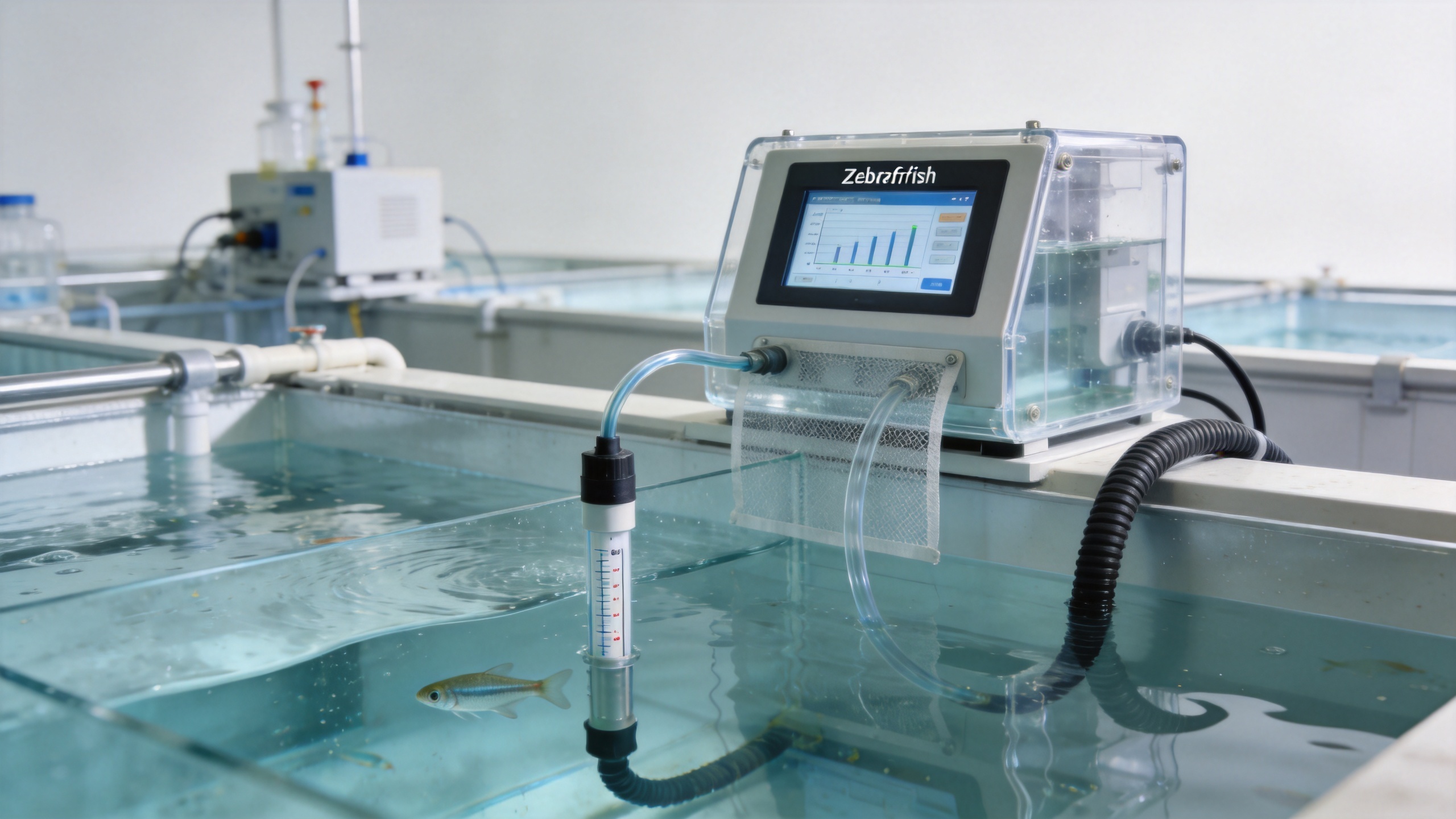
What signals should inform the response?
A facility should choose parameters according to its housing design, source water, filtration approach, stocking practices, and validated husbandry program. Common examples include temperature, pH, conductivity, and dissolved oxygen; nitrogen-related indicators such as ammonia, nitrite, and nitrate may also prompt investigation. The right question is not “Which one number runs the system?” but “Which combination of observations reliably tells us that a water-quality issue is developing?”
For example, a conductivity shift may be meaningful only when the incoming-water supply is stable and the probe has passed its routine checks. A trend that develops over several readings may be more informative than an isolated point. In practice, the Zebrafish Water Quality Monitor should be configured around locally validated bands and trend rules, not copied thresholds from another facility. Different systems, strains, life stages, and experimental protocols can have different constraints.
Guardrails that make automation safer
Water changes can correct some water-quality concerns, but abrupt or excessive exchange can introduce stress or create a new mismatch between source and system water. The controller needs safeguards. A sensible design usually includes maximum exchange volume per cycle, rate limits, a minimum delay between actions, and an upper limit on cumulative exchanges in a defined period. It should also pause automatic action if incoming-water quality is outside its own approved range.
Redundant checks improve safety. One useful pattern is to require persistence across several readings before a response begins, then require a second relevant signal or a plausibility check before allowing a larger correction. Another is a manual-approval mode for severe deviations. This is not a failure of automation; it is deliberate risk management. Most facilities should reserve fully automatic corrective action for well-characterized situations and route unusual patterns to an alarm and a trained person.
Sensor health belongs in the same design. The system should flag missing data, implausible jumps, calibration expiry, and communication loss. If a reading cannot be trusted, the safest action is often to inhibit automatic water change and notify staff. A monitor should not quietly turn uncertain data into repeated valve commands.
How integration improves daily operations
Thoughtful integration can reduce the gap between a facility’s husbandry observations and its equipment actions. The monitor supplies a shared record; the controller applies approved rules; alarms bring staff in when the rules are not enough. That makes handoffs easier across shifts and supports troubleshooting after an event.
Consider a recurring conductivity decline. Instead of asking a technician to reconstruct the issue from memory, the event history can show when the trend started, whether the system ran a limited water change, how the readings responded, and whether source-water checks were normal. This record does not replace biological observation, but it narrows the investigation and helps distinguish a water-system issue from a sensor or protocol issue.
It also supports reproducibility. When an experimental result differs across dates, facility teams can review environmental records alongside feeding, stocking, maintenance, and protocol notes. The goal is not to claim that water quality explains every difference. It is to avoid leaving a major environmental variable undocumented.
A practical implementation sequence
- Map the water path. Identify where water is measured, where replacement water enters, which valves or pumps execute changes, and which tanks or loops are affected.
- Validate monitoring first. Compare monitor readings with the facility’s established verification method, define calibration and cleaning routines, and confirm that data are stable enough for control use.
- Start with visibility and alarms. Use the Zebrafish Water Quality Monitor to collect trends and alert staff before enabling automatic actions.
- Define bounded actions. Set locally approved limits for volume, rate, frequency, and source-water checks. Test failure modes, including sensor loss and a stuck valve, before connecting routine actions.
- Review the feedback record. After each event, confirm that the response improved the intended condition and did not introduce a new excursion. Adjust logic through documented change control.
Choosing the right level of automation
Not every zebrafish facility needs the same degree of automation. A small lab may benefit most from monitoring, alerts, and guided manual water changes. A larger shared facility may justify a controller that can execute limited, validated actions with comprehensive logging. The right choice depends on system scale, staff coverage, source-water consistency, and the consequences of an incorrect response.
The most dependable setup keeps people, sensors, and equipment in complementary roles. A Zebrafish Water Quality Monitor provides early evidence; feedback logic turns that evidence into a controlled response; staff retain authority over exceptions and biological concerns. When that arrangement is planned deliberately, automated water change systems can support stable husbandry without making the facility dependent on blind, timer-based intervention.








