
 EN
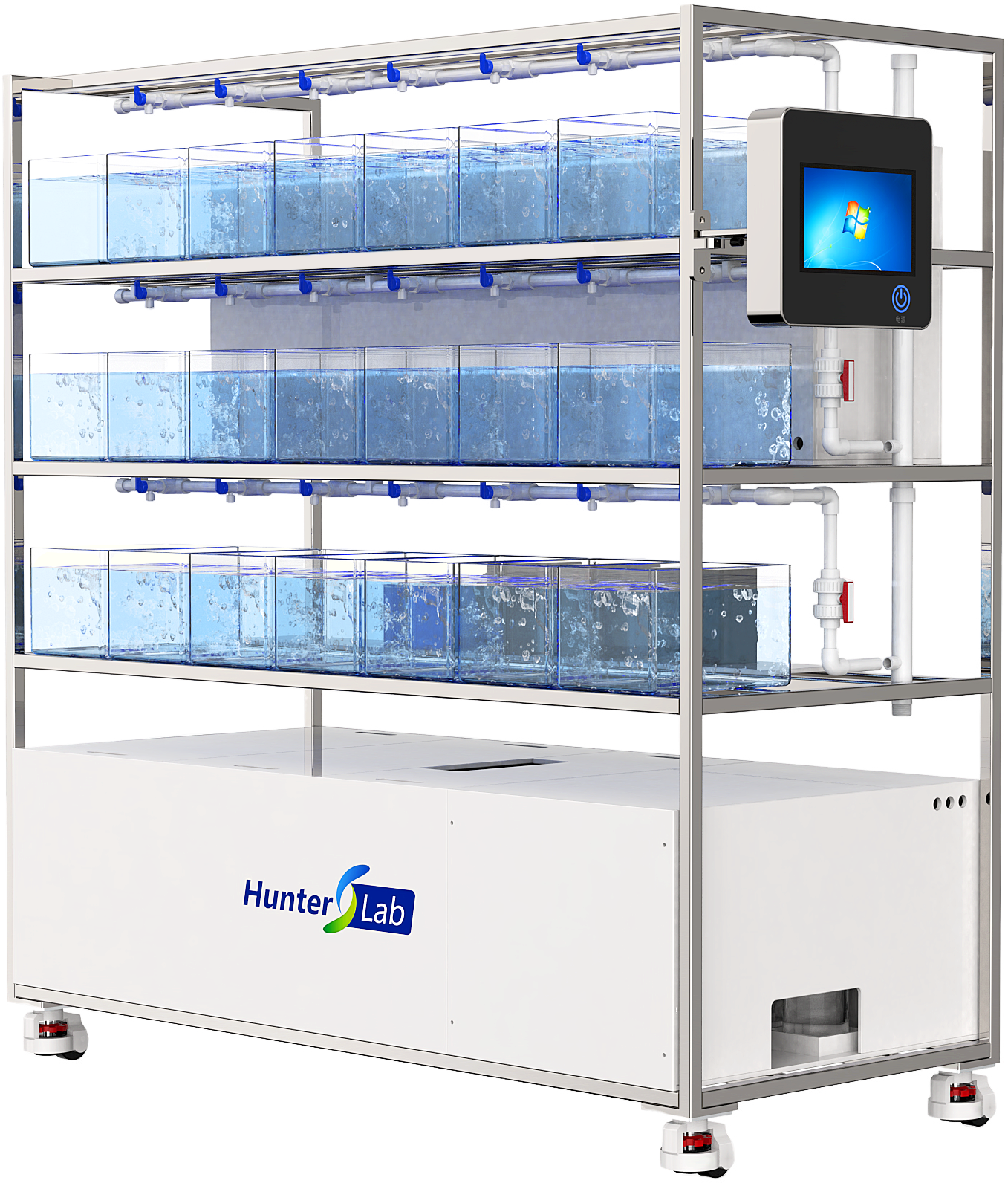
How Does a Zebrafish Flow-Through Exposure System Maintain Constant Toxicant Levels?
A Zebrafish Flow-Through Exposure System is built to solve a basic problem in aquatic toxicology: the concentration prepared at the start of a test is not necessarily the concentration experienced by fish later. A compound can adsorb to tubing, settle, volatilize, degrade, or be removed with waste water. Meanwhile, feeding, fish biomass, and biological activity can change the water matrix. For a developmental or longer-duration study, those shifts can blur the dose-response relationship.
The practical answer is continuous replacement. A Zebrafish Flow-Through Exposure System feeds a defined toxicant solution into each exposure chamber at a controlled rate while the same volume exits through an overflow or drain. Done well, it creates a moving but predictable chemical environment: fresh solution replaces losses instead of allowing them to accumulate. The objective is not a motionless number on a worksheet; it is stability of the concentration that reaches the animals over time.
The core principle: balance what enters, mixes, and leaves
Every Zebrafish Flow-Through Exposure System has three linked elements: a source solution, a delivery path, and an exposure chamber. The source is prepared or diluted to the target concentration. Pumps or metering devices deliver it at a known flow. Inside the chamber, mixing distributes the incoming solution before it reaches the outlet. The outlet removes an equivalent volume, preventing the chamber from overfilling.
This is a mass-balance problem. If the incoming toxicant mass per unit time matches the intended dose, mixing is adequate, and the chamber is exchanging predictably, the system approaches a steady exposure concentration. If one of those conditions changes, constant levels become harder to maintain. For example, a blocked outlet changes residence time; a drifting pump changes the input; a poorly mixed chamber can expose fish near the inlet and outlet to different concentrations.
A useful distinction is between nominal and measured exposure. The nominal concentration is what the laboratory intends to deliver. The measured concentration is what an analytical sample shows in the source vessel or chamber. A good Zebrafish Flow-Through Exposure System is designed so those two values remain close enough for the study question, but analytical verification is what establishes that the system is actually stable.
Why continuous dosing protects toxicant stability
In a static vessel, a toxicant may decline between solution changes. Regular renewal can reduce that decline, but it still produces a cycle: the concentration is refreshed, then potentially falls until the next renewal. Aquatic-testing guidance recognizes renewal and flow-through designs as different exposure approaches. A flow-through design reduces the size of that cycle by continually supplying fresh test solution.
That matters most when the toxicant is sensitive to light, oxygen, temperature, container surfaces, or biological uptake. A Zebrafish Flow-Through Exposure System does not make those processes disappear. Rather, its controlled flow offsets them by replacing solution as the chamber loses active chemical. The required turnover depends on the compound, vessel geometry, fish load, and study duration, so there is no credible universal pump setting.
Source preparation also matters. The stock, intermediate dilution, and final delivery solution should be protected from avoidable loss before they reach the chamber. If a toxicant is unstable in the delivery vessel, increasing the flow alone may only deliver an unstable solution faster. Labs should therefore assess compatibility of reservoirs, tubing, connectors, and light exposure with the compound and solvent system used.
Mixing turns delivery into an even exposure
Continuous input is not enough if the chamber has dead zones or a direct shortcut from inlet to drain. The design should encourage gentle, reproducible mixing while avoiding currents that stress larvae or alter behavior. In practice, this means placing the inlet and outlet so fresh solution spreads through the usable chamber volume rather than bypassing it.
Here is the operational point that is easy to miss: a high flow rate is not automatically better. Excessive current can affect fish welfare and behavior; insufficient exchange can allow the toxicant concentration to drift. The appropriate setting is the one that achieves stable, well-mixed exposure under the actual loading and chamber conditions. Conditional qualification matters here because a configuration that works for a short embryo assay may not translate directly to a longer juvenile exposure.
For this reason, a Zebrafish Flow-Through Exposure System should be commissioned with a non-study check. Observe dye or a suitable tracer to reveal whether solution disperses evenly, inspect for bubbles and leaks, and confirm that each outlet drains consistently. These checks do not replace chemical analysis, but they identify hydraulic causes of instability before animals and valuable test material are involved.
How laboratories verify constant levels
The strongest evidence for constant levels is a sampling plan. Samples are commonly taken from the source solution and representative exposure chambers at defined points across the study. Comparing those samples answers different questions: source samples test preparation and delivery, while chamber samples test the combined effects of delivery, mixing, adsorption, degradation, and removal.
A sensible plan also records pump settings, actual flow checks, temperature, water-quality observations, and any interruption. If measured toxicant concentration changes, those records help distinguish a preparation problem from a pump, tubing, or chamber issue. In a troubleshooting review, the first useful question is often not “Was the target concentration correct?” but “Where did the measured value begin to diverge from the target?”
Replicate chambers deserve attention too. A system can appear stable in one location while a partly restricted line produces a different exposure elsewhere. Comparing replicate concentrations and documenting delivery checks makes stability an observable performance characteristic rather than an assumption.
Common causes of concentration drift
- Pump drift or inconsistent tubing: changes the delivered volume and therefore the toxicant input.
- Adsorption or precipitation: lowers dissolved toxicant before or during exposure, especially when materials or water chemistry are unsuitable.
- Uneven mixing: creates local differences even when the source concentration is correct.
- Outlet restrictions: change chamber volume and residence time, undermining constant levels.
- Unrecorded interruptions: a pause in flow can turn an intended continuous exposure into an unplanned static interval.
Each failure mode has a different corrective action. Recalibrating a pump will not correct adsorption, and raising the toxicant concentration without understanding the cause can create a different bias. The better approach is to verify the delivery chain from source to chamber, then change one plausible variable at a time.
Frequently Asked Questions
Is a flow-through system required in every zebrafish toxicology study?
No. Static or renewal designs can be appropriate when the compound, exposure duration, and study objective support them. A Zebrafish Flow-Through Exposure System is particularly useful when maintaining a consistent exposure over time is important and periodic renewal would allow meaningful drift.
Does continuous flow guarantee toxicant stability?
No. Continuous dosing supports stability, but it does not guarantee it. The toxicant must remain suitable in the source and delivery materials, the chamber must mix predictably, and measurements must confirm the actual exposure concentration.
What should be checked before starting an exposure?
Confirm the delivery rate, inspect every line and outlet, evaluate chamber mixing, verify water conditions, and establish an analytical sampling plan. Those steps make it easier to show whether constant levels were achieved rather than merely intended.
The takeaway
A Zebrafish Flow-Through Exposure System maintains constant toxicant levels by continuously balancing fresh, defined input with controlled output, while mixing the chamber contents and replacing chemical lost through normal physical or biological processes. Its value comes from the whole chain: compatible materials, calibrated delivery, appropriate flow, even mixing, and measured confirmation. When those controls are documented together, the resulting exposure is more interpretable and more defensible for zebrafish toxicology.








