
 EN
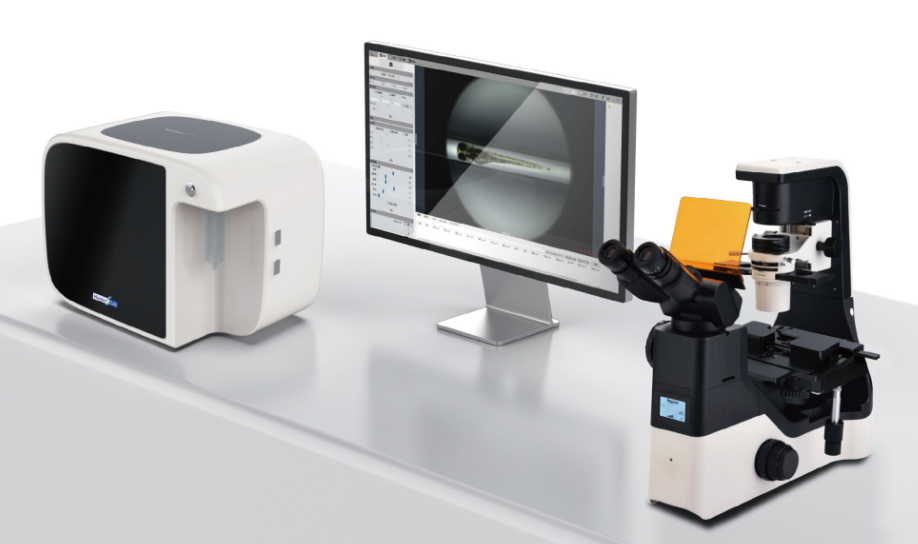
How Does a Zebrafish Behavioral Analysis System Handle High-Density Recording Scenarios?
High-density studies are appealing because they let a laboratory compare more conditions in one run. But a larger plate, more tanks, or more camera views does not automatically create better evidence. A Zebrafish Behavioral Analysis System handles high-density work well when it keeps acquisition, environmental control, tracking, data management, and quality checks aligned from the first frame to the final export.
For researchers running locomotor, light-dark, startle, or social-behavior assays, the practical question is not simply “how many fish can be recorded?” It is whether every animal receives a comparable observation window and whether the resulting data remain traceable. A well-planned Zebrafish Behavioral Analysis System treats capacity as a controlled workflow, not a headline number.
What high-density recording really means
In behavioral work, high-density can refer to many parallel wells, multiple chambers, several camera fields, or repeated batches moving through a shared imaging station. The limiting factor may be optics, file transfer, compute time, or the time needed to review exceptions. That is why a Zebrafish Behavioral Analysis System should be evaluated across the complete chain rather than by animal count alone.
At the acquisition stage, the system needs a stable view of each experimental unit. At the analysis stage, it needs to distinguish the fish from reflections, debris, well edges, and neighboring animals. At the reporting stage, it needs to preserve the link between each endpoint and its plate, well, treatment, run, and quality status. If one layer is weak, added capacity can amplify noise instead of useful throughput.
1. It organizes recording into repeatable acquisition blocks
A reliable Zebrafish Behavioral Analysis System begins with an acquisition plan: plate map or chamber map, animal identifiers, treatment groups, recording order, and a defined observation period. Those details should be set before video starts, not reconstructed after a busy day of recording. For plates, the software or accompanying workflow should make it possible to associate each track with a well position; for multi-tank studies, it should preserve the camera or arena identity.
Parallel capture also depends on synchronization. When a stimulus is introduced, timing should be consistent enough that a difference in response is not merely a difference in when a group was recorded. Where a study uses separate camera views, a Zebrafish Behavioral Analysis System should document how timestamps, stimulus events, and run metadata are aligned. That record is particularly helpful when a later review asks whether a behavioral shift occurred across the entire plate or only in a segment of the run.
2. It controls the conditions that become more variable at scale
More animals in one session create more opportunities for environmental drift. Illumination, reflections, vibration, temperature, handling time, and the order in which groups enter the arena can all influence behavior. A Zebrafish Behavioral Analysis System therefore benefits from a repeatable enclosure and a pre-run checklist rather than relying solely on a high-resolution camera.
One useful quality habit is to inspect representative frames from different positions before committing to the full run. Are edge wells darker? Is there glare over one row? Does the background make a lighter larva harder to segment? These questions are not minor setup details. In high-density work, a small position-specific artifact can affect dozens of observations. The correct response may be to adjust lighting, background, camera height, or the plate orientation—not to force the processing algorithm to accept poor input.
3. It turns video into individual, reviewable tracks
The analysis layer of a Zebrafish Behavioral Analysis System typically converts video into trajectories and endpoints such as distance moved, speed, activity bouts, zone occupancy, turning, or responses around a stimulus event. High-density use makes automated tracking essential, yet automation should not mean blind acceptance. The workflow should flag low-confidence tracks, missing detections, merged objects, clipped frames, and wells whose movement pattern is inconsistent with the image.
That review path matters because higher capacity increases the volume of exceptions as well as the volume of usable data. Instead of manually watching every video, a lab can define targeted checks: review a random sample from each group, inspect all warnings above a threshold, and compare a few raw clips with exported tracks. A published multi-camera array example reported automated, scalable 3D analysis of 48 larvae in parallel; it illustrates why parallelization is feasible, while also reinforcing that camera arrangement and tracking validation are part of the method.
4. It manages processing and storage before the bottleneck appears
Raw behavioral video can become the hidden limit in a high-density workflow. A Zebrafish Behavioral Analysis System should support a predictable handoff from capture to processing: where files are written, how they are named, when they are queued for analysis, and where processed results are stored. Consistent naming that includes date, experiment, plate or arena, and run identifier makes later audit far easier.
It is also sensible to separate urgent decisions from archival tasks. A research team may need a same-day summary to decide whether a screen should continue, while full video retention and batch re-analysis can run later. The important point is to avoid silently dropping frames or overwriting files when several recordings finish together. A Zebrafish Behavioral Analysis System is more useful when its practical capacity includes the compute and storage path, not just simultaneous imaging.
5. It uses quality control to protect comparisons
High-density experiments need predefined acceptance rules. Before the study, decide what constitutes an unusable well, a failed track, an interrupted stimulus, or an environmental deviation. During analysis, retain both the original metadata and the reason for exclusions. A Zebrafish Behavioral Analysis System can then produce a clear audit trail instead of a spreadsheet that only contains final averages.
Position effects deserve special attention. Randomizing treatments across a plate or rotating placements across runs can help separate a genuine treatment effect from an edge, lighting, or handling effect. Baseline cohorts are equally valuable: they show the laboratory’s normal variation under the actual high-density setup. If a baseline is unstable, adding more fish will not solve the underlying issue.
A practical way to scale without losing confidence
Start with a pilot at the intended density. Verify image quality across positions, test a small set of manual-versus-automated track comparisons, measure how long processing takes, and confirm that files and metadata remain linked. Then increase the number of concurrent units only when the pilot’s quality checks are stable. This staged approach makes a Zebrafish Behavioral Analysis System more defensible for academic laboratories, pharmaceutical teams, cosmetics programs, and other groups using zebrafish behavior as an early screening signal.
In short, a Zebrafish Behavioral Analysis System handles high-density recording by combining parallel acquisition with disciplined environmental control, track-level review, scalable processing, and documented quality decisions. The appropriate configuration is not necessarily the one with the largest stated count. It is the one that delivers comparable, traceable behavioral endpoints at the density your protocol can genuinely support.








