
 EN
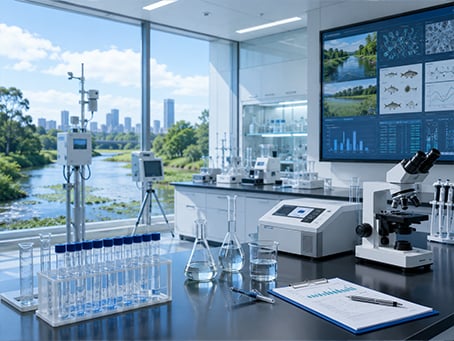
How can a zebrafish water quality monitor reduce manual testing workload?
A Zebrafish Water Quality Monitor does not eliminate husbandry judgement. It changes where that judgement is spent. Instead of asking staff to collect the same readings from every rack at fixed intervals, it can log routine conditions continuously, surface meaningful deviations, and give the team a documented trend to investigate. For a core facility manager, that shift can make manual testing more targeted, improve handoffs, and support better workload reduction without treating automation as a substitute for good laboratory practice.
Water conditions are part of the experimental environment, not merely a tank-maintenance task. Temperature, pH, conductivity, and dissolved oxygen are commonly considered candidates for continuous observation in aquatic systems. The useful question is not whether every parameter should be automated in the same way. It is which readings consume staff time, which deviations matter to the facility’s SOPs, and which events still require a trained person to confirm the result.
Why routine water checks create hidden workload
In a manual workflow, someone travels to each system, takes a reading, records it, compares it with an acceptable range, and decides whether to retest or escalate. That sequence can be appropriate for a small or stable setup. As the number of tanks, rooms, or study schedules grows, however, repeated manual testing can become a fragmented job: the work is distributed across the day, notes are entered in different places, and a change between checks may be impossible to reconstruct.
The impact is broader than minutes spent at a meter. When environmental context is undocumented, a team may later have to investigate why baselines shifted between runs. A Zebrafish Water Quality Monitor gives the team a time-stamped record that supports that investigation. It does not prove that water quality caused a result; it makes the environmental history available when the team needs to assess a possible confounder.
Where automation genuinely helps
The most practical form of automation is continuous collection plus exception-based attention. A monitor can collect routine data, retain a trend, and flag a threshold or rate-of-change event for review. Staff then spend time on conditions that need interpretation rather than transcribing values that are unchanged. This is the foundation of realistic workload reduction: fewer routine rounds, fewer duplicated records, and clearer prioritization when several duties compete.
| Manual-only task | What a monitor can support | What still needs people |
|---|---|---|
| Walk-by readings at scheduled intervals | Continuous trend logging between rounds | Review whether readings fit the facility’s operating context |
| Handwritten or manually transcribed logs | Time-stamped electronic records | Review completeness and preserve records under the SOP |
| Discovering a change at the next check | Alarm or exception notification | Verify the event, assess animals and equipment, and respond |
| Repeated screening of stable systems | Attention directed to outliers and drift | Calibration, maintenance, and independent spot checks |
There is an important correction here: more readings do not automatically mean better decisions. The useful outcome is a clear, reviewable workflow. A Zebrafish Water Quality Monitor should be configured around the facility’s validated ranges, escalation ownership, and response time—not around the largest possible dashboard.
Use manual testing differently, not less carefully
Strong automation moves manual testing from repetitive collection to verification and diagnosis. A sensible workflow retains scheduled reference checks, especially after installation, sensor replacement, maintenance, unusual animal observations, or an alarm. The manual result can confirm whether a sensor needs calibration, whether a sample point is representative, or whether a system-level reading masks a local issue.
For example, an alert about conductivity drift should create a short, owned sequence: acknowledge the alert, inspect the system, take a confirmatory reading according to the SOP, document the disposition, and close or escalate the event. That sequence gives staff a meaningful job to perform. It also makes workload reduction measurable because the team can compare the number of routine rounds, exception reviews, repeat measurements, and unresolved events before and after deployment.
Build an exception-first workflow
- Map the current workload. List each water-quality round, the person responsible, the parameters recorded, the log location, and the decisions that follow.
- Choose monitoring points deliberately. Start with parameters and locations where trend visibility would change a decision. A Zebrafish Water Quality Monitor is most valuable when it solves a specific information gap.
- Set alerts with an owner. Define who receives an alert, what requires verification, and when the issue becomes an escalation. An unowned alert is not useful automation.
- Validate against manual testing. During rollout, compare monitor output with the facility’s reference method across normal operation and controlled maintenance events.
- Review trends, not only alarms. A weekly review can reveal gradual drift, recurring nuisance alerts, or a threshold that needs refinement.
This approach also supports efficiency in shared facilities. A new staff member can see what happened before their shift rather than relying on an informal verbal handoff. A principal investigator can receive documented environmental context when interpreting an unexpected result. And the facility manager can assign work based on exceptions rather than guesses.
What to evaluate before choosing a monitoring approach
Ask vendors and internal stakeholders practical questions: Which parameters are measured directly? Where are sensors installed? How are they calibrated and cleaned? Can the system preserve time-stamped records? Are alarm thresholds, acknowledgements, and access permissions configurable? What happens during a network or power interruption? Answers should be assessed against the facility’s own SOPs and risk tolerance, not assumed from a product label.
It is also worth separating monitoring from control. A Zebrafish Water Quality Monitor may provide visibility and alarms without changing water conditions itself. That can still deliver efficiency, because faster awareness and a cleaner record can reduce time spent finding and reconstructing a problem. If a facility considers control functions, it should validate safeguards, override procedures, and response responsibilities separately.
How to show workload reduction without overstating it
Before implementation, record a representative period of manual testing: rounds per week, staff minutes per round, number of values transcribed, repeat checks, alerts investigated, and time to close an exception. After implementation, compare the same measures while noting changes in animal inventory, staffing, and study activity. Avoid promising a universal percentage reduction. The result depends on system size, sensor coverage, alarm quality, and the facility’s verification policy.
For many teams, the clearest gain is not simply fewer tests. It is more purposeful work: routine values are captured consistently, deviations are easier to find, and skilled staff can focus on confirmation, corrective action, and animal welfare. That is a more defensible definition of efficiency than claiming that monitoring removes human responsibility.
Conclusion
A Zebrafish Water Quality Monitor can reduce the burden of recurring water checks by turning routine collection into continuous records and exception-driven review. A well-governed deployment preserves manual testing for calibration, verification, and investigation; uses automation to improve visibility and prioritization; and measures workload reduction through facility-specific operational data. With clear alarm ownership and disciplined follow-up, the result is a calmer, more traceable water-quality workflow rather than a hands-off one.








