
 EN
How can a zebrafish trajectory tracking system integrate with behavioral assays?
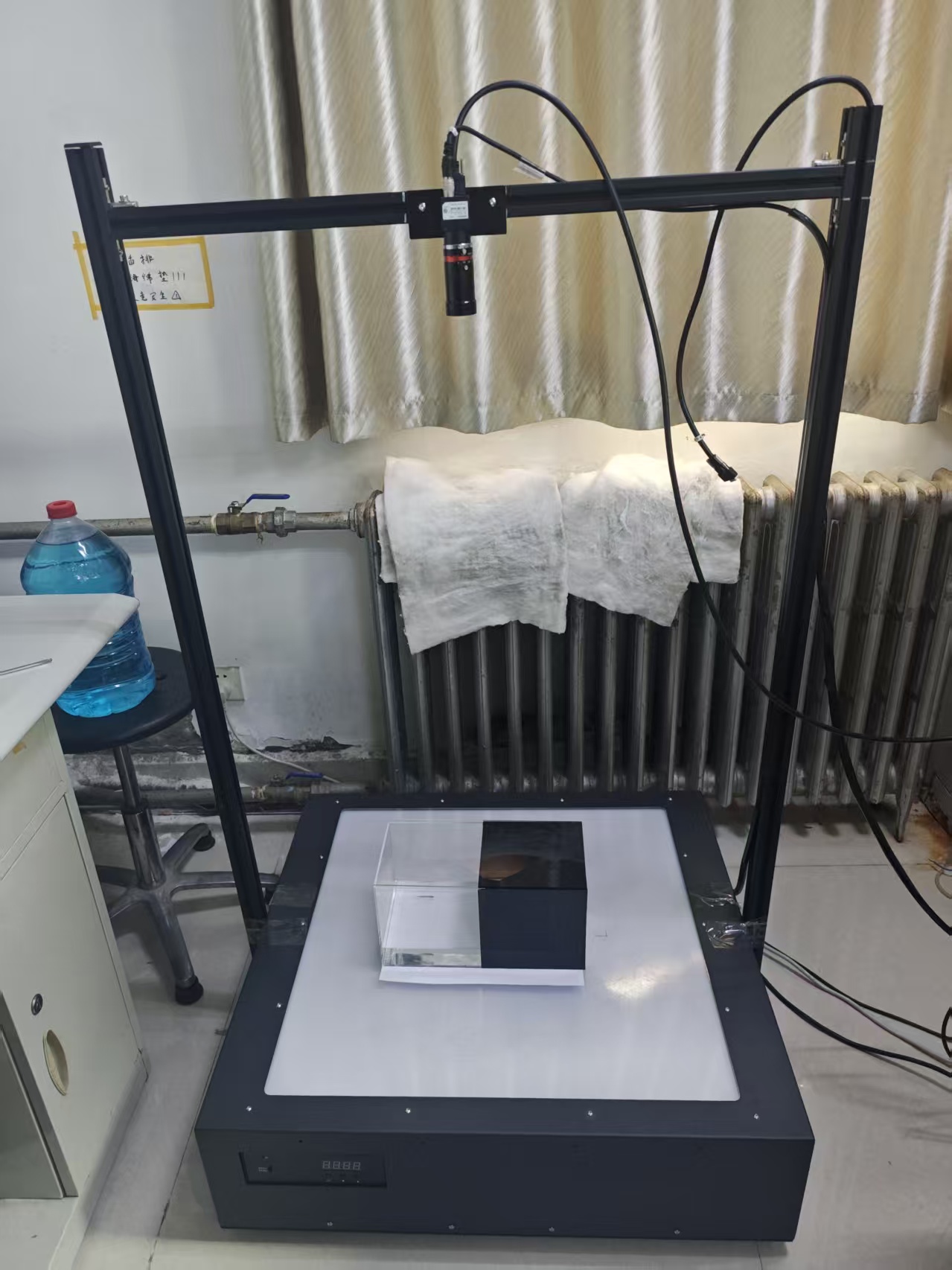
A Zebrafish Trajectory Tracking System becomes more useful when it is treated as part of the assay rather than as a camera that is switched on after the experiment begins. The practical goal is to connect each fish’s movement path to a defined exposure, stimulus, time window, and quality-control decision. That connection lets a laboratory turn video into behavioral evidence without assuming that every change in movement has the same biological meaning.
In day-to-day behavior-workflow optimization, one recurring lesson is this: the tracking settings alone rarely rescue an assay with vague timing or unstable baseline conditions. A thoughtful Zebrafish Trajectory Tracking System should therefore be planned alongside plate layout, acclimation, stimulus delivery, recording conditions, and the analysis plan.
Start with the behavioral question, not the output list
Behavioral assays can measure spontaneous locomotion, a light/dark transition, a startle response, social preference, or zone choice. Before configuring a Zebrafish Trajectory Tracking System, write a short statement of the decision the assay must support. For example: does a treatment change distance moved during a post-stimulus window, alter time spent in a zone, or affect recovery after a disturbance? That statement determines which trajectory features are meaningful.
Distance, speed, mobility, turning, and time in zones are related but not interchangeable. A lower distance value may reflect a true locomotor effect, a developmental-stage difference, an exposure-related sedation effect, or a failed detection caused by glare. Here, the details of the setup matter a great deal. Define a primary endpoint, a small set of secondary endpoints, and the time window for each before looking at group results.
Build one synchronized assay timeline
The most reliable integration uses a shared timeline for handling events and video data. In a well-designed workflow, the Zebrafish Trajectory Tracking System records timestamps that can be aligned with acclimation start, exposure addition, lighting changes, vibration or sound cues, and the analysis window. If the system cannot receive a direct trigger, record the event time in a run sheet and use a visible or logged marker that can be reconciled later.
- Define the unit of analysis. Decide whether one larva, one well, a pair, or a group is the experimental unit. Keep that decision consistent with the plate map and statistics plan.
- Set the baseline window. Record an undisturbed segment before the planned stimulus. Baseline is a comparison anchor, not simply extra video.
- Specify event windows. Mark when a stimulus begins and ends, then define response and recovery windows before the run.
- Capture context. Log strain, developmental stage, treatment, concentration, well position, operator, date, temperature conditions, and any protocol deviations.
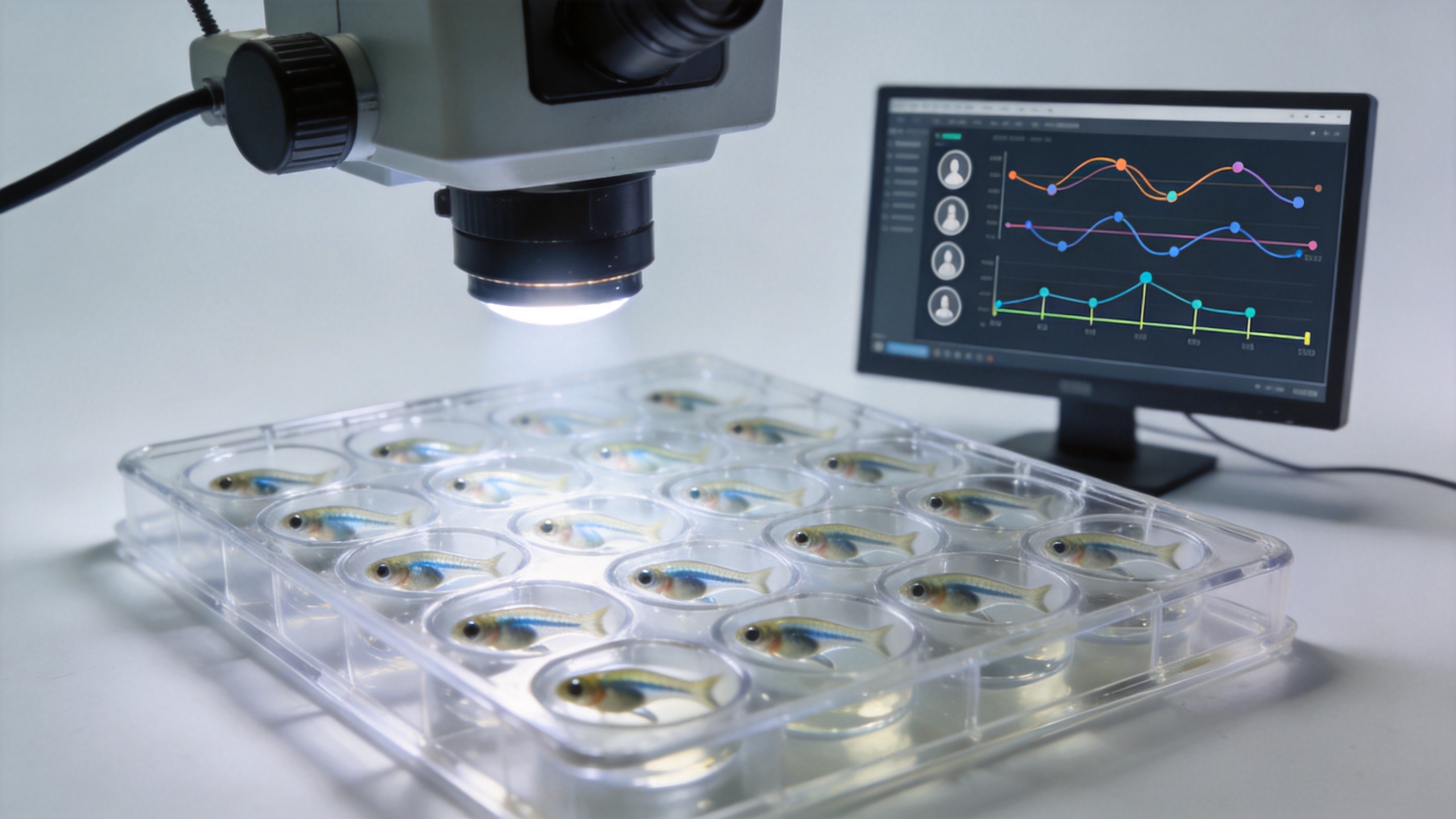
For larval work, developmental stage is especially important. A current protocol result is explicitly framed for 4 dpf zebrafish larvae, which illustrates why a stage should be recorded rather than silently generalized across assays. A Zebrafish Trajectory Tracking System cannot correct for a biological comparison that has not been properly specified.
Match acquisition settings to the assay
Configure the arena, camera view, illumination, contrast, and frame rate for the behavior being measured. Startle or rapid-turn assays may need acquisition settings that preserve short events, while longer locomotor screens may prioritize stable tracking over extended windows. The right setting depends on the condition; higher frame rate is not automatically better if it reduces contrast, storage reliability, or practical throughput.
Run a small pilot with representative animals before a full plate. Review raw clips beside the trajectories generated by the Zebrafish Trajectory Tracking System. Watch for reflections at well edges, bubbles, shadows during light transitions, missed identities, and trajectories that jump across an arena. These errors can look like genuine movement unless the raw video remains available for review.
Use quality control as part of the analysis
A good integration plan separates biological exclusion criteria from technical exclusions. Technical flags might include an empty well, occlusion, a damaged arena boundary, loss of contrast, or a tracking confidence failure. Biological criteria should be written separately and applied consistently. Do not remove an observation merely because its behavior is inconveniently different from the group.
The Zebrafish Trajectory Tracking System should export enough information to audit every exclusion: sample identifier, time segment, metric, tracking status, and reason. A two-pass review is often practical. First, use predefined automated flags to identify questionable records. Then have a reviewer inspect only the flagged raw-video segments using the same documented rules. This approach supports throughput while retaining traceability.
Convert trajectories into behavioral endpoints carefully
Trajectory analysis is most useful when features map back to the assay hypothesis. For a light/dark task, compare pre-specified movement or zone measures within defined light states. For a startle assay, calculate response latency, peak movement, and recovery over a fixed window. For social or preference work, consider occupancy and transitions alongside distance so that a change in total movement is not mistaken for a preference signal.
Behavioral assays benefit from seeing both individual paths and group summaries. A Zebrafish Trajectory Tracking System can provide the individual record, while a clear analysis pipeline aggregates only after QC and uses the correct experimental unit. The 2024 search result describing a 3D tracking dataset of 36,980 images is a reminder that robust computer-vision validation can require substantial labeled data; a local lab should validate its own conditions rather than infer accuracy from a vendor demonstration or an unrelated dataset.
Design for reproducible integration
Reproducibility comes from a repeatable chain: protocol version, plate map, acquisition profile, event log, tracking export, QC record, and analysis script or settings file. Save these together under a run identifier. When a result needs to be repeated, the laboratory can then ask whether the difference arose from biology, handling, imaging, or computation.
This workflow can create useful synergy between experimental scientists and imaging staff. Scientists define the behavior and acceptable biological controls; imaging staff verify that the Zebrafish Trajectory Tracking System can detect the required movement under the chosen conditions. Neither task should be delegated without a shared acceptance test.
A practical pre-run checklist
- Is the hypothesis linked to one primary behavior endpoint and a defined analysis window?
- Are sample IDs, plate positions, treatments, and developmental stage recorded before acquisition?
- Has the Zebrafish Trajectory Tracking System been piloted with the same arena, illumination, and stimulus sequence?
- Are baseline, stimulus, and recovery events timestamped in a common timeline?
- Are tracking failures and biological exclusions documented separately?
- Can another analyst locate the raw clip and reproduce the metric calculation?
With these pieces in place, a Zebrafish Trajectory Tracking System does more than draw paths. It becomes a transparent measurement layer inside behavioral assays, helping research teams connect controlled experimental events to interpretable movement outcomes. Start small, validate against raw video, and revise the workflow before scaling to a larger study.








