
 EN
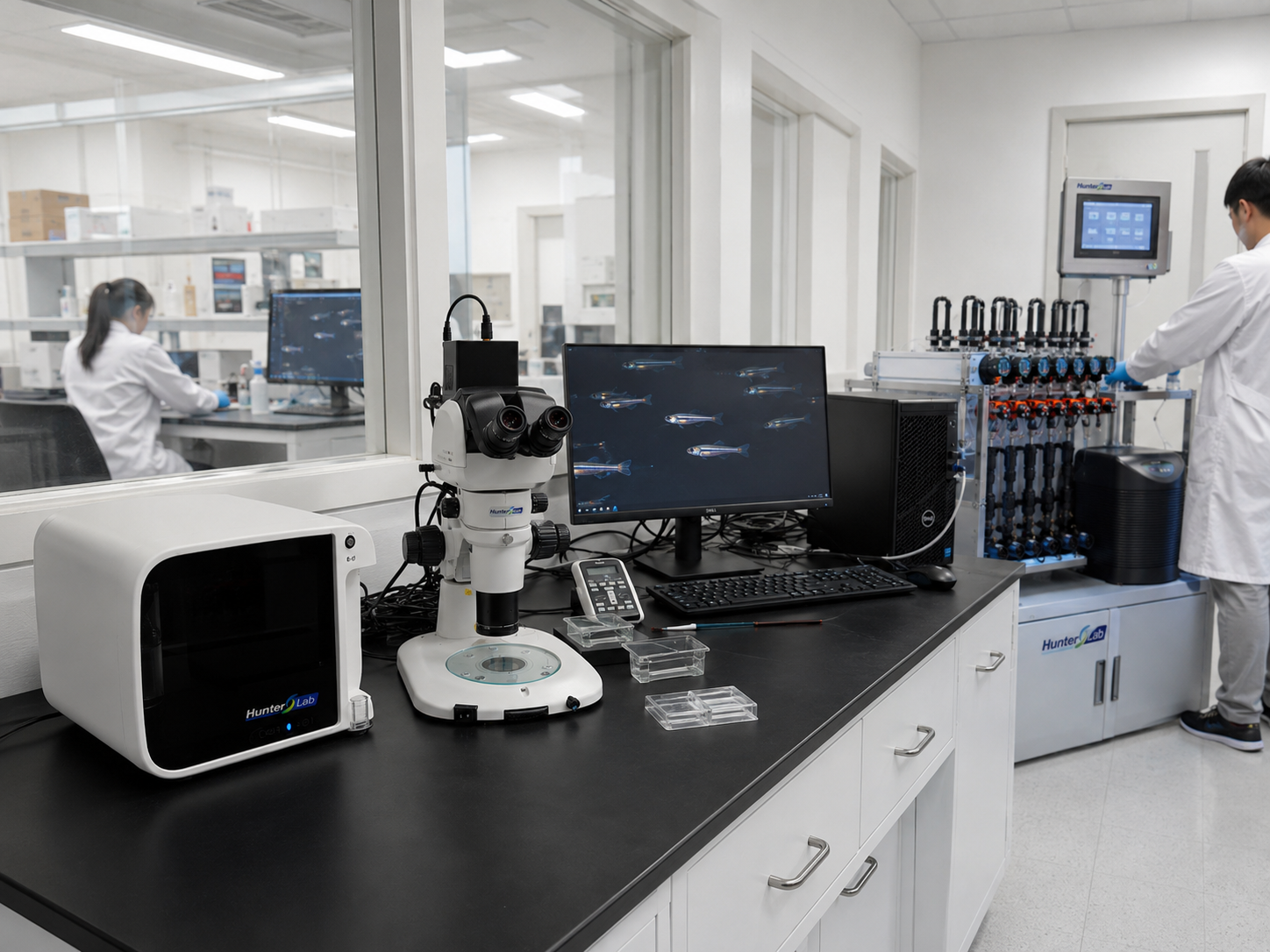
How can a zebrafish toxicological exposure system mimic environmental exposure conditions?
A zebrafish exposure platform becomes environmentally useful when it represents the exposure that organisms actually encounter, rather than only delivering a nominal dose in a convenient plate. For pharmaceutical, chemical, cosmetic, and environmental-health teams, the aim is not to make the study less controlled. It is to control the right features: concentration over time, water chemistry, temperature, light, life stage, feeding, and handling. A realistic platform turns those features into documented experimental factors.
The distinction matters in practice: environmental realism is not permission for conditions to drift. It means defining a plausible scenario, measuring the variables that could change the dose or biological response, and deciding which variables should remain fixed. That approach makes the study both more interpretable and more reproducible.
Start with an exposure scenario, not a concentration list
Before choosing wells, tanks, or pumps, specify the scenario the study is intended to mimic. Is the concern a short pulse after runoff, a steady low-level discharge, repeated daily contact, or developmental exposure from fertilization onward? Each question implies a different concentration-time profile. A one-time static exposure can be appropriate for acute hazard screening, while a chronic design may need renewal or flow-through delivery to avoid confusing chemical loss with declining biological effect.
Where feasible, use measured concentration as the anchor for realism. Nominal concentration alone may be misleading when a test item adsorbs to plastic, degrades in light, volatilizes, or is depleted by organisms. Sampling at the beginning and end of an interval helps show whether the system delivered the intended exposure. If the environmental question concerns fluctuating contamination, program pulses or renewals deliberately instead of treating an uncontrolled fall in concentration as a realistic mimic.
Match duration and life stage to the biological window
Exposure duration should follow the mechanism under study. A 96-hour embryo design is a useful standardized benchmark: OECD Test Guideline 236 exposes newly fertilized zebrafish eggs for 96 hours and records defined acute endpoints. Yet a Zebrafish Toxicological Exposure System designed for environmentally realistic risk questions may need a longer window when the concern involves development, recovery, endocrine effects, behavior, or cumulative burden.
Life stage deserves the same attention. Embryos, larvae, juveniles, and adults differ in uptake routes, metabolism, feeding, and sensitive developmental processes. Therefore, describe the chosen stage as part of the exposure model rather than as a logistical detail. In a robust study, the exposure onset, duration, and observation schedule are linked to a biological hypothesis, not merely the calendar of instrument availability.
Control the water environment that shapes both dose and response
The water itself is part of the treatment. Temperature, pH, hardness, conductivity, dissolved oxygen, photoperiod, and microbial condition can influence chemical behavior or zebrafish physiology. The experimental setup should establish acceptable ranges before the experiment, record them during exposure, and flag deviations alongside the biological data. This is especially important when a small effect could otherwise be mistaken for a compound response.
Standard methods provide useful reference conditions without replacing scenario-specific design. For example, OECD TG 236 includes 26 ± 1 °C water temperature and dissolved oxygen of at least 80% saturation among its validity criteria. A Zebrafish Toxicological Exposure System studying a different environment may select another justified condition, but it should not silently mix temperature stress, hypoxia, and chemical exposure unless their interaction is the question.
Light calls for the same discipline. Photoperiod can affect circadian biology, behavior, and the stability of photosensitive chemicals. When environmental exposure is meant to include light-driven transformation, define the light source, cycle, and verification plan. When it is not, shield and standardize the vessels. Either decision can be realistic if the protocol makes the rationale visible.
Choose delivery architecture that preserves the intended profile
Static, semi-static, and flow-through formats answer different needs. Static plates support efficient early screening, but they require checks for evaporation, oxygen, and concentration stability. Semi-static renewal can maintain a repeated exposure profile while limiting operational complexity. A flow-through setup is often helpful when a chemical is unstable or when a sustained concentration is central to the environmental scenario.
Regardless of the architecture, include controls for vehicle, dilution water, and system performance. Place organisms randomly, balance plate or tank positions, and rotate positions only when that practice will not create a new handling confounder. The study plan should also distinguish biological replicates from technical replicates; many wells do not compensate for a single unreplicated exposure event.
Represent real-world complexity with a tiered design
Environmental mixtures, variable temperatures, feeding cycles, and intermittent pulses can matter, but adding every variable at once makes attribution difficult. A practical program uses tiers. Begin with a controlled single-chemical reference arm, then add one environmentally motivated feature at a time: a realistic concentration range, a pulse schedule, a mixture, or a defined temperature regime. This sequence reveals whether a result arises from the chemical, the context, or their interaction.
For a mixture study, justify component selection and ratio from monitoring data or a clear scenario. For weather-like variation, predefine the pattern and include a stable comparator. The goal is not to recreate an entire river in miniature; it is to represent the exposure drivers that are most likely to change interpretation.
Validate realism through measurement and endpoint selection
A claim of realism is credible only when it is verified. Record survival and developmental observations, but match additional endpoints to the scenario: behavior for neuroactive contaminants, morphology for developmental stress, or quantitative cardiovascular measures when cardiac liability is plausible. The platform should collect environmental logs, exposure analytics when available, and image or assay quality flags in the same study record.
Interlaboratory work in zebrafish toxicology has highlighted variation in exposure scenarios, endpoints, and analysis. That is why a final protocol should state what was controlled, what was intentionally varied, and how missing or out-of-range records will be handled. A protocol that reports those decisions gives other laboratories a realistic chance to reproduce the biology.
A practical design checklist
- Define the environmental scenario and concentration-time profile before selecting hardware.
- Select life stage and duration that match the suspected sensitive window.
- Document temperature, dissolved oxygen, water chemistry, and light conditions.
- Verify exposure stability or explain the planned concentration change.
- Add complexity in tiers, with a controlled comparator for every environmentally motivated variable.
- Predefine endpoints and quality criteria so environmental context improves interpretation rather than adding noise.
Ultimately, such a system mimics environmental exposure conditions by making the real-world drivers explicit, measurable, and testable. The strongest design combines scenario realism with disciplined controls, allowing teams to see not only whether an effect occurs, but under which exposure conditions it is likely to matter.








