
 EN
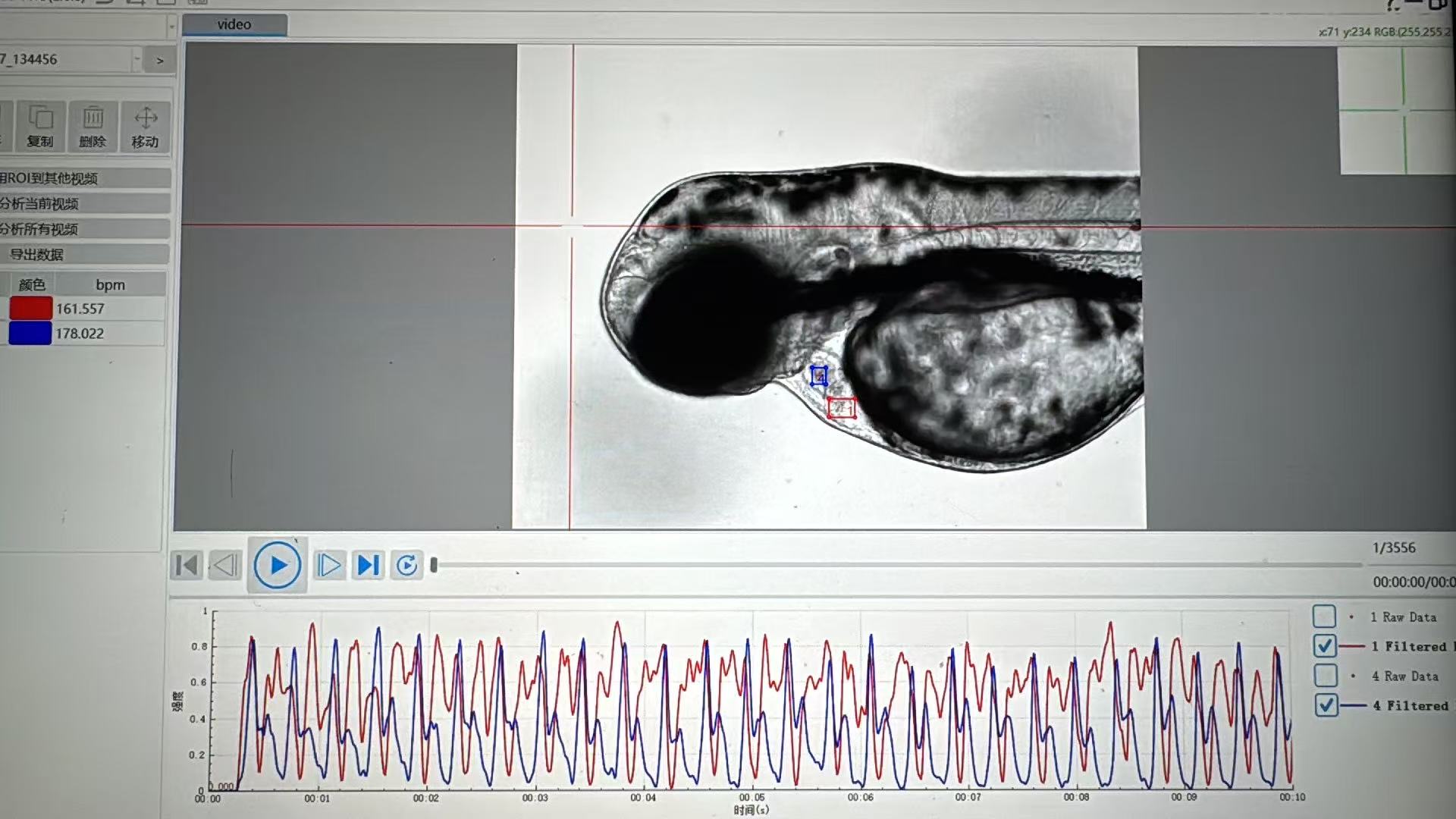
How can a zebrafish imaging system support long-term time-lapse studies?
Long-term time-lapse work asks more of an experiment than a sharp image at one moment. You need to preserve a living specimen, keep the scene comparable from one acquisition to the next, and leave enough signal to answer the biological question at the end. A well-planned Zebrafish Imaging System supports that chain of decisions by bringing optics, environmental control, positioning, acquisition settings, and analysis into one reproducible workflow.
After repeated live-imaging sessions, the practical lesson is simple: a longer movie is not automatically a better experiment. The useful record is the one in which changes in morphology, fluorescence, behavior, or physiology can be separated from changes caused by mounting, temperature, focus drift, or light exposure. That is where system design and protocol discipline meet.
Start by defining what “long-term” means for the study
Before choosing settings, define the observation window and the event you expect to capture. A developmental study may need regular images across several stages. A regeneration assay may track migration into a defined region. A time-lapse experiment on cardiac or vascular dynamics may need faster sampling during selected intervals and wider spacing between them. These are different acquisition problems, even when they use the same fish line.
A useful planning sheet states the developmental stage, assay endpoint, imaging interval, duration, objective, channels, expected movement, and acceptable handling time. It also records what will count as a failed run: loss of orientation, visible stress, focus loss, bleaching, or a missing reference frame. A Zebrafish Imaging System is most helpful when those requirements drive the setup rather than when a generic preset is applied afterward.
Keep the specimen stable without treating stability as an afterthought
Mounting is not merely preparation for imaging; it is part of the measurement. Long-duration live imaging depends on holding the animal in a repeatable orientation while allowing conditions appropriate to the protocol. For embryos and larvae, the mounting approach should be validated for the strain, age, endpoint, and duration rather than copied unchanged from another laboratory.
For long-term experiments, small shifts can become large analytical errors. A slight roll changes the apparent shape of a structure. A gradual translation moves a region of interest toward the edge of the field. An inconsistent depth plane can look like a change in fluorescence. Establish a consistent landmark, record the initial orientation, and define when refocusing is allowed. If manual intervention is needed, log it so that it can be considered during analysis.
Temperature and solution conditions deserve the same attention. Stable environmental conditions make it easier to interpret a trajectory because biological responses can otherwise be confounded by the imaging environment. Measure the conditions that matter to the assay, allow the setup to equilibrate before starting, and use a short pilot series to confirm that the specimen remains suitable through the planned observation window.
Manage light dose as a study variable
Long movies can fail quietly when the acquisition is more demanding than the biology can tolerate. Exposure, illumination intensity, channel count, z-stack depth, and sampling frequency all contribute to the total burden. The most informative Zebrafish Imaging System workflow therefore begins with the lowest practical light dose and adds complexity only when it improves the endpoint.
It is tempting to assume that a higher frame rate necessarily produces better data. In practice, moderate sampling with stable signal and healthy specimens can be more valuable than a dense sequence with progressive bleaching or altered behavior. Test a small matrix of settings before committing a full experiment. Compare signal quality at the beginning and end, watch for changes in background or morphology, and ask whether every channel and plane is necessary.
This is especially important when the goal is to study dynamics. The interval should be matched to the speed of the process, not selected because the instrument can acquire faster. A gradual developmental change may only need periodic frames, while a rapid transient may justify a short high-frequency segment embedded within a longer, lower-dose schedule.
Build repeatability into focus, position, and timing
Automation can improve consistency when it reduces routine variation rather than simply increasing throughput. Repeatable stage positions, saved acquisition recipes, autofocus checks, and timestamped metadata help a Zebrafish Imaging System return to the same observation logic across wells, animals, and sessions. The benefit is not just convenience: it creates a clearer audit trail when results differ.
Use a pilot run to identify the main source of drift. If focus changes because the specimen settles, improving the mount may matter more than adding aggressive autofocus. If the stage returns inconsistently, verify coordinates and reference landmarks. If fluorescence changes across sessions, include a control specimen or reference field and review illumination history. The right response depends heavily on the source of variation; there is no single setting that works for every lab.
Design the data pipeline before the first long run
Long-term time-lapse studies generate many files, but raw volume is not the same as usable evidence. Establish a naming rule that connects each file to the specimen, condition, time point, channel, and acquisition recipe. Save the metadata needed to reconstruct the sequence, including objective, exposure, interval, and any manual adjustments.
For quantitative work, define regions of interest and normalization rules before reviewing outcomes. A consistent analysis workflow can help distinguish biological change from variation introduced during acquisition. If you are tracking a moving structure, decide how registration will be checked. If you are comparing fluorescence, define how background and photobleaching will be handled. An automated measurement can reduce repetitive scoring, but it still needs visual quality control on representative frames.
Use checkpoints to protect both fish welfare and data quality
Rather than waiting until the final frame, review a small set of checkpoints during a pilot: the initial frame, an early interval, a middle interval, and the endpoint. Look for orientation changes, focus instability, unexpected motion, signal loss, and any sign that the preparation is no longer appropriate for the planned study. This approach gives the team an opportunity to adjust a protocol before a full batch is consumed.
A practical Zebrafish Imaging System supports this work by making the sequence repeatable, observable, and documented. It does not eliminate the need to validate anesthesia, mounting, illumination, or environmental conditions for a specific experiment. What it can do is make those variables easier to control and easier to trace.
A practical selection checklist
- Can the setup maintain the specimen and relevant environmental conditions for the required duration?
- Can positioning, focus, acquisition intervals, and channel settings be saved and repeated?
- Can the light dose be adjusted and tested without rebuilding the whole workflow?
- Does the data output preserve timestamps and acquisition metadata for later review?
- Can the planned analysis workflow handle registration, quality control, and longitudinal comparison?
When these questions are answered before the experiment begins, a Zebrafish Imaging System becomes more than a camera. It becomes a controlled framework for observing biological change over time—while keeping the limitations of each assay visible to the researchers interpreting it.








