
 EN
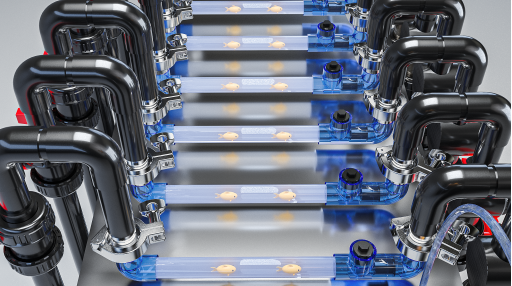
Can a Zebrafish Endurance Testing Device Perform Both Forced and Voluntary Swim Tests?
A Zebrafish Endurance Testing Device can support both forced and voluntary swim work, but only if the hardware and the protocol were designed for the two questions separately. That distinction is important. A current-driven endurance assay asks whether a fish can maintain swimming against a defined load. A voluntary swim assay asks what the fish chooses to do when it has room to move and the stimulus is controlled. One chamber does not automatically make one valid result set.
As a researcher planning zebrafish studies, start with the endpoint rather than the label on the instrument. The useful Zebrafish Endurance Testing Device is the one that lets you define water velocity, observe individual fish reliably, and document a low-disturbance configuration for behavior. If those conditions are absent, calling a setup versatile may overstate what it can measure.
The short answer: yes, with a dual-mode design
A dual-purpose Zebrafish Endurance Testing Device normally needs controllable flow, a stable observation area, suitable chamber geometry, and a tracking method that works in both modes. In forced swim work, a pump or impeller establishes a repeatable current. In voluntary swim work, the same system must reduce flow to a verified neutral baseline, or use a separate observation section, without persistent turbulence, glare, vibration, or handling cues.
The two modes can share a physical platform, but they should not share assumptions. A fish holding position in a current is responding to an imposed challenge. A fish exploring a calm chamber is expressing a pattern that may be influenced by light, social context, novelty, and water conditions. A capable Zebrafish Endurance Testing Device makes the settings and the transition between those modes visible in the study record.
What “forced swim” means in zebrafish endurance work
In this context, forced swim usually means swimming against a controlled water current. A typical endurance protocol includes acclimation, a defined starting velocity, planned increments or a fixed load, and a pre-defined endpoint. Published adult-zebrafish endurance methods describe progressively increasing current and time to exhaustion as a useful endpoint framework. The exact velocity, increment, age, strain, and stopping criteria still need local validation.
For a Zebrafish Endurance Testing Device, the practical questions are whether current is sufficiently uniform across the test area, whether velocity is measured rather than assumed from a pump setting, and whether fish can be observed without repeatedly disturbing them. Temperature also deserves attention: water temperature can affect swimming capability, so a protocol should log and control it rather than treat it as background noise.
A credible forced swim workflow also protects welfare. Define removal criteria before the run, use trained observers, and avoid extending a trial merely to create a more dramatic endpoint. The goal is a reproducible physiological or performance measure, not an unnecessarily severe challenge.
What voluntary swim testing requires
Voluntary swim assessment is not simply the forced-current test with the pump turned down. It needs a calm, validated observation condition and a behavioral question. Depending on the study, outcomes might include distance moved, activity distribution, zone preference, response to a cue, or changes over time. The right Zebrafish Endurance Testing Device can assist if it provides a documented low-flow or no-flow state and clear video or tracking access.
Before treating the chamber as a voluntary swim arena, check for residual circulation, directional drift, reflections, and dead zones. These details can quietly bias where fish spend time. The published protocol said a low-flow setting was adequate in some laboratories, but in your setup you may see persistent drift until you adjust the chamber fill, pump bypass, lighting, or camera angle. That is why a baseline recording with untreated animals matters.
Can both tests be run on the same day?
They can, but both assays should be treated as related yet distinct experiments. A demanding forced swim exposure may change subsequent spontaneous activity through fatigue, stress, recovery time, or altered motivation. If voluntary behavior is the primary outcome, measure it before a forced challenge or use separate cohorts. If endurance is primary, specify a recovery window and justify it. A Zebrafish Endurance Testing Device does not remove this sequencing problem; careful experimental design does.
For repeated measures, keep timing, feeding state, water chemistry, lighting, acclimation, and operator procedure consistent. Video identifiers and chamber settings should travel with the data file. Those records turn the Zebrafish Endurance Testing Device from a flow chamber into a defensible research workflow.
A buyer’s checklist for real versatility
When comparing a Zebrafish Endurance Testing Device, ask vendors or technical teams for evidence on these points:
- How is current velocity calibrated at the fish location, and how is uniformity checked?
- Can the system create and document a low-flow or no-flow behavioral condition?
- Does the chamber permit unobstructed video tracking in forced and voluntary modes?
- How are temperature, lighting, vibration, and dissolved oxygen monitored or controlled?
- Can the setup retain protocol settings, timestamps, and individual or group identifiers?
- Are chamber dimensions, cleaning steps, and animal-handling procedures appropriate for the intended life stage?
That checklist is more useful than a generic versatility claim. A Zebrafish Endurance Testing Device with adjustable flow but poor baseline observation may be strong for endurance and weak for behavioral work. Conversely, a tracking arena without validated current control may not support a meaningful forced swim endpoint.
How to validate a dual-mode workflow
Start with a small method-development study. First, map flow and verify the forced swim settings. Then record voluntary behavior under the intended neutral condition and inspect the tracks for directional bias. Repeat these checks on different days. If your priority is comparing treatment groups, the most important factor to evaluate first is repeatability across sessions, not the longest list of software features.
A practical validation file for a Zebrafish Endurance Testing Device should include the chamber configuration, flow settings, calibration method, environmental logs, video settings, endpoint definitions, exclusion rules, and the order in which tests were run. This is especially valuable for university laboratories and screening teams that need others to reproduce the workflow later.
Final decision
Yes, a Zebrafish Endurance Testing Device can be used for forced and voluntary swim tests when it has independently validated current control and a genuinely neutral observation mode. The versatility comes from the workflow, not the name of the equipment. Treat forced endurance and voluntary behavior as separate measurement problems, validate each condition, and choose the configuration that matches the endpoint you need to defend.








