
 EN
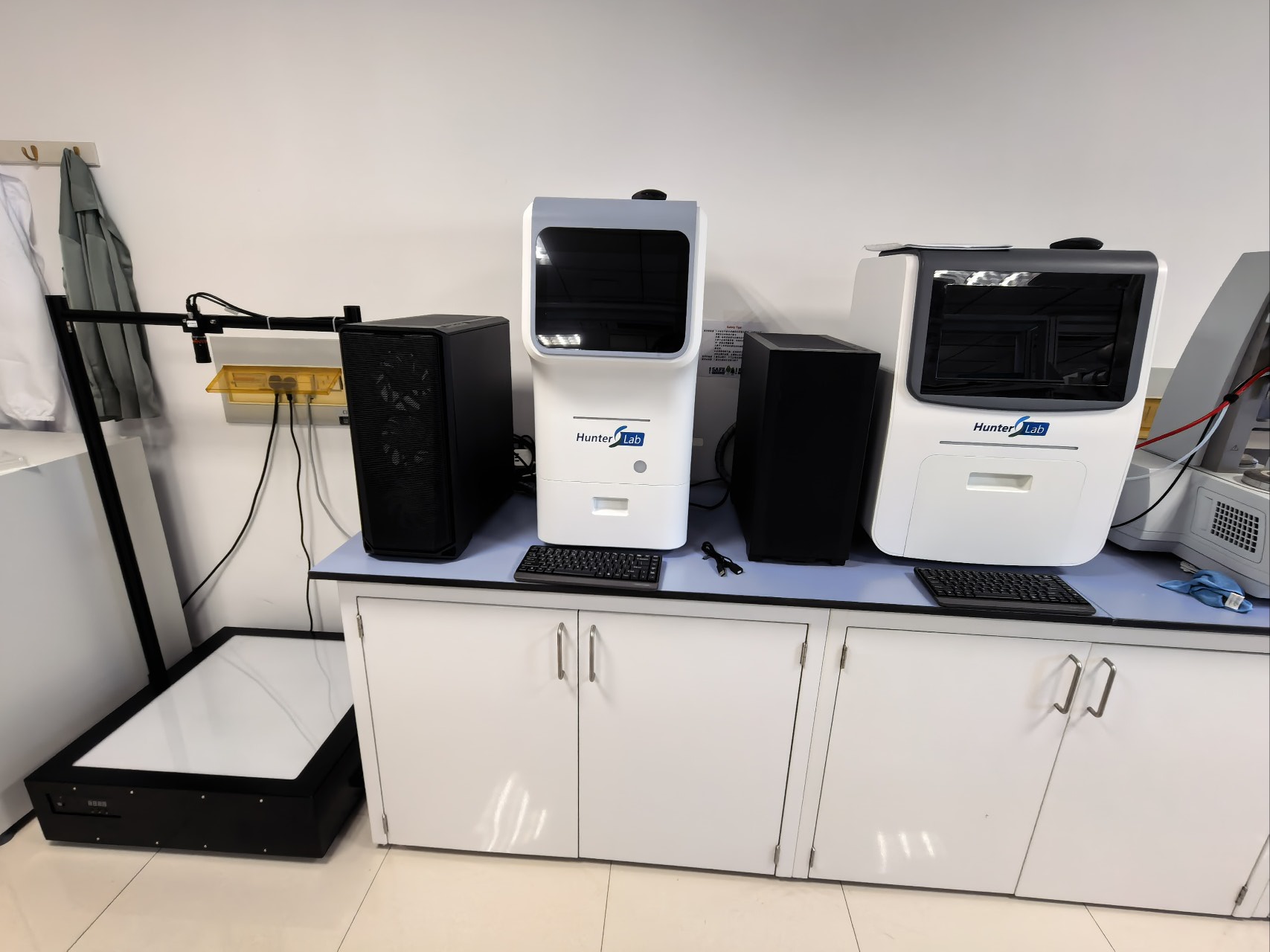
When a client asks whether a compound changes behavior, a verbal observation is rarely enough. They usually need a traceable account of what moved, when it changed, under which conditions, and how the conclusion was reached. A Zebrafish Trajectory Tracking System helps turn video into a structured behavioral record that can be reviewed alongside the study protocol rather than treated as an isolated visual impression.
For a shared facility or contract research workflow, that distinction matters. Different clients may be asking about locomotion, exploration, stimulus response, recovery, or a possible adverse behavioral signal. The useful output is not simply more data. It is detailed data with context: a defined arena, a stated observation window, explicit endpoints, and a route back to the original video when a result needs discussion.
Why a movement trace is more useful than a single behavioral label
A single label such as “active” or “inactive” compresses a great deal of information. A trajectory retains the path across time. From that path, a study team can calculate endpoints such as distance travelled, velocity, mobility state, time in defined zones, latency after a stimulus, or turning-related measures. The appropriate endpoint depends on the question. For a basic locomotor assay, distance and velocity may be informative; for an escape-response study, latency, acceleration, and turning behavior can add necessary detail.
This is where a Zebrafish Trajectory Tracking System supports more careful client communication. It lets a team show the behavioral pattern behind a summary statistic. If two groups have similar total distance but one group repeatedly pauses near a boundary, the trajectory and zone-time record can reveal a difference that a distance-only report may miss. Conversely, an apparent difference in a chart can be checked against the video and path plot before it is presented as a biological finding.
Start with the client question, then define the endpoints
The most reliable workflow begins before recording. Ask what the client needs to decide after receiving the report. Is the aim to compare baseline locomotion, characterize a startle response, monitor a recovery period, or identify a pattern that merits follow-up? A Zebrafish Trajectory Tracking System becomes more valuable when the endpoint plan is written around that decision rather than selected after the video has been reviewed.
- For locomotor questions: define the observation duration and evaluate distance, velocity, and immobility using the same rules for every group.
- For exploration questions: predefine arena zones and report time, entries, or path use within those zones.
- For stimulus-response questions: document the stimulus timing and capture latency, path change, acceleration, and recovery window.
- For longitudinal work: retain the identifiers, developmental stage, exposure timing, and acquisition settings that make later comparisons interpretable.
That structure also protects quality. A behavioral readout can be influenced by lighting, temperature, handling, arena geometry, developmental stage, and the timing of observation. The right approach depends heavily on which of these conditions the client needs held constant; there is no single endpoint set that works for every zebrafish study.
What detailed data should include
Clients often need enough information to understand both the result and its limits. A Zebrafish Trajectory Tracking System should therefore sit within a documentation workflow, not replace one. A practical delivery package pairs each analysis output with the acquisition and analysis information needed to interpret it.
1. A clear sample and session record
Record strain or line where relevant, developmental stage, group assignment, exposure or handling context, arena configuration, observation window, and any exclusions. If a client later asks why two runs should not be pooled, this record is often the first place to look. It is also a straightforward way to distinguish a genuine behavioral pattern from a run-to-run protocol change.
2. Path-level evidence and defined summaries
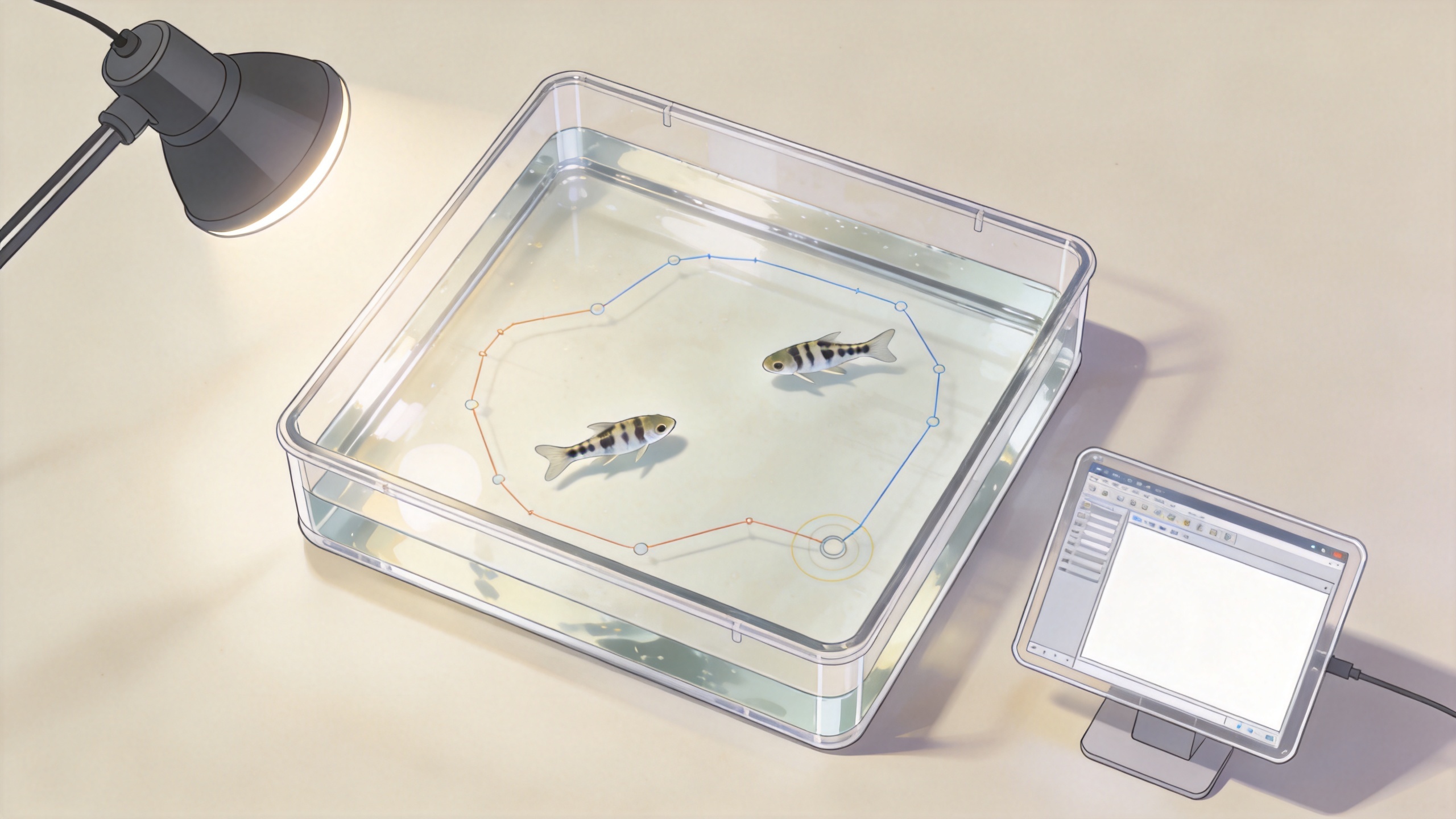
Export a path visualization and the corresponding endpoint table. The visualization helps a reviewer see whether a value represents sustained motion, short bursts, circling, wall-following, or an artefact caused by poor detection. The table makes the output usable for group comparison. Together, they are more informative than a statement that one group “looked different.”
3. Quality-control visibility
Detection confidence, missed frames, tracking interruptions, and exclusion rules should be visible to the analyst. In practice, the image may look usable while the tracking assumptions are not. The detail the camera catches can be valuable, but only after the team has checked whether reflections, overlap, low contrast, or a boundary crossing affected the path. A Zebrafish Trajectory Tracking System is a measurement workflow, not a substitute for review.
Build comparability into the operating routine
Client satisfaction is often determined by whether the data can be compared across conditions and reporting cycles. A compact operating routine can make a major difference:
- Use a written setup checklist for lighting, camera position, arena definition, and acclimation timing.
- Confirm tracking on representative recordings before processing an entire batch.
- Lock the endpoint definitions and exclusion criteria before examining group differences.
- Keep raw video, trajectory output, and analysis settings associated with the same session identifier.
- Report deviations rather than silently treating them as equivalent to the planned protocol.
Across repeated projects, this routine enables a Zebrafish Trajectory Tracking System to deliver detailed data that is easier to audit and explain. It also helps an operations team train new users: the goal is not that every person applies their own interpretation, but that each person can follow the same documented path from recording to report.
Use trajectory data to make the client conversation more specific
A useful report does not overstate what a behavioral endpoint means. For example, lower movement may be consistent with several explanations, including altered locomotion, changed arousal, an environmental issue, or a technical problem. The report should explain what was measured, what changed under the tested conditions, and what follow-up would distinguish competing explanations. This is more credible than translating a single metric directly into a broad biological conclusion.
When selecting a Zebrafish Trajectory Tracking System, ask how the workflow handles the conditions your clients actually bring: larvae or later stages, individual or group tracking, defined zones, stimulus timing, repeated measurements, video retention, and export formats. Then test the workflow with representative recordings. Most facilities benefit from a small validation set that includes normal movement, low-contrast conditions, rapid turns, and cases that require manual review.
A decision framework for client-ready behavioral evidence
The practical value of a Zebrafish Trajectory Tracking System is its ability to connect a behavioral question to evidence that another scientist can inspect. First define the question. Next choose endpoints that answer it. Then standardize acquisition, preserve the path-level record, and state the quality checks used to support the final table. That chain gives clients detailed data they can use in internal reviews, study discussions, and decisions about the next experiment.
For teams serving multiple programs, quality is not the number of metrics exported. Quality is the consistency between the protocol, the trajectory, the analysis rules, and the explanation delivered to the client. A thoughtfully implemented Zebrafish Trajectory Tracking System makes that consistency easier to maintain while leaving room for the assay-specific judgment that behavioral research requires.








