
 EN
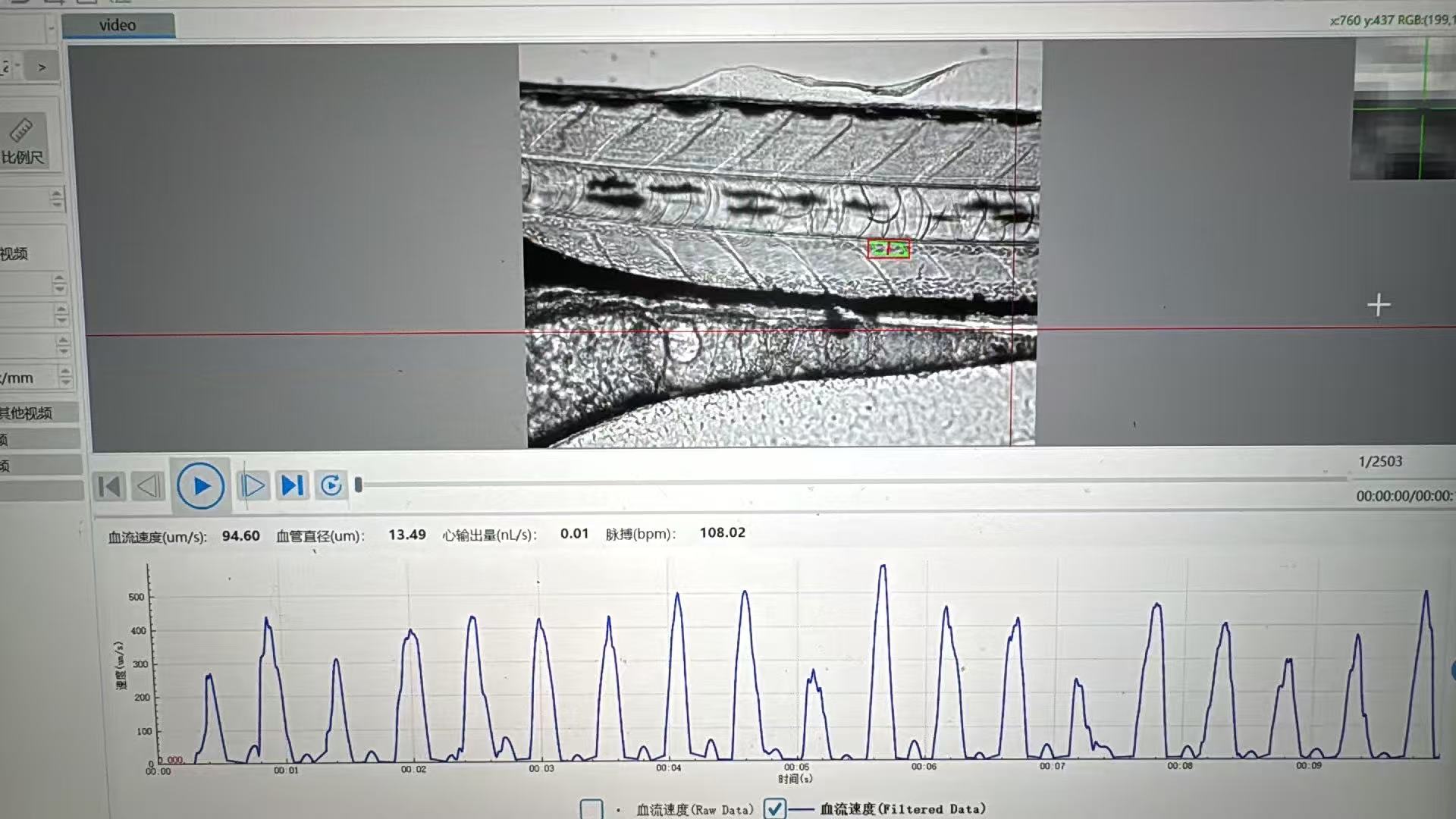
For a laboratory moving from occasional observations to plate-based studies, a Zebrafish Cardiovascular Analysis System is most useful when it turns short cardiac recordings into a consistent decision workflow. It does not replace experimental design or biological review. Instead, it helps a team acquire comparable images, define measurable endpoints, and triage a larger set of embryos or larvae for closer inspection. That distinction matters when high-throughput work must still support careful cardiac phenotyping.
Researchers can observe zebrafish cardiovascular development directly during early life stages, which makes the model practical for screening questions involving rhythm, chamber motion, circulation, and morphology. Published zebrafish high-throughput approaches describe measurement of heart rate, contractility, and blood flow. A well-planned Zebrafish Cardiovascular Analysis System gives those endpoints a repeatable acquisition and review framework rather than treating a single image as a final result.
Why high-throughput cardiac phenotyping needs a workflow
High-throughput does not simply mean recording more wells per day. In cardiac phenotyping, efficiency comes from keeping the sequence of preparation, imaging, analysis, and review stable enough that biological differences can be interpreted in context. A team may use the same developmental window, orientation method, imaging duration, exposure timing, and file-naming convention for each plate. The result is a dataset that is easier to compare across exposure groups and assay days.
A Zebrafish Cardiovascular Analysis System supports this workflow by helping users capture and organize observations around predefined questions. For example, a first-pass screen may flag embryos with altered beat regularity, reduced visible circulation, edema, or an unusual vessel pattern. Reviewers can then inspect the original recording and decide whether the feature is a biological signal, a handling artifact, or a sample that needs exclusion under the study plan.
Choose endpoints before beginning the screen
The most productive screens begin with a short endpoint plan. Cardiac phenotyping often combines quantitative measures with morphology-based observations, because neither tells the full story on its own. A Zebrafish Cardiovascular Analysis System can be configured around the measurements that answer the study question rather than around a generic dashboard.
- Rhythm and rate: Record beat timing and note irregularity using a consistent recording window.
- Contractile motion: Compare chamber movement over repeated frames while keeping magnification and focus comparable.
- Circulation: Review visible flow in selected vessels and document the anatomical location used for assessment.
- Cardiac and vascular morphology: Capture structured observations such as pericardial edema, looping appearance, chamber proportions, or vessel pattern changes.
- Developmental context: Pair the cardiac readout with stage, survival, gross morphology, and exposure timing so that interpretation remains biologically grounded.
This endpoint-first approach makes screening more efficient because it separates collection from interpretation. The operator knows which views are needed, and the reviewer receives recordings with enough metadata to apply the same criteria across the plate.
Control the variables that influence the signal
Cardiac readouts are sensitive to experimental conditions. Temperature is especially important: published automated heartbeat work reports that zebrafish heart rate changes with temperature, so a plate-to-plate comparison needs stable environmental conditions and documented acquisition timing. The OECD Fish Embryo Acute Toxicity guideline also regards heartbeat observation as a defined endpoint and specifies observation conditions for embryos in that test context. Those details are not a complete cardiac-phenotyping protocol, but they reinforce a practical lesson: recording conditions belong in the result, not only in a lab notebook.
Before using a Zebrafish Cardiovascular Analysis System for a large screen, establish a small control plate. Confirm that the chosen developmental stage, orientation, illumination, frame rate, and recording length allow the intended structures to be seen. Include vehicle and untreated controls when appropriate, and set rules for image quality, motion artifacts, and re-recording before looking at exposure-group outcomes. This reduces avoidable variability and makes later review more transparent.
Build a practical high-throughput review loop
A scalable cardiac phenotyping workflow usually has three passes. In the first pass, the operator checks acquisition quality and confirms that each well has the expected metadata. In the second, analysis software or a trained reviewer applies the predefined measurements and flags outliers. In the third, a scientist reviews flagged recordings alongside controls and decides whether the observation warrants follow-up.
That structure uses a Zebrafish Cardiovascular Analysis System efficiently. Routine samples progress through a consistent pipeline, while unusual phenotypes receive the attention they need. It also keeps a useful audit trail: the team can trace a reported phenotype back to the original recording, the measurement rule, and the associated sample information. For preclinical screening, that traceability is often more valuable than a single aggregate number.
What to evaluate in a system and support plan
When evaluating a Zebrafish Cardiovascular Analysis System, laboratories should ask how it fits their own assay rather than assume that every capability is needed on day one. Useful questions include whether the optical setup can resolve the selected endpoint, how recordings are stored and retrieved, how users document exclusions, and whether the analysis workflow can be trained consistently across operators.
Application expertise also matters. Hunter Lab focuses on zebrafish instruments and reports hands-on cardiovascular assay experience, so prospective users can discuss an intended endpoint and protocol before selecting a configuration. The company’s application consultation and training approach can help a laboratory align instrument operation with its cardiac biology questions. Researchers should still validate the final workflow with their own strains, controls, and acceptance criteria.
Turn efficient acquisition into useful phenotypes
The value of high-throughput cardiac phenotyping is not the number of recordings alone. It is the ability to make comparable, reviewable observations across a study without losing the biological context that explains them. By defining endpoints early, stabilizing acquisition conditions, and preserving a review path from summary metrics to source video, a Zebrafish Cardiovascular Analysis System can support a disciplined screening workflow for academic, pharmaceutical, cosmetics, and health-product research teams.
Start with a pilot plate, document the decisions that affect measurement, and expand only when the control data show that the workflow is reliable for the question at hand. That approach keeps high-throughput cardiac phenotyping efficient while leaving room for the expert judgment that meaningful zebrafish studies require.








